

Last Updated on April 16, 2026 by Homegrown Florida
Hey there, fellow thrifty gardeners! Are you all about saving money while still eating really fresh food? Then this list is for you.
If money is tight, growing even one or two of the right crops can make a real difference in your grocery bill. Some vegetables are fun to grow but don’t save you much. Others produce so heavily, or cost so much at the store, that they earn their space quickly.
Here are some of the best crops to grow if your goal is to save money.
Table of Contents
This post may contain affiliate links. Read full disclosure here.
Number 10: Garlic – A Savory Investment
Garlic can absolutely save you money, but this one really depends on how much garlic you use. If you only cook with it once in a while, it may not be your biggest money saver. But if you use garlic the way I do, in dinners, soups, sauces, pickles, roasts, and all the little things that make food taste good, then yes, it adds up fast.
Garlic can cost around $0.72 a head at the grocery store, and if you use a head a week, that adds up to around $35 to $40 a year just for fresh garlic. That does not even include garlic powder, garlic in canning recipes, or the extra cloves you use when you are cooking heavily.
The nice thing about garlic is that once you buy seed garlic, you can keep replanting from your own harvest. In the South, softneck garlic is usually the better choice, while northern gardeners tend to have more success with hardneck garlic. So while this one may not be the most dramatic money saver on the list, it can absolutely be worth it for households that cook with garlic often.
Number 9: Cucumbers – Crunchy and Cost-Effective

Cucumbers are one of those crops that quietly save you money because you can pick so many from just a few plants. Store-bought cucumbers often run around $0.89 each, and if you like slicing them into salads, snacking on them, or making pickles, the cost adds up quickly.
A single seed packet can cost only a couple of dollars and give you more cucumber plants than most people need. Once they start producing, they often produce heavily. If you grow a reliable variety and keep harvesting, you can get a steady stream of cucumbers for much less than buying them one at a time from the store.
Number 8: Peppers – Spice Up Your Savings
Peppers are one of my favorite money-saving crops because grocery store peppers are expensive for what you get. Sweet peppers, specialty peppers, and mini snacking peppers all seem to cost more than they should.
Green bell peppers often run around $0.89 each, and once you get into colored bells or sweeter specialty peppers, the price goes up. If you grow your own, especially productive varieties like sweet peppers, you can get a lot of food from a small space.
This is especially true if you grow peppers you actually like to cook with all the time. One or two productive plants can save you from constantly tossing peppers into the cart every grocery trip.
Number 7: Sweet Potatoes – Nature’s Sweetest Deal

Sweet potatoes are a fantastic money saver because one potato can turn into a surprising number of plants. A single sweet potato can produce multiple slips, and each slip can produce several more sweet potatoes.
Store-bought sweet potatoes are not outrageously expensive one at a time, but the value comes from multiplication. You are not just growing one plant from one seed. You are taking one sweet potato and turning it into a whole patch.
They also store well, which matters. A money-saving crop is even better when you can keep it for months and use it slowly.
Number 6: Kale – A Leafy Green Goldmine
Kale absolutely earns its place on this list. Store-bought kale can cost around $1.29 a bunch, and the bunch is usually not very large. Meanwhile, one seed packet gives you more kale than most families could ever reasonably plant.
What makes kale especially valuable is that it keeps producing. You do not harvest the whole plant once and call it done. You keep taking leaves, and the plant keeps going. In many climates, kale can produce for a long time, and in warm climates it often handles both cold and heat better than many other greens.
If you like smoothies, soups, sautés, or kale chips, this one is a very smart crop to grow.
Number 5: Lettuce – Fresh, Crisp, and Cost-Effective
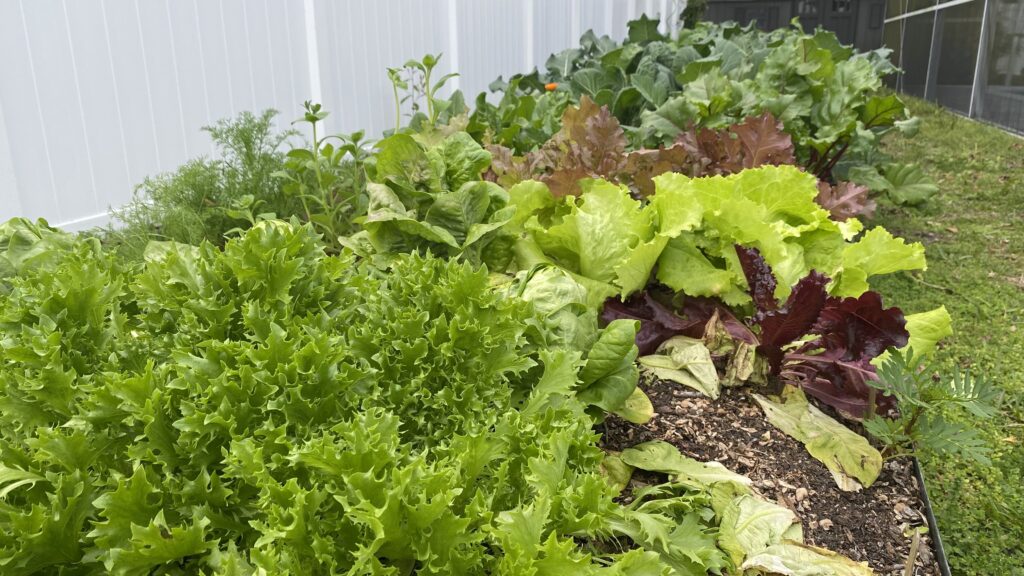
This category is bigger than just lettuce, and that is what makes it such a strong money saver.
Bagged salad greens can cost around $5.78 a pound, and even the smaller containers add up quickly. Whole heads are usually a little cheaper, but greens are still something many families buy again and again.
The best part of growing your own is how productive they are. Most greens can be grown as cut-and-come-again crops. That means you do not harvest the whole plant at once. You take what you need, and the plant keeps growing. One planting can feed you over and over.
And you are not limited to lettuce. You can grow kale, collards, Swiss chard, arugula, cabbage, broccoli leaves, and a whole range of greens depending on the season. In Florida and other hot climates, you can also grow tropical greens like longevity spinach, Okinawa spinach, katuk, chaya, Egyptian spinach, and Malabar spinach when regular lettuce gives up.
So this one is not just a money saver, it is a category that can work almost year round if you choose the right plants.
Number 4: Squash, the High Yield Workhorse
Squash absolutely deserves a spot on this list.
Zucchini at the grocery store can run around $1.02 each, and winter squashes can get much more expensive depending on size and season. Some specialty squashes can easily hit several dollars each.
What makes squash such a strong budget crop is the yield. One healthy squash plant can produce a lot of food. And if you pick the right variety, you can get even more value.
One of my personal favorites is tromboncino squash. I love it because you can use it as a summer squash when it is young and green, or let it mature into a winter squash with a harder skin. So one plant gives you flexibility and a lot of food. It is also part of the moschata group, which tends to be more resistant to squash vine borers and powdery mildew than some other squashes.
This one plant can feed a family for a while, and because heirloom varieties can be seed saved, you may only have to buy seed once.
Number 3: Tomatoes, the Garden’s Rockstars

Tomatoes deserve to be near the top because they save money in so many different ways.
Cherry tomatoes at Walmart were around $4.36 per pound when I checked, and most stores do not even sell them by the pound. They sell them in those smaller containers so the price does not look quite as painful. But it adds up fast.
And cherry tomatoes are one of the best places to save because they produce so heavily. In many gardens, cherry tomatoes outproduce slicing tomatoes by a lot. They also ripen faster, which means faster returns.
The other reason tomatoes are such a strong money saver is flexibility. There is a tomato for every situation. If you live in a short season, there are very early tomatoes. If you live in a long hot season, there are varieties that just keep going. If you only have a balcony, there are dwarfs. If you are growing indoors, there are micro dwarfs like Tiny Tim. If you are in a really hot climate, there are currant types like Everglades tomatoes that can keep producing when bigger tomatoes struggle.
No matter your space or climate, there is probably a tomato that fits. And once you find the right one, it can save you a lot at the grocery store.
Number 2: Fruit Trees – Nature’s Generous Bounty
This section is broad, but it absolutely belongs near the top because fruit is expensive.
Berries are one of the biggest grocery budget drains for families, especially if you have kids. Strawberries, blueberries, raspberries, and blackberries can cost anywhere from around $3.24 to $5.65 a pound, and because they are usually sold in small containers, they disappear fast.
The good news is that berries can often be grown in small spaces. Strawberries can grow in vertical planters, blueberries can grow in pots, and many berry bushes fit easily into home gardens.
Then there are fruit trees, which are a slower payoff but often a huge one. A fruit tree may take a little longer to get going, but once it starts producing, the return can be enormous. A single peach tree, mulberry, loquat, fig, or citrus tree can produce a surprising amount of fruit for years.
And you do not need a giant property. A lot of fruit trees can be kept small with pruning. Dwarf and semi-dwarf trees are a great fit for small yards. Even one tree can make a difference, especially if it is something you buy regularly.
So while this category may take a little more patience than herbs or greens, it can save a lot over time.
Number 1: Herbs, Flavorful, Frugal, and Wildly Underrated

Herbs take the top spot for me because the price comparison is just ridiculous.
An ounce of herbs can average around $3.56. That works out to around $56.96 a pound. Almost $57 a pound.
That is wild.
And yes, we usually do not eat herbs by the pound, but that is exactly why they are such a great money saver. A tiny amount at the store costs a lot, and one plant at home keeps giving and giving.
Perennial herbs are especially valuable. Oregano, rosemary, mint, garlic chives, lemon balm, and others can live for years. You plant them once and keep harvesting. Annual herbs like basil and cilantro are still worth growing too because one packet has tons of seeds and fresh herbs make such a difference in cooking.
But herbs are not just for flavor. You can dehydrate them into your own seasoning blends, use them as mulch, root cuttings to make more plants, and even use some of them in herbal remedies and skincare. Oregano, calendula, mint, and others can do a lot more than most people realize.
They also do not take much space. A single planter or one section of a bed can produce more herbs than most people would ever buy in a season.
If I had to grow one category of crops just for the financial return, herbs would be hard to beat.
So there you have it, some of the best crops to grow if your goal is to save money in the garden. The exact crops that save you the most will depend on what your family actually eats, but if you start with high-yield crops, expensive store-bought items, and plants that keep producing, you will see the difference.
I’d love to know, if there was one fruit, vegetable, or herb you could grow that would save your family the most money, what would it be?