Last Updated on October 16, 2025 by Homegrown Florida
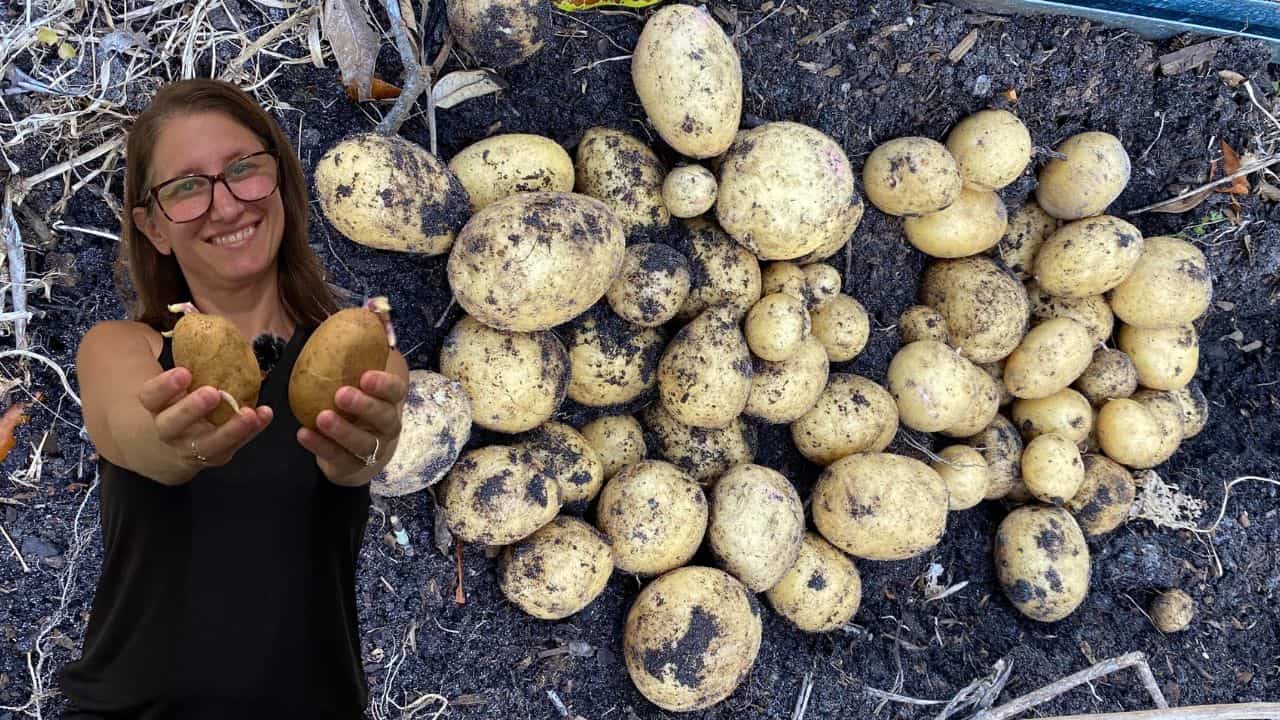
Today we’re diving into something I’ve been waiting to do for what feels like forever, planting fall potatoes in Florida. Fall isn’t always the easiest time to start potatoes here in Florida, but it can be done with the right approach. With a few tricks, you can enjoy a harvest of tender “new potatoes” before winter sets in.
Table of Contents
This post may contain affiliate links. Read full disclosure here.
When to Plant Fall Potatoes in Florida
Florida gardeners get two chances each year to grow traditional potatoes:
- Spring planting starts in January, with harvests ready by April before daytime temperatures consistently pass 85°F.
- Fall planting happens in September, with the goal of harvesting before frost. In North and Central Florida, that usually means potatoes need to be dug up by Christmas. South Florida can contiune growing the potatoes through winter until the tops die back.
Because the fall season is short (around 90 days), these crops won’t size up like spring russets. Instead, fall potatoes are harvested young and tender for the perfect “new potato” size.
Choosing Varieties
Not every potato thrives in Florida’s climate. For fall planting, I stick with varieties that mature quickly and perform well in warm, humid conditions:

- Huckleberry Gold – Purple skin with yellow flesh, beautiful color and good flavor.
- Golden Nugget – My favorite for flavor, creamy and rich.
- Cal White – A strong, dependable performer.
- Yukon Gold – A yellow creamy potato that is a favorite by all gardeners.
Whole vs. Cut Potatoes
This season I’m experimenting with planting both whole seed potatoes and cut pieces.
- Whole potatoes are usually the safest bet in fall since hot weather and heavy September rains can cause cut pieces to rot underground.
- Cut potatoes are more efficient because you get more plants from fewer seed potatoes but they need careful preparation.
To give the cut potatoes the best chance, I cut them and let them scab over for 10 full days before planting. Each piece has at least 2–3 sprouts (or “eyes”) and a hardened surface to help resist rot. I also prefer planting sprouted potatoes in fall, since unsprouted pieces may sit too long underground and never emerge.
How to Plant Fall Potatoes in Florida
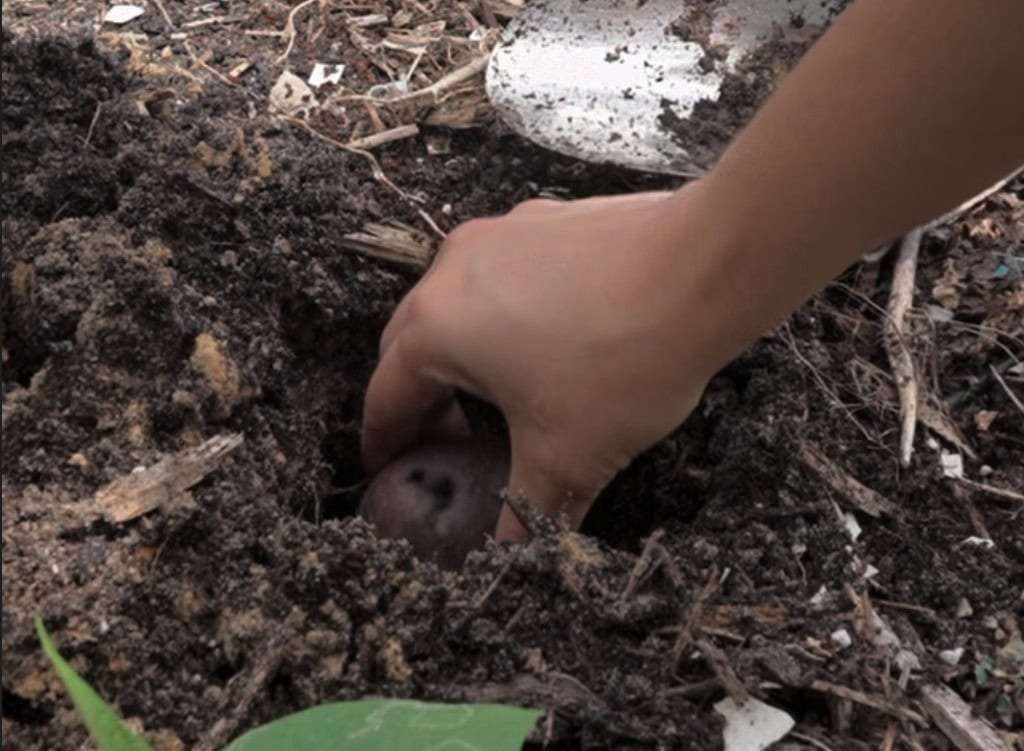
- Dig planting holes about 5 inches deep.
- In spring, I go deeper (6–8 inches), but in fall I want sprouts closer to the surface so they can grow quickly.
- Add a balanced fertilizer to the planting hole. I refer a chicken manure style fertilizer for potatoes.
- Plant the potatoes with sprouts pointing upwards.
- Cover with soil and a light layer of mulch.
- The mulch isn’t strictly necessary in fall since the season is short, but it helps keep tubers covered and prevents greening if they peek out.
Fertilizing Potatoes
Potatoes don’t need heavy feeding, but they do appreciate the right nutrients. My favorite option is Nutri-Rich chicken manure fertilizer (4-3-2 with 7% calcium). I use it only for potatoes because they seem to thrive on it.
Other options:
- Aged chicken manure
- Organic blends like Garden Tone or Plant Tone
I mix fertilizer into the planting hole, and that one application is usually enough to carry the crop through the whole season.
Maintenance and Growing Tips
Growing fall potatoes in Florida requires a little patience since they can take two to three weeks to emerge, sometimes even four if they weren’t pre-sprouted before planting. During this time, it’s important not to worry if you don’t see anything breaking through the soil right away. Once they do emerge, they grow steadily without needing much extra care. The main concern is excess moisture, especially in September when heavy rains are common, since soggy conditions can cause rot. Mulching helps keep the soil cool and prevents potatoes from turning green if they peek out of the ground, but heavy hilling isn’t necessary for fall because the growing window is so short. A light layer of mulch is all that’s needed to protect the tubers from sunlight.
When to Harvest

Fall potatoes are generally ready in about 90 days. In Central and North Florida, frost is the easiest indicator because it naturally kills off the foliage and signals that the tubers are ready to dig. If frost doesn’t arrive or your are growing in a frost free area like South Florida, the plants will follow their normal life cycle and begin to look yellow, weak, and eventually die back. This is the second clear sign that it’s time to harvest. The potatoes won’t grow to the large size of spring crops, but instead will be perfect as “new potatoes”, small, tender, and full of flavor. If the season is unusually warm and frost never comes, the plants can simply be left in the ground until the tops dry up completely before harvesting which will allow for larger potatoes.
Final Thoughts
Growing fall potatoes in Florida takes some trial and error, but with the right timing and prep, it’s a rewarding crop. This season I’m eager to see how my experiment with cut versus whole potatoes turns out. If the cut pieces sprout well, it’ll be a game changer for maximizing future harvests.
If you’re looking for even more detailed guidance on growing veggies here in Florida—like when to start seeds, how to manage pests, and what varieties really thrive—don’t forget to check out my ebook! It’s got a chapter for every single vegetable and is packed with everything I’ve learned over the years gardening in Florida.