Last Updated on August 27, 2026 by Homegrown Florida
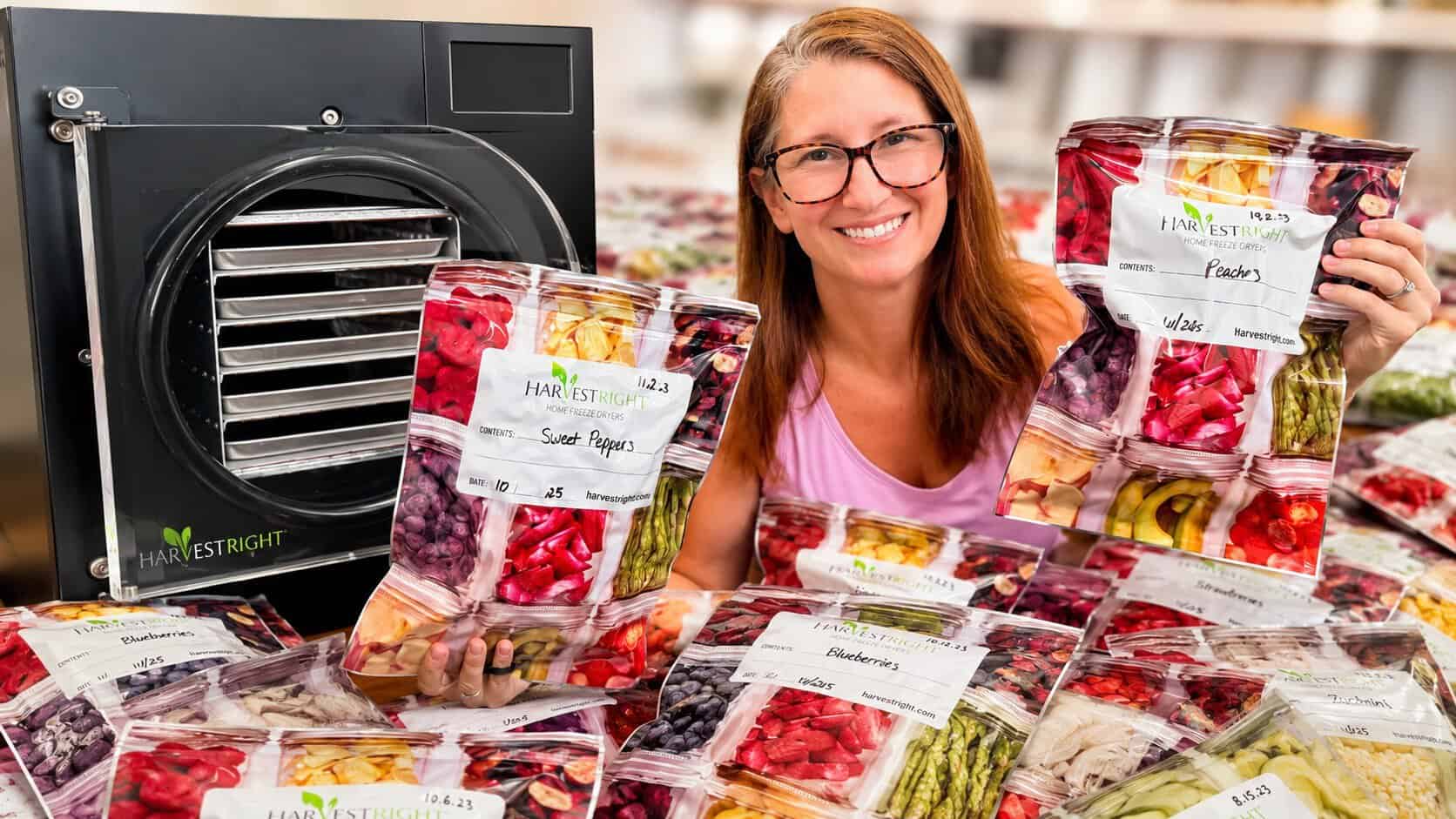
It has been three years since I purchased my Harvest Right freeze dryer, which means I’ve had plenty of time to put some pretty random things in it just to see what that freeze-dried food would taste like.
A lot of those experiments start in my garden. When you grow your own food, harvests don’t always arrive in convenient amounts. One week you’re waiting impatiently for the first pepper to ripen, and a few weeks later you’re standing in your kitchen wondering what you’re supposed to do with 40 of them.
Table of Contents
This post may contain affiliate links. Read full disclosure here.
Before buying a Harvest Right freeze dryer, I preserved our excess harvests by canning, dehydrating, and freezing, and I still use all three methods. But freeze-drying has become one of my favorites because it’s relatively hands-off and gives me options I don’t have with some of those other methods. Properly packaged freeze-dried food can also be stored for decades while retaining much of its nutritional value.
Over the past three years, I’ve freeze-dried fruits, vegetables, eggs, yogurt, broth, guacamole, complete meals, and plenty of things in between. Some have become pantry staples I make over and over again. Others technically worked, but I probably won’t waste another four-day freeze-dryer cycle on them.
So rather than just giving you a giant list of foods you can freeze-dry, let’s talk about what I’ve actually made, how we use it, what surprised me, and most importantly, what’s worth making again.
Why Freeze-Drying Became My Favorite Way to Preserve Food
I enjoy preserving food almost as much as I enjoy growing it. I can, dehydrate, ferment, and freeze food regularly, but every preservation method has strengths and weaknesses.
One of the biggest advantages of freeze-drying is how hands-off it is. I’m not saying it’s fast because it definitely isn’t. The machine can run for days depending on what I’m processing, but most of that time doesn’t require anything from me. Once I’ve prepared the food and loaded the trays, the freeze dryer does most of the work.
It also gives me more choices for foods I don’t particularly like preserved another way. Peaches are a perfect example. We had a large peach harvest in 2026, and although I tried canning some, I didn’t love how soft they became. Freeze-dried peaches can be eaten crunchy or rehydrated, and when they’re rehydrated, they retain much more of the firmness I want from a peach.
Storage space has become another big advantage. I still have shelves full of canned food, but jars take up a lot of room. Once water is removed from food, especially when I turn that food into powder, I can fit an incredible amount into a relatively small space.
What surprised me most, though, is that freeze-drying hasn’t become just a long-term food storage method. I originally pictured all those Mylar bags waiting patiently for hurricane season, power outages, and camping trips. Instead, we’re constantly eating this stuff.
Freeze-Dried Fruit: One of the Biggest Winners
If someone asked me what to freeze-dry first, fruit would be pretty high on my list. It almost seems like the sweetness becomes concentrated once the water is removed, and most fruit makes an excellent crunchy snack without ever being rehydrated.

Over the past three years, I’ve freeze-dried:
- Pineapple
- Bananas
- Mixed berries
- Strawberries
- Grapes
- Pears
- Peaches
- Loquats
- Watermelon
- Roselle
- Strawberry and banana mixtures
- Fruit powders for smoothies
Strawberries and bananas are especially useful because I keep them both as pieces and powders. The pieces make easy snacks, particularly when my nieces and nephew visit and apparently decide my entire freeze-dried fruit supply belongs to them. The powders go into smoothies.
Peaches were another big winner. After discovering that I didn’t particularly like the texture of my canned peaches, freeze-drying gave me a much better way to preserve a large harvest. I can eat them dry or add water and bring them much closer to the texture of the original fruit.
Loquats surprised me even more. I wasn’t sure how they would turn out because they’re such a juicy fruit, but freeze-dried loquats are basically candy. That experiment made me much more interested in trying citrus flavors, so lemons followed, and I plan to experiment with mandarins, finger limes, and calamondins as I harvest them.
Watermelon is where things got a little ridiculous. It freeze-dried successfully and tasted good, but it took around four days to finish because watermelon is mostly water. I’m not sure I’d do that again in pieces. If I had a big harvest to preserve, I’d probably puree it and try removing some of the water first before freeze-drying the puree.
I also freeze-dry homemade yogurt specifically for smoothies. I make a large batch using milk and yogurt with active cultures in my Instant Pot, spread it onto the trays, freeze-dry it, and grind it into powder. Mixed berry, banana, and yogurt powder have become one of my favorite smoothie combinations.
Freeze-Dried Vegetables: From Garden Surplus to Pantry Staples
Vegetables are where the freeze dryer becomes particularly useful for me as a gardener. I’ve had seasons when one crop produces far more than we can possibly eat fresh, and I need something to do with it before all that work ends up in the compost pile.
Some of the vegetables and vegetable products I’ve freeze-dried include:
- Hot and sweet peppers
- Shredded cucumber
- Cauliflower rice
- Pumpkin puree
- Sweet potatoes
- Hash browns
- Tomatoes
- Tomatillo salsa
- Mixed squash, tomatoes, onions, and peppers
- Tromboncino squash
Peppers probably take up more space in my freeze-dried pantry than any other vegetable. I’ve had two incredibly productive pepper years, so I keep some in glass jars for regular use and package the rest in Mylar bags for longer-term storage.
Shredded cucumber has been surprisingly handy too. I use it for tzatziki and Greek or Mediterranean-style dressings. It’s a great example of finding another way to preserve a crop that isn’t particularly easy to store long term.
Tromboncino squash led to one of my favorite experiments: zucchini flour. I had so much squash that I preserved some in pieces, shredded some for zucchini bread, and powdered the rest. I’ve been able to replace up to about one-third of the all-purpose flour in baked goods with zucchini flour without noticing a significant difference in the taste or rise.
You’re stretching the flour while adding vegetables, and nobody can see, taste, or smell the zucchini. Sometimes gardening requires a little deception.
I also like freeze-drying pumpkin puree because I don’t use enough of it to dedicate valuable freezer space to it all year. I can powder it and keep it on the shelf until the holidays. Hash browns solve a similar problem because I like having them available, but I have very limited freezer space.
Not everything has been perfect. I freeze-dried tomatillo salsa and didn’t love the texture after rehydrating it. Blending helped, but I think the better use may be turning it into a seasoning rather than trying to recreate the original salsa.
That’s something I’ve learned over the past three years. A food doesn’t have to return perfectly to its original form to be useful. Sometimes the better question is what else I can make with it.
Powders: One of the Most Useful Ways to Freeze-Dry Food
Powders have become one of the most useful parts of my freeze-dried pantry because they take up very little room and can often be used in several different ways.

Some of the powders I’ve made include:
- Tomato powder
- Milk powder
- Yogurt powder
- Banana powder
- Strawberry powder
- Lemon powder
- Pumpkin powder
- Zucchini flour
- Greens powder
- Roselle powder
- Freeze-dried broth
Tomato powder is especially versatile. Depending on how much water you add, it can become tomato juice, sauce, or paste, or you can add the powder directly to recipes.
Freeze-dried broth was mostly an experiment because I already can a lot of broth. The finished product has a strange crystallized texture, but once you add water, you have broth again. It’s a compact alternative when I don’t want to store another shelf full of jars.
Roselle is something I preserve in several forms. I keep some whole, chop some for tea, and powder some so I can mix it directly with water. Add a little freeze-dried lemon and you’ve got a lemon-roselle drink without having to brew anything.
I’ve also made a greens powder from kale, collards, mustard greens, spinach, and other greens. It works perfectly well and can be added to smoothies, soups, or baked goods for extra nutrients.
Will I make it again? Probably not.
I’m a visual eater, and apparently I have a personal issue with drinking a green smoothie. If that doesn’t bother you, though, it’s a perfectly good way to preserve excess greens.
One experiment that deserves an honorable mention here is guacamole. I’d heard that avocados didn’t freeze-dry particularly well, so instead of preserving plain avocado, I made guacamole and freeze-dried the finished recipe.
It is outstanding. We’re down to our last bag, and we’re basically protecting it at this point.
Freeze-Drying Complete Meals
This is where I think a freeze dryer really shines.
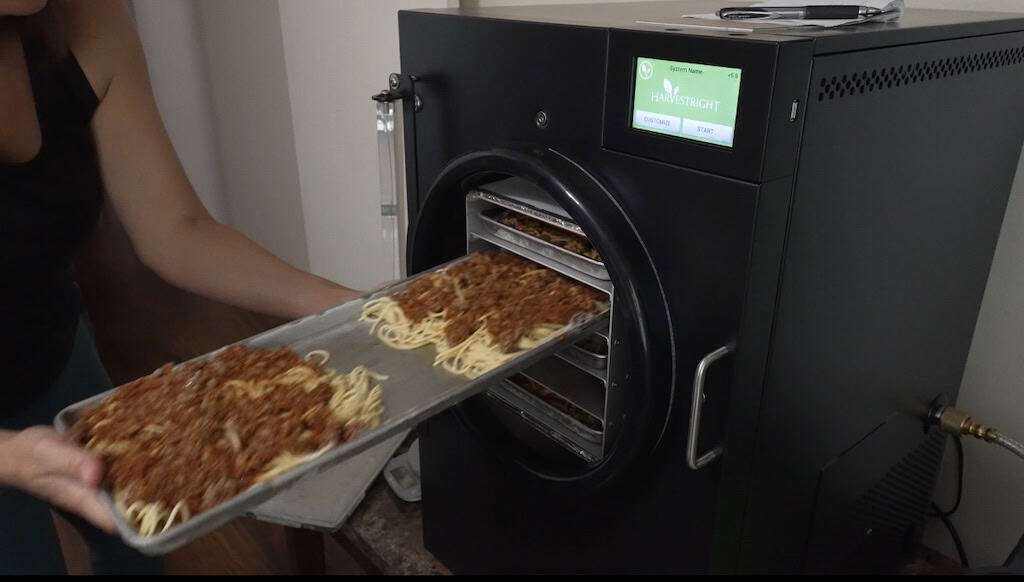
Instead of cooking special recipes specifically for food storage, I can make more of whatever we’re already having for dinner and put the leftovers onto a freeze-dryer tray. Over the years I’ve preserved:
- Ravioli with meat sauce
- Spaghetti with meat sauce
- Loaded mashed potatoes
- Chili with steak
- Stuffed peppers with ground beef and rice
- Chicken noodle soup
- Chicken and dumplings
- Rice and beans
These meals are especially useful for camping and hurricane season because most only need water to become dinner again. If the power is out, being able to add hot water to a complete meal is considerably easier than trying to cook from scratch.
I recently opened a bag of spaghetti with homemade meat sauce that had been sitting in my pantry since 2024. I hadn’t rehydrated that particular meal before, and I wasn’t completely convinced the pasta would survive the process without becoming mush.
I added boiling water gradually, covered it to hold in the steam, and let it sit. When I found crunchy pieces, I added a little more water and waited again.
The result genuinely surprised me. The noodles were closer to al dente than mushy, and the meat and homemade sauce tasted remarkably similar to the day I made them. The long noodles had broken into shorter pieces while they were dry, but that was really the only significant difference.
After two years sitting in a Mylar bag, I had a bowl of spaghetti I was perfectly happy to eat. That’s pretty impressive.
Freeze-Dried Eggs: One of My Most Practical Pantry Staples
Eggs may not be the most exciting thing in my freeze-dried pantry, but they’re easily one of the most practical.
My husband and I eat around six eggs a day between us, so when egg prices increase, we notice it quickly. When prices are low, I can buy 60 or even 120 eggs, freeze-dry them, and put them away. At the moment, we have roughly a four-month supply.
I freeze-dry my eggs raw. My basic process is:
- Crack the eggs into a food processor.
- Blend until completely combined.
- Pour the raw eggs onto freeze-dryer trays.
- Make sure they’re completely frozen before the vacuum cycle begins.
- Freeze-dry until completely dry.
- Grind the finished eggs into powder.
- Package the powder for storage.
I don’t always pre-freeze the trays, but if I put them directly into the machine, I extend or lower the freezing cycle enough to make sure the eggs are completely solid before the vacuum starts. That’s important with liquids because you don’t want a partially frozen tray when the vacuum kicks on.
For rehydrating, I use roughly equal amounts of egg powder and water. I keep one jar of powdered eggs in the pantry for everyday cooking and baking, then refill it from our Mylar bags as needed.
I’ve never felt much need to freeze-dry cooked eggs because I’m so happy with the raw version. Once they’re rehydrated and cooked, the taste and texture are remarkably similar to fresh eggs.
They’re also a great example of how much space freeze-drying can save. Sixty eggs sound like they should take up half the pantry. Once they’re powdered, they’re surprisingly compact.
What I Learned Rehydrating Freeze-Dried Food
There are precise ways to determine how much water to add back to freeze-dried food. You can weigh the trays before and after freeze-drying, calculate how much water was removed, and portion everything accordingly.
I am way too lazy for that.
My system is to start with a little water, wait, and add more. As I told my husband while rehydrating the spaghetti, I basically keep going until God tells me that’s enough.
There is actually a useful lesson hiding inside my very scientific method: start small. You can always add more water, but once you’ve turned your spaghetti into soup, there’s not much you can do about it.
A few things I’ve learned:
- Use hot water for cooked meals when you want to rehydrate and warm the food at the same time.
- Cold water works perfectly well for foods like fruit.
- Add water gradually and give the food time to absorb it before adding more.
- Powders can usually be mixed directly into water or whatever recipe you’re making.
- Many fruits don’t need rehydrating at all and are delicious eaten dry.
- If you don’t like the texture after rehydrating something, try using it differently before deciding the experiment was a failure.
That last one is important. My tomatillo salsa wasn’t great rehydrated as salsa, but it may be fantastic as a seasoning. Freeze-drying preserved the food, I just needed to rethink what I wanted it to become.
How I Store and Actually Use My Freeze-Dried Food
My storage system has changed quite a bit since I started.

Originally, almost everything went into Mylar bags with oxygen absorbers because I was thinking primarily about long-term storage. The problem is that Mylar bags aren’t particularly convenient when you’re constantly using the food.
Now I use two storage methods:
- Glass jars for foods we’re actively using.
- Mylar bags with oxygen absorbers for longer-term storage.
When a jar gets low, I refill it from the Mylar supply. This works particularly well for eggs, fruit, powders, and other ingredients we’re regularly pulling from the pantry.
I keep the Mylar bags organized in large storage bins. It’s not a perfect system because I still have to dig around to see what’s inside each bin. At some point I should probably make an inventory sheet and attach it to each lid. I haven’t done that yet because apparently being organized enough to freeze-dry several years’ worth of food does not mean I’m organized enough to make a piece of paper telling me where I put it.
More importantly, we’ve learned that stored food should actually be eaten.
I don’t want a pantry full of food that’s technically good for decades but never gets touched. We use our freeze-dried fruit for snacks, powders for smoothies and recipes, eggs for cooking and baking, and complete meals for camping or whenever they’re convenient. Then I continue replacing what we use.
What I’d Freeze-Dry Again, and What I Probably Wouldn’t
After three years, I’ve stopped looking at the freeze dryer and asking, “Can I freeze-dry this?”
Of course I’m still going to ask that occasionally because experimenting is half the fun. But the better question is whether the finished food is useful enough to justify the time and space it takes.
Things I would absolutely make again include:
- Most fruits, especially strawberries, bananas, peaches, pears, and loquats
- Hot and sweet peppers
- Tomato powder
- Zucchini flour
- Pumpkin powder
- Yogurt powder
- Broth
- Hash browns
- Guacamole
- Complete meals
- Raw eggs
Then there are the things I’d change or probably skip:
- Watermelon pieces took far too long, so I’d experiment with a puree instead.
- Greens powder worked, but I don’t use enough of it to make it worthwhile for me.
- Tomatillo salsa wasn’t great rehydrated, so I’d either change the preparation or use the existing batch as a seasoning.
What I’ve learned is that preserving something only makes sense if you’re eventually going to eat it. It doesn’t matter whether something can sit on a shelf for 30 years if nobody in your house wants it.
Three Years Later: Was a Freeze Dryer Worth It?
Looking at my pantry now, I’m surprised by how much food I’ve put through this machine in three years, especially because what remains on the shelves doesn’t include everything we’ve already eaten.
The freeze dryer hasn’t replaced canning, dehydrating, freezing, or any of the other preservation methods I use. Instead, it’s given me another option. Sometimes canning makes the most sense. Sometimes I want something in the freezer. And sometimes freeze-drying gives me a finished product I like much better.
For a gardener, that flexibility is incredibly useful. A great harvest can quickly become an overwhelming harvest, and I hate seeing food I spent months growing go to waste. Freeze-drying gives me another way to turn that excess into something we’ll actually use months or even years later.
It’s not a perfect preservation method. The machine is a significant investment, batches can take a long time, and there’s still work involved in preparing, packaging, and organizing everything. I don’t think everyone with a backyard garden automatically needs one.
But for us, it has absolutely become more useful than I expected.
We aren’t filling Mylar bags with food that disappears into a closet and waits for some hypothetical emergency. We’re eating it. We’re making smoothies, baking with powdered eggs, snacking on fruit, taking meals camping, preserving large garden harvests, and keeping food available for hurricane season and power outages.
After three years, that’s probably my biggest takeaway. The best food to freeze-dry isn’t necessarily whatever lasts the longest or looks most impressive stacked in the pantry. It’s the food your family already eats and will continue reaching for once it’s preserved.
That’s what makes all the time spent running that freeze dryer worthwhile.