Last Updated on November 19, 2026 by Homegrown Florida
My first vegetable garden was a five-by-five-foot patch in the ground. Twenty-five square feet does not give you much room to make questionable planting decisions, so I had to figure out which plants would give me the most food in a small garden.
That experience still shapes how I garden. I love a plant that keeps producing, lets me harvest a little at a time, or grows up instead of taking over every available inch of ground. A small garden can be productive, but I want to choose plants that make good use of it.
These are ten of my favorite crops for getting a lot out of a small space. They are in no particular order, and they do not all earn their spot the same way. Some give repeated harvests, some can be replanted quickly, and a few produce an impressive amount of food if you give them something to climb.
Table of Contents
This post may contain affiliate links. Read full disclosure here.
1. Bush Cucumbers
A bush cucumber can pack a surprising amount of production into a small plant. I have one growing at the top of a GreenStalk, and the number of flowers on that single plant is impressive. When I look at a plant like that, I start thinking about how much food a small container can hold.
For a bush cucumber, I generally think in terms of about 10 to 15 cucumbers per plant. That is an estimate, rather than a promise that every flower will become a cucumber, but it gives you an idea of why these made my list.
How I Would Use the Space
In a five-tier GreenStalk with six pockets per tier, you have 30 planting pockets. At ten cucumbers per plant, the arithmetic works out to 300 cucumbers from a fully planted tower. I would treat that as a way to picture the potential.
You also have options outside a vertical planter:
- In a GreenStalk: Use the individual pockets for compact bush plants.
- In a bed: I would fit about two bush cucumber plants per square foot and let them trail beneath taller plants.
- For planning a harvest: Think about both the number of plants and the roughly 10-to-15-cucumber yield I look for from each one.
The attraction is a small plant that can produce enough cucumbers to make its spot worthwhile. You do not need a sprawling cucumber vine to enjoy growing them.
2. Pole Beans
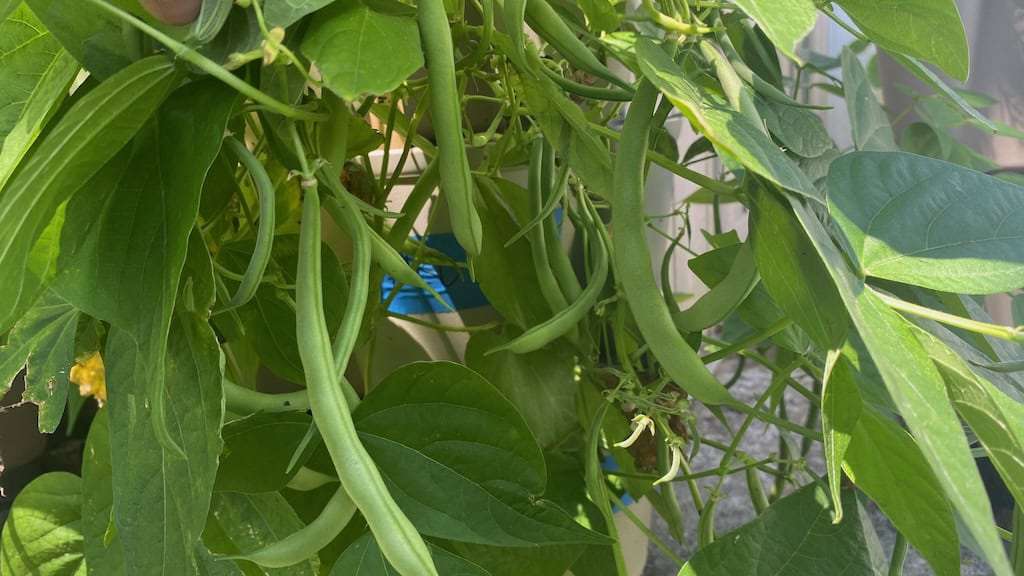
Bush beans sound like the obvious choice for a compact garden, but when I compare production from individual plants, I prefer pole beans. Bush beans tend to produce in a few flushes. A pole bean keeps giving me more beans from that one plant, provided I have somewhere for it to climb.
The comparison I use is roughly 10 to 15 beans from a bush bean plant versus around 40 from a pole bean plant. Your harvest can vary, but that difference in the amount I expect from each plant is why I am willing to make room for a trellis.
Give Them a Grow Bag and Something to Climb
I would use a wide grow bag and plant the beans around a support. In a sufficiently wide bag, I would consider about ten plants, rather than assuming every grow bag can hold the same number.
My favorite support for this is animal fencing formed into a cylinder. Set it into the grow bag so the beans have something to climb, and you can use that vertical space for production.
You are giving the vines height without needing to spread them across a whole bed. For someone choosing between bush beans and pole beans, that is the tradeoff I would consider: the bush beans are compact on their own, but the climbing beans can give you more food from each plant.
3. Green Onions
Green onions are one of my favorite ways to keep harvesting from a tiny spot. You can start with something you were already buying at the grocery store, regrow the bottoms, and keep cutting greens instead of treating each bunch as a one-time purchase.
The next time you buy green onions, save the bottoms and plant them. Once they are growing, cut the green tops for meals and let the plants produce more. They can also flower and make seeds that you can save.
A Small Plant With Repeated Harvests
I would fit about nine green onions in a square foot. I often spread mine around the garden as companion plants instead of keeping all nine together, but that gives you an idea of how little space they need.
There are several ways to get more from the same planting:
- Regrow the bottoms from a grocery-store bunch.
- Harvest the green tops and let them regrow.
- Save seeds when the plants produce them.
- Grow a multiplying onion if you want to harvest more of the white portion too.
That last option is the one I get especially excited about. I like the green parts, but I also like the white part, and a multiplying onion gives me more opportunities to use both.
My Florida Finley Multiplier Onions
I grow Florida Finley multiplier perennial onions. I got mine about three years ago and have not needed to buy another green onion since.
One onion divides into several. I had a plant that had already split into three, and I have seen them multiply into around ten. Once a clump has multiplied, I can lift it, take the onions I want, and replant one to start multiplying again.
They go dormant during summer in my garden. I lift and store them as I would bulbing onions, then replant them. That seasonal routine is different from just leaving an ordinary bunch of green onions alone indefinitely.
I have pointed people toward places such as Cody Cove Farm and Whitwam Organics for these onions. They can be something you need to wait for, rather than assume they are always available when you decide you want them.
4. Dwarf Tomatoes

A tomato plant does not have to tower over you to produce a worthwhile harvest. I have grown dwarf tomatoes in the past and been very happy with them, especially for small spaces.
There are many dwarf and micro dwarf choices, including compact plants that still produce plenty of cherry or grape tomatoes. Heartbreaker and Patio Choice are two I have liked.
Compact Plants Still Need Support From the Soil
With the small-fruited varieties, I have seen the potential for around 50 tomatoes from a little plant. That is a useful amount of food from something that may only take about a square foot of space.
You might be able to fit two very small plants into that area, but I would be careful about crowding them. I want them to get the nutrients they need to produce, rather than squeeze in another plant and assume the harvest automatically doubles.
For planning, I would focus on:
- Plant size: Choose a dwarf or micro dwarf that fits the space you have.
- Fruit size: The high numbers I am talking about here are for cherry or grape types.
- Feeding: Leave enough room and nutrients for the plants to produce well.
5. Loose-Leaf Lettuce
Lettuce is a wonderful container crop, especially when you choose a loose-leaf variety and keep harvesting from the same plant. I would fit about nine loose-leaf lettuce plants in a square foot, which gives you plenty to pick from without dedicating an entire bed to salad.
Here in Florida, I grow lettuce during winter. Within that growing window, I can keep harvesting fresh leaves instead of pulling out the whole plant every time I want some.
Two Ways to Keep Lettuce Producing

I use the cut-and-come-again approach, and there are two ways to do it:
- Take the outside leaves. Harvest the oldest leaves around the outside and leave about three or four in the center to keep growing.
- Cut back a bushier plant. Let it fill out, then cut it back while leaving about two inches at the bottom so it can regrow.
Repeated picking is what makes lettuce so useful in a small garden. I am getting multiple harvests from the same space during the season, rather than planting, harvesting once, and immediately needing to start again.
That does not mean a lettuce plant will keep going forever. I am working within our winter growing window, but I can get a lot of fresh lettuce from the plants while that window lasts.
6. Collards and Kale
Collards and kale earn their space in a different way. They get much larger than a little lettuce plant, but I can keep taking leaves from them over a long period.
I harvest the older outside leaves and allow the center to continue growing. One kale plant and one collard plant have given my household greens through the season, with more to preserve as the plants get big toward the end.
Fresh Greens Now and More for Later
Near the end of the season, I cut the plants down, blanch the greens, and freeze them. Those greens keep feeding us after the fresh growing season is over, which is a lot of usefulness from a couple of plants.
Broccoli leaves are edible too, but I would be careful about applying the same heavy leaf-harvesting approach to every broccoli or cauliflower plant. I still want those plants to produce their heads. For ongoing leaf harvests, collards and kale are the ones I would concentrate on.
I would weigh the space these plants occupy against how often you will actually eat the greens. For my household, repeated fresh harvests followed by greens in the freezer make them worth growing.
7. Climbing Squash
I know. Putting squash on a list for small gardens sounds questionable when there is a giant vine involved. But I am thinking about where the roots grow and where I can send the vine, rather than assuming I need to give it an entire open bed.
I grow climbing squash in a 10-gallon grow bag and use a nearby structure for support. That lets me position the roots in a container while the vine climbs somewhere that is already available.

Use What You Already Have for Support
I have grown squash up a palm with old cut frond bases that the vine can climb. Other possibilities I have discussed include:
- A chain-link fence.
- A suitable tree.
- A fallen or dead tree.
- Another fence or structure the vine can climb along.
The grow bag gives you flexibility in where you place the planting. Finding a good climbing spot may be the harder part. This is a small planting footprint with a big vine, so I would choose it where I have that climbing room available.
Seminole Pumpkin and Tromboncino
Seminole pumpkin is one I grow here. I look for a big harvest from it, potentially around 20 to 25 pumpkins over the plant’s life. That is a lot of food if you can accommodate the vine.
Tromboncino is another vigorous climbing squash I would consider. These are two that I have grown or discussed hanging without needing little hammocks for the fruit, which keeps the support work simpler.
For me, squash belongs on this list when I have somewhere for the growth to go. I would not try to pretend the vine itself is tiny just because I planted it in a bag.
8. Radishes
Radishes can give you a lot from a small planting because the plants are compact and you can harvest and replant them relatively quickly. I think of a roughly 45-day turnaround, which lets me use the same spot for another round during the growing window.
I would plant about nine to 16 smaller radishes in a square foot. If you keep harvesting and planting again, those little batches add up.
Choose the Size You Want to Eat
Daikon gives me a much bigger radish, but I would not pack it in at the same spacing as a small variety. For those, I would think more in terms of four to six per square foot.
And you do not have to limit yourself to a couple of thin slices on a salad. Other ways I like to think about using radishes include:
- Roasting them.
- Pickling them.
- Slicing them fresh for salads.
That is useful when choosing a productive crop. A whole lot of radishes is more exciting if you have more than one way you want to eat them.
9. Strawberries
I am including fruit too, because strawberries can give you a lot of plants in a very small area. I grow mine in a GreenStalk Leaf, which has shallower tiers and gives me room to stack seven tiers with six pockets each.
That is 42 plants. I sometimes need a minute with the multiplication, but seven times six does get us to 42.
A Vertical Planter Full of Berries
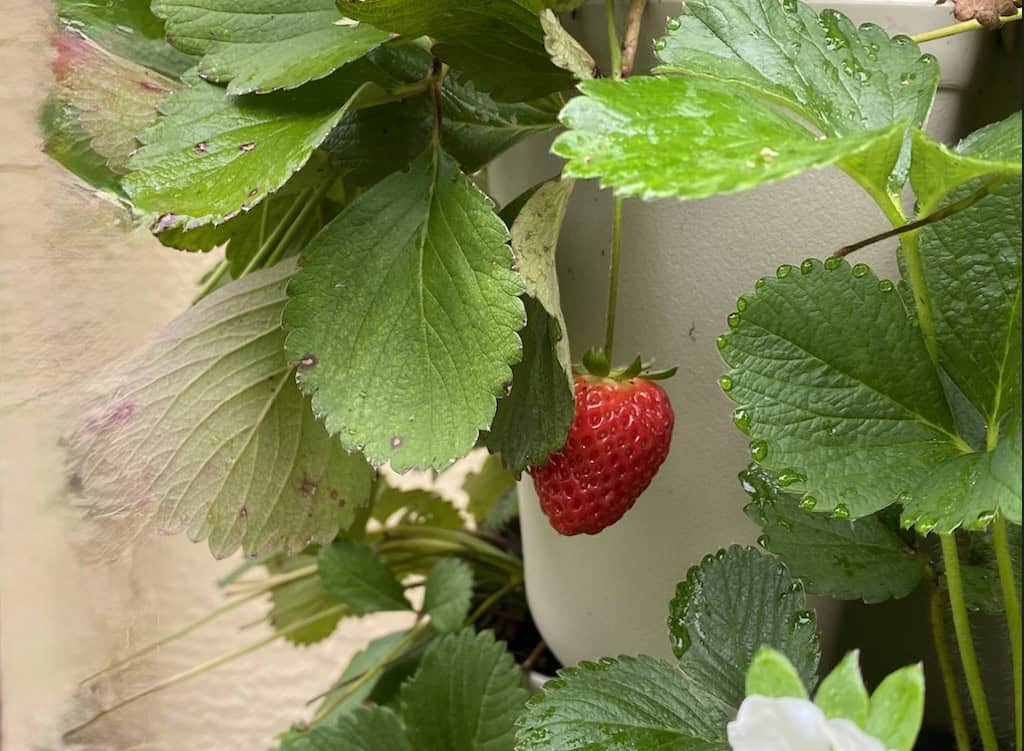
Using the roughly two-square-foot footprint I describe for the planter, that is a lot of strawberry plants without needing a whole bed.
For first-year June-bearing plants, I use about ten berries per plant as a rough planning estimate. Multiply that by 42 and you get 420 berries. Those numbers illustrate the potential of the planting, rather than a guarantee that every plant will produce an identical harvest.
Here in Florida, I generally think about that first-year crop because many of us grow our strawberries that way. Gardeners who can keep their plants for more seasons may see different production in later years.
For a small garden, I love being able to grow that many plants vertically. A few strawberries from each plant can add up to a harvest that feels much bigger than the space would suggest.
10. Herbs
Herbs are one of the most useful things I grow in containers. My oregano has been living in a vertical planter for close to seven years. I cut it back multiple times a year, and it grows back again.
For herbs, I prefer the deeper pockets of the original GreenStalk. Five tiers with six pockets per tier give you 30 planting spaces in that same small footprint.
Use Herbs for More Than a Sprig on Dinner

I understand if your first thought is, “I do not eat that many herbs.” But there are plenty of ways to use a generous harvest:
- Cook recipes that use handfuls. Pesto uses plenty of basil, and chimichurri puts parsley to work.
- Dry herbs for seasonings. Keep some of the harvest for later meals.
- Make gifts. Fresh herb bundles or dried herb seasonings are lovely things to share.
- Take cuttings. Grow more plants, share them, or sell extras and put the money back into the garden.
I also use herbs in projects such as oxymels, tinctures, skin care, and a homemade lemongrass mosquito spray. Those are some of my own uses, beyond cooking, that make a big herb harvest welcome.
I even saw an herby cilantro dressing from Zen Hen and the Honey Bee that looked good enough to make me want to try it, and I do not like cilantro. Apparently, there is still hope for me.
Many of the herbs I grow last beyond one season, although I would not assume every herb behaves like that oregano. I think about basil and dill differently. The appeal is choosing herbs I will actually use and letting those useful plants keep producing.
Which Crops Fit Your Small Garden?
The best choice depends on whether you have a planter, a few grow bags, a little bed, or a fence that needs a productive vine. Here is how I would sort the options:
| What you want from the space | Crops I would consider | How they earn their place |
| Repeated leaf harvests | Lettuce, collards, kale | Keep picking while the plants continue growing |
| Small plants with useful production | Bush cucumbers, dwarf tomatoes | Compact plants that can give multiple fruits |
| Crops that grow upward | Pole beans, climbing squash | Use a support instead of spreading across a bed |
| A quick harvest and succession planting | Radishes | Reuse the same patch for successive crops |
| Plants you can keep harvesting or multiplying | Green onions, herbs | Regrowth, division, or repeated cutting |
| Fruit in a vertical planter | Strawberries | Fit many small plants into the planting pockets |
You do not need to grow all ten. In my first 25-square-foot garden, I had to choose, and I would still start with the crops I was most excited to eat. A productive plant only helps the grocery bill if the harvest is something you use.
If you are starting a garden here in Florida, my Homegrown Florida Gardening Guide includes planting timelines, pest and disease management, planting depth, and container growing. Small-space growing is one of the things I want gardeners to feel comfortable trying.