Last Updated on June 20, 2026 by Homegrown Florida
While squash might not be the flashiest vegetable in the garden, it’s a true unsung hero. Whether you’re growing it for summer meals or winter storage, squash is one of the most versatile crops you can add to your Florida garden. I’ll share my top tips to grow squash in Florida, along with a few of my favorite varieties.
Table of Contents
This post may contain affiliate links. Read full disclosure here.
Summer Squash vs. Winter Squash: What’s the Difference?
Squash comes in two main categories: summer squash and winter squash. But don’t be fooled by the names—these don’t refer to when they’re grown, but rather when they’re harvested and eaten. In Florida, gardeners typically plant squash in very early spring or fall to avoid the intense summer heat. Whether you’re aiming for summer squash like zucchini or hardier winter varieties, both have a place in the Florida garden.
Summer Squash: Light, Fresh, and Versatile
Summer squash, such as zucchini and yellow squash, are soft-skinned vegetables that grow quickly and are perfect for tossing into a variety of dishes. The thin skin and mild flavor make them ideal for everything from salads and stir-fries to being a base for low-carb noodles. One of my favorite ways to use zucchini is in zucchini bread. It’s a sweet, moist treat that rivals banana or pumpkin bread and sneaks in a bit of extra nutrition.
In Florida, we grow summer squash primarily in the cooler months of early spring and fall. This timing avoids the scorching summer temperatures that can stress out the plants. By planting early, you can enjoy a bountiful harvest before the heat or pests have a chance to take over. Remember, summer squash has a short growing period, so you’ll be enjoying your fresh veggies in no time.

Winter Squash: The Sweet Staple Crop
Butternut, acorn, and spaghetti squash develop thicker, harder skins, which allow you to store them for months after harvest. You can pick them immature and eat them like summer squash, but letting them fully mature on the plant enhances their flavor. This makes them sweeter and more robust.
One of the reasons I to grow squash in Florida is its potential as a long-term storage crop. After curing, it can last throughout the winter months, giving you access to homegrown vegetables well into the new year. Whether you roast it with seasonings like salt, pepper, onion powder, and garlic powder or use it in soups and casseroles, winter squash is a reliable staple that’s well worth the effort.
Overcoming Challenges to Grow Squash in Florida
Let’s face it—to grow squash in Florida comes with its challenges. From the short growing seasons to relentless pests, you’ve got to be strategic about how you plant and care for your squash.
- Pests and Diseases: Squash bugs, pickleworms, and powdery mildew are the most common challenges. Protecting your plants with row covers early on helps reduce bug infestations. Regular monitoring can help you stay on top of any problems. For powdery mildew, a simple mix of water and hydrogen peroxide can help keep your plants healthy.
- Starting Early: Timing is everything when it comes to growing squash in Florida. Because our summers are so hot, it’s best to start your squash in early spring or late fall when the temperatures are more moderate. Start seeds indoors in pots to give them a head start. Then transplant them into the garden once they’ve developed strong roots.
- Succession Planting: Another good strategy is succession planting, where you plant in intervals to spread out your harvest. This can help you get a longer season of production, especially when pests or diseases take down a plant.
- Watering and Mulching: Florida’s climate can be both hot and humid, so be sure to water your squash consistently. Aim to water the base of the plants to avoid wetting the leaves. Mulching around the base can help retain soil moisture and keep the roots cool, which is especially important when the temperatures start to rise.
My 4 Favorite Summer Squash Varieties for Florida
After years of growing squash in Florida, I’ve learned that variety selection matters almost as much as pest management. Some squash simply tolerate our heat, humidity, diseases, and insects better than others.
These are the four varieties that have earned a permanent spot in my garden.
4. Tromboncino Squash (Zucchino Rampicante)
Type: Heirloom, Open-Pollinated
Pros:
- Extremely productive
- Handles summer heat well
- Good resistance to squash vine borers
- Can be harvested as either summer squash or winter squash
- Seeds can be saved
Cons:
- Fruit can become very large quickly
- Thick skin often requires peeling
- Unusual appearance makes it harder to share with friends and family
- Still vulnerable to pickleworms
Tromboncino is one of the most unique squash I’ve ever grown. Technically it’s a moschata squash, which gives it a major advantage to grow squash in Florida. Unlike traditional zucchini, it has solid stems and is much more resistant to squash vine borers.
I harvest it young and use it exactly like zucchini. The flavor is mild, the texture is excellent, and the plants seem determined to keep producing no matter what Florida throws at them.
One season I harvested somewhere between 15 and 20 squash from a single plant before root-knot nematodes finally slowed it down. That’s an impressive harvest for any squash in Florida.
If you’re tired of watching vine borers destroy your zucchini every year, Tromboncino is one of the first varieties I would recommend trying.
3. Dunja Zucchini
Type: Hybrid
Pros:
- Excellent heat tolerance
- Strong disease resistance
- Looks and tastes like traditional zucchini
- Consistent producer
Cons:
- Cannot save seed
- Slightly less productive than Tromboncino or Sunburst
If you love traditional zucchini and don’t want to experiment with unusual varieties, Dunja is probably your best option. What I like most about Dunja is its consistency. While other squash varieties are wilting dramatically through heat waves or showing disease issues, Dunja usually just sits there minding its own business and continuing to grow.
It has the appearance, texture, and flavor most gardeners expect from zucchini while offering better disease resistance than many older varieties.
It may not be the highest producer on this list, but it’s one of the most dependable.
2. Gray Zucchini (Mexican Zucchini)
Type: Heirloom, Open-Pollinated
Pros:
- Reliable producer
- Excellent flavor
- Handles Florida heat well
- Seeds can be saved
Cons:
- Doesn’t produce huge flushes of fruit all at once
- Can still be affected by root-knot nematodes
If Dunja is the dependable employee who quietly gets the job done, Gray Zucchini is the employee who shows up every day, works hard, and never causes problems. It may not produce the biggest harvest all at once, but it consistently puts squash on the table week after week.
I find the flavor superior to many traditional zucchini varieties, and it seems to tolerate our spring heat better than most.
For gardeners who prefer heirloom varieties and enjoy saving seed, Gray Zucchini is one of the best options I’ve found for Florida gardens.
1. Sunburst Patty Pan Squash
Type: Hybrid
Pros:
- Most productive summer squash I’ve grown
- Excellent heat tolerance
- Handles disease pressure well
- Firmer texture when cooked
- Fewer seeds than traditional zucchini
Cons:
- Cannot save seed
- Fruit color can fade slightly under heat or nutrient stress
Sunburst has become my favorite summer squash, and it’s not particularly close. Year after year it outperforms most other summer squash varieties in my garden. The plants are productive, vigorous, and seem to handle Florida’s disease pressure better than many traditional zucchini varieties.
The fruit has a firmer texture than zucchini, which I actually prefer. It holds up better when sautéed, grilled, or added to casseroles. The seed cavity stays smaller for longer, meaning more usable squash and less waste.
I also find the flavor slightly sweeter and more pleasant than many traditional zucchini varieties.
If someone asked me for one summer squash variety to grow in Florida, Sunburst would probably be my answer.
Favorite Winter Squash Varieties for Florida
Not all squash varieties are suited for the Florida climate, but there are some standout options that grow well here. My top picks include:
- Seminole Pumpkin: This native squash is one of the most resilient varieties for Florida, tolerating heat and pests.
- Tahitian Melon Squash: A great tropical variety that performs well in our warm climate.
- Waltham Butternut: For butternut squash lovers, this variety is a reliable producer with a rich, sweet flavor.
- Table Queen Acorn Squash: Perfect for those who love roasting squash halves with a bit of butter and brown sugar.
- Trivoli Spaghetti Squash: If you’re looking for a healthy pasta alternative, this variety is perfect for Florida’s growing conditions.
Moschata Varieties: The Best Defense Against Squash Vine Borers

If you’ve struggled with pests like squash vine borers in Florida, Cucurbita moschata varieties are your best bet. These varieties, such as Seminole pumpkin and Tromboncino squash, have thicker, more resilient stems than other types of squash, which makes them much less susceptible to squash vine borers.
Even better, moschata varieties have a growth habit where they root along the stems as they spread. This not only makes them more resistant to pest damage, but it also helps the plant recover quickly if any section of the vine is compromised. As the vines touch the soil, they’ll root in place, giving the plant extra strength and increasing the chances of a successful, bountiful harvest.
Because of these natural defenses, moschata varieties are the ideal choice for growing squash in Florida. Their ability to thrive in our climate while resisting common pests makes them a reliable and productive option for any Florida garden.
The good news is that every variety on this list can be productive in Florida when planted at the right time and paired with a solid pest management strategy. Variety selection won’t eliminate every challenge, but it can dramatically improve your chances of success.
Now let’s talk about harvesting, because timing matters just as much as variety selection.
What About Root-Knot Nematodes?
If you’ve ever had a squash plant that looked perfectly healthy one week and completely miserable the next, root-knot nematodes might be the culprit.
They’re one of the most common problems I see in Florida gardens, especially in sandy soils.
The frustrating thing about root-knot nematodes is that the symptoms look like almost everything else. Your squash might have:
- Yellowing leaves
- Stunted growth
- Poor production
- Wilting during the heat of the day
- Plants that look nutrient deficient despite regular fertilizing
At first glance, it looks like the plant needs more fertilizer or more water. That’s usually the first thing gardeners try. The problem is that neither one fixes the issue.
Root-knot nematodes are microscopic worms that live in the soil and attack plant roots. As they feed, they create swollen knots or galls on the root system. Those damaged roots can no longer efficiently take up water and nutrients, which is why the plant starts looking stressed no matter how much you feed it.
If you suspect nematodes, the only way to know for sure is to pull the plant and inspect the roots.
Healthy squash roots should be white and fibrous. Roots infected with root-knot nematodes will have small bumps, knots, or swollen areas all over them.
Once you see those knots, you’ll know exactly what you’re dealing with. The good news is that root-knot nematodes can be managed.
Over the years I’ve had the best results from a combination of approaches:
Add More Organic Matter
Compost is one of the best long-term solutions. The more organic matter you have in your soil, the more beneficial microbes you attract. Many of those microbes compete with or prey on nematodes, helping keep their populations under control.
Every season I try to add more compost to my beds, even if it’s just a thin layer.
Grow Sunn Hemp
Sunn hemp is one of my favorite summer cover crops. It grows quickly, produces a tremendous amount of biomass, improves soil structure, and has been shown to help suppress root-knot nematode populations.
When I’m taking a bed out of production for a season, sunn hemp is often my first choice.
Plant Marigolds
Not all marigolds are equal when it comes to nematodes, but many varieties can help reduce populations when grown throughout the bed.
I like mixing them into my garden anyway because they attract pollinators and beneficial insects, so the nematode suppression is an added bonus.
Use Crab Meal
Crab meal is another tool that many Florida gardeners swear by. As it breaks down, it encourages populations of beneficial soil organisms that feed on nematode eggs and young nematodes.
It’s not an overnight fix, but it can become part of a long-term soil improvement strategy.
Focus on Soil Health
I’ve found that healthy soil solves a surprising number of gardening problems. The gardens where I consistently add compost, mulch heavily, grow cover crops, and avoid disturbing the soil too much tend to have fewer nematode issues than beds that are constantly being worked and replanted without replenishing organic matter.
You may never completely eliminate root-knot nematodes in Florida. Most of us won’t. The goal is to build a healthy enough soil ecosystem that the plants can still thrive despite their presence.
That’s really the secret to gardening in Florida. We aren’t trying to create a pest-free garden. We’re trying to create a balanced one.
How to Harvest and Store Squash
Knowing when to harvest is key to getting the best flavor and texture from your squash. For summer squash, you’ll want to pick them while they’re still small and tender, typically around 6-8 inches long. Waiting too long can result in tough skins and large seeds that are less enjoyable to eat.
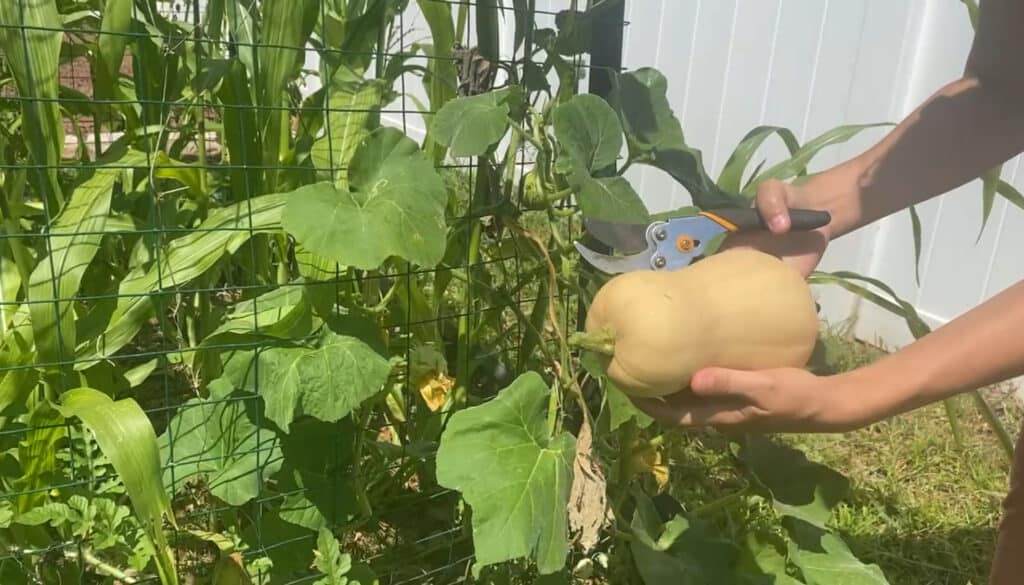
Winter squash, on the other hand, needs to be left on the vine until the skin hardens and the color deepens. A good rule of thumb is to wait for a strong, deep color change rather than using the traditional “fingernail test.” Once harvested, leave a long stem on the squash to prevent rot. Then let it cure in the sun for about a week. After curing, store your winter squash in a cool, dry place—somewhere like a pantry. This will allow them to last for several months, giving you a homegrown vegetable supply all winter long.
Squash might not get the attention it deserves, but its versatility, productivity, and ability to store for long periods make it an essential addition to any Florida garden. With the right care and timing, growing squash in Florida can be a rewarding experience, giving you fresh vegetables from spring through winter. Happy gardening, and enjoy your squash!