
Last Updated on April 16, 2026 by Homegrown Florida
Your garden might be working a lot harder than it has to. Companion planting is an easy and natural way to boost your harvest, improve plant health, and even manage pests without constantly fighting nature.
Most people think of companion planting as a way to deter pests, but that’s just one small part of it. In fact, I’ve found other forms of companion planting to be much more effective. So, let’s break it down—how to use companion planting to help with pests, improve soil nutrients, and even enhance plant growth.
This post may contain affiliate links. Read full disclosure here.
Table of Contents
Using Companion Planting for Pest Control
Pests are one of the biggest challenges in the garden, and many people turn to companion planting as a natural way to keep them away. But not all companion planting methods for pest control are equally effective. There are three main approaches: deterring pests, attracting beneficial predators, and trap cropping.
Deterring Pests with Strong-Smelling Plants
Certain plants release strong scents that mask the smell of their neighbors, making it harder for pests to find their favorite crops. Some of the best plants for this are onions, garlic, and leeks, all part of the allium family.
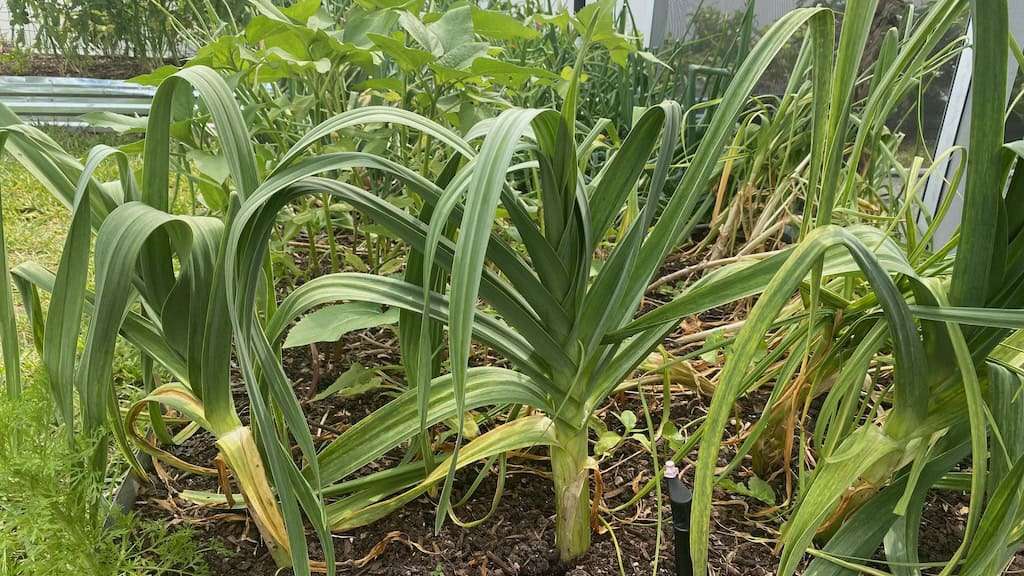
For example, if you plant green onions around celery, the scent of the onions can help confuse pests that would normally go after the celery. However, this only works well when the plants are about the same height. If you plant onions next to a tall tomato plant, the scent stays low to the ground while pests attack the higher foliage, making it far less effective.
Other strong-smelling companion plants include:
- Marigolds, especially Tangerine marigolds, to repel root-knot nematodes
- Mustard greens to deter soil pests
- Dill to help protect cabbage, broccoli, and other brassicas from cabbage moths
The key to making this method work is planting enough of the deterrent plant. A single onion next to your celery won’t make much of a difference, but surrounding the entire crop with onions or interplanting herbs throughout the bed will provide better protection.
Attracting Beneficial Predators
Instead of just trying to keep pests away, a more effective strategy is to bring in predatory insects that feed on them.

Flowers and herbs like borage, bee balm, cilantro, and dill attract predatory insects such as parasitic wasps, lacewings, and ladybugs. These beneficial bugs feed on aphids, caterpillars, and other common pests, keeping their populations under control without you having to intervene. One of my favorite ways to incorporate more herbs into my growing space is to use these vertical Greenstalk planters.
Another great way to encourage natural pest control is by attracting birds to your garden. Birds love to eat pests like pickleworms and tomato hornworms, so by creating a bird-friendly environment, you can reduce infestations naturally.
Trap Cropping: Sacrificing One Plant to Save the Rest
Trap cropping is one of the most underrated but powerful companion planting techniques. Instead of trying to repel pests, you give them something they love even more to keep them away from your main crops.
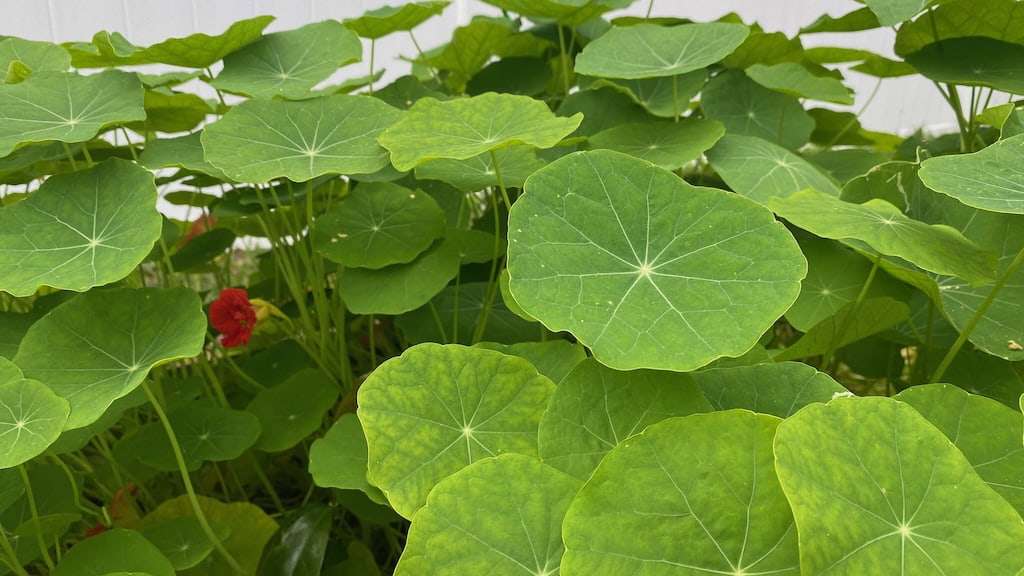
Chamomile is an excellent trap crop for aphids. Aphids love this plant and will infest it while leaving nearby vegetables alone. Other good trap crops include:
- Radishes to attract beetles, slugs, and caterpillars
- Nasturtiums to draw aphids away from tomatoes and beans
- Blue Hubbard squash to lure squash vine borers and squash bugs away from your other squash plants
If you use trap crops, keep in mind that once the plant is overrun with pests, you need to remove it from the garden before the pests migrate to other plants. The best way to dispose of a heavily infested trap crop is to either burn it (if allowed in your area) or seal it in a plastic bag and throw it in the trash. For more tips on pest management, check out this post next.
Companion Planting for Better Soil Health
Companion planting isn’t just about pests—it’s also a great way to improve soil nutrients naturally, reducing your need for fertilizers.
Nitrogen-Fixing Plants
Legumes such as beans, peas, cowpeas, and sun hemp are nitrogen-fixing plants. They work with bacteria in their roots to take nitrogen from the air and store it in the soil, making it available for other plants to use.
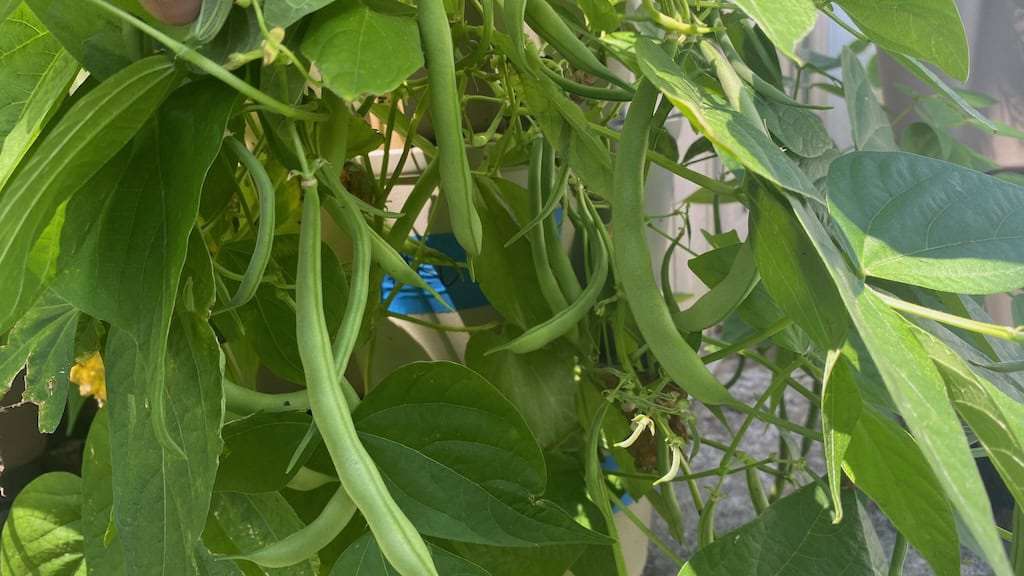
This is the idea behind the Three Sisters planting method, which pairs corn, squash, and beans. The corn provides support for climbing beans, the squash shades the soil to prevent weeds, and the beans fix nitrogen to feed the corn and squash.
If you have nitrogen-hungry plants like leafy greens, onions, or corn, planting legumes nearby can help naturally boost soil fertility.
Phosphorus-Boosting Plants
If your soil is low in phosphorus (which is essential for fruiting plants), borage is an excellent companion plant. It helps draw phosphorus up from deep in the soil, making it available for nearby plants like tomatoes, peppers, and squash.
Companion Planting for Fruit Trees
Companion planting doesn’t just benefit vegetables—it’s also great for fruit trees.

One of the best companion plants for fruit trees is Tangerine marigolds, which help control root-knot nematodes. These pests can severely damage fruit tree roots, especially when grown in sandy soil like we have in Florida.
Marigolds also help regulate soil temperature. In summer, they shade the roots and reduce evaporation, while in winter, they trap warmth to protect against cold snaps.
Other good companion plants for fruit trees include:
- Nasturtiums to deter aphids
- Comfrey to improve soil and provide mulch
- Chives to prevent fungal diseases
By planting these around your fruit trees, you create a healthier, more resilient orchard without relying on synthetic pesticides or fertilizers.
Easy Companion Plant Pairings That Actually Make Sense
Companion planting does not have to be complicated. You do not need to memorize a giant list of every plant that likes every other plant. In my garden, I keep it much simpler than that.
A good basic rule is this: if I want to protect a crop, I usually pair it with onions, herbs, flowers, or radishes. That covers most of what I need.
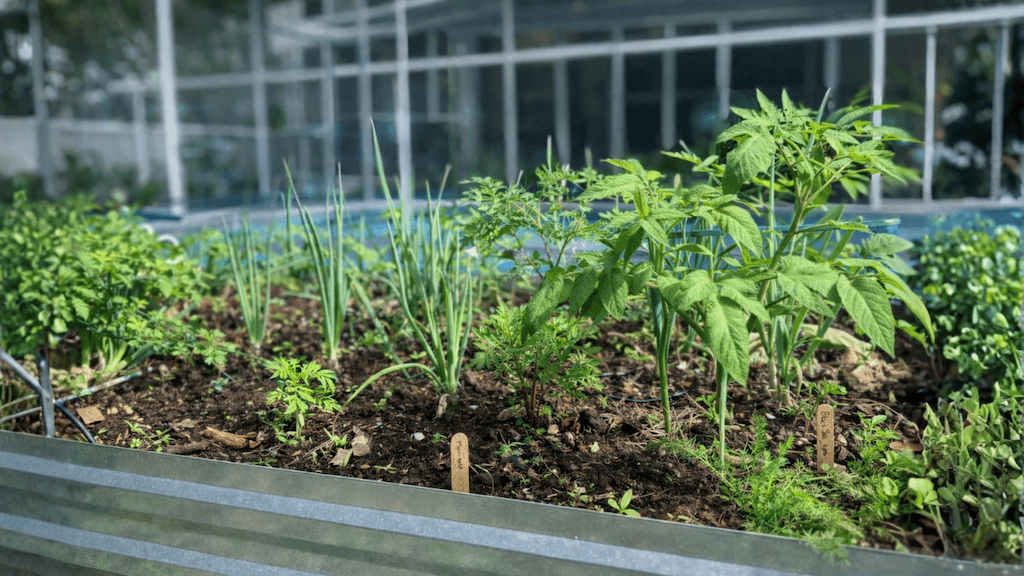
Tomatoes with Marigolds and Onions
This is one of my favorite combinations, especially in Florida.
Tomatoes, peppers, potatoes, and eggplant are all part of the nightshade family, and they tend to have issues with root-knot nematodes in sandy soil. That is where French marigolds really shine. I like planting them close to tomatoes because they help reduce root-knot nematode pressure, and they also seem to help with some of the smaller pests like aphids and spider mites.
I also love planting onions near tomatoes. Green onions, garlic, chives, leeks, walking onions, really anything in the allium family works well. They have a strong scent that helps confuse pests that are looking for the tomatoes.
Carrots with Garlic
Garlic and carrots are a really good pairing because they help each other without competing too much.
Garlic helps deter pests that would otherwise bother the carrots, and the two crops grow differently enough underground that they can usually share space well. Carrots grow straight down, while garlic stays more toward the top and bulbs out.
They also have different feeding needs, which sounds like it would be a problem, but it usually is not. Garlic likes more nitrogen early on, while carrots really do not need much. In a mixed bed, I usually just feed lightly and let each crop take what it needs.
Potatoes with Flowers
Potatoes pair really well with flowers like dahlias and marigolds.
The flowers help attract pollinators and beneficial insects, which in turn helps reduce pest pressure from things like aphids and beetles. This is one of those combinations where you are not trying to repel every pest. You are trying to create balance in the bed so the pests do not completely take over.
The only thing to think about is that dahlias and potatoes both make tubers, so if they are planted too close together, harvesting one may disturb the other. I usually treat the flowers as a seasonal helper if needed.
Squash with Beans
This is one of the classic combinations for a reason.
Beans help push nitrogen into the soil, and squash benefits from that. At the same time, squash spreads out and shades the soil, which helps keep the root zone cooler and acts a bit like a living mulch.
This is part of the old Three Sisters method, which usually includes corn too. Even if you skip the corn, beans and squash still make a great pairing.
Cabbage with Peas, Chamomile, and Onions
This is a really nice layered combination.
Bush peas can help support the cabbage by contributing nitrogen. Chamomile can help attract beneficial insects and also acts as a bit of a trap plant for aphids. Onions help confuse pests like cabbage moths.
So instead of relying on one single magic companion plant, you are building a little system around the cabbage.
That is really how I think about companion planting now, less as one perfect pair, and more like a small support team around the crop I care about.
My Simplest Companion Planting Strategy
If you do not want to memorize a chart, here is the easiest version.
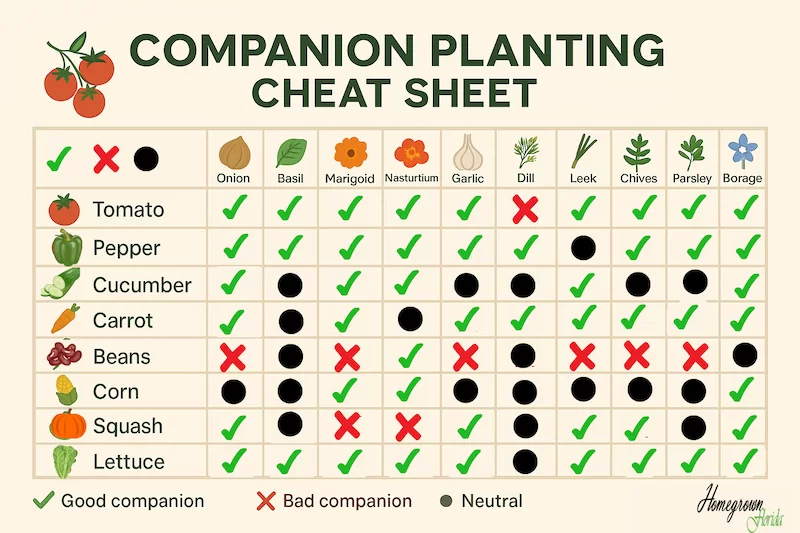
Plant alliums like onions, garlic, chives, or leeks near crops that tend to get above-ground pests.
Plant flowers like marigolds, dahlias, chamomile, or nasturtiums anywhere you want to attract beneficial insects or create a trap crop.
Plant herbs like basil, parsley, dill, cilantro, oregano, or borage throughout the garden to bring scent, flowers, and more insect activity.
And if you grow squash, cucumbers, or melons, tuck in some radishes nearby. I do this often even though I do not really care about harvesting the radish itself. I grow it because the plant and flower seem to help around squash beds.
That is really it. You do not need to overthink companion planting. Start with onions, herbs, flowers, and radishes, and you will already be doing more than enough to see the benefits.
Do Certain Plants Harm Each Other?
A common concern with companion planting is whether some plants inhibit each other’s growth. While this does happen in some cases, most plants grow just fine together as long as they have enough space and resources.

One well-known example is tomatoes and potatoes—both attract the same diseases, so planting them together increases the risk of losing both crops.
Another example is sunflowers, which produce a chemical in their roots that inhibits nearby plant growth. However, this only affects plants within about 12 inches of the sunflower’s base, so as long as you plant other crops a little farther away, you won’t have issues.
To avoid potential plant conflicts, a simple trick is to plant in groups of three—for example, tomatoes with basil and onions, or beans with squash and corn. This ensures no two plants are competing too much while still providing the benefits of companion planting.
Making the Most of Companion Planting
Companion planting isn’t a one-size-fits-all solution, but when done right, it can make your garden more productive, pest-resistant, and self-sustaining.
If you’re new to companion planting, start small. Try interplanting herbs with vegetables, adding pollinator-attracting flowers, or experimenting with trap crops to see what works best in your garden. Over time, you’ll find the combinations that help you grow healthier plants with less effort. Happy gardening!