Last Updated on November 28, 2025 by Homegrown Florida
Winter in Florida is never boring. Some years we sail through without a single frost. Other years we get a cold snap that drops into the low thirties and reminds us that yes, Florida can, in fact, surprise us. I garden just north of Tampa in zone 9B, and I typically see one to three frosts every winter. It is enough to do real damage if I do not pay attention, but not enough to justify spending hours protecting every single plant I own.
This guide walks you through exactly how I decide what to protect, when to protect it, and the methods I use in my own backyard for Florida frost protection. Frost in Florida is different from frost up north, and once you understand the patterns here, protecting your garden becomes simple.
Table of Contents
This post may contain affiliate links. Read full disclosure here.
Which Plants Need Florida Frost Protection (And When)
This is the biggest point of confusion for Florida gardeners. Not every cold morning requires a full garden panic. The temperature matters, the plant type matters, and so does how long the cold actually lasts.
Tropical Plants
When it comes to tropical plants like Avocado, banana, turmeric, ginger, papaya… I do not cover these until we hit 32°. If you do not want to risk it, start at 35°. Young tropicals need more help than mature ones.
Warm and Hot Season Crops
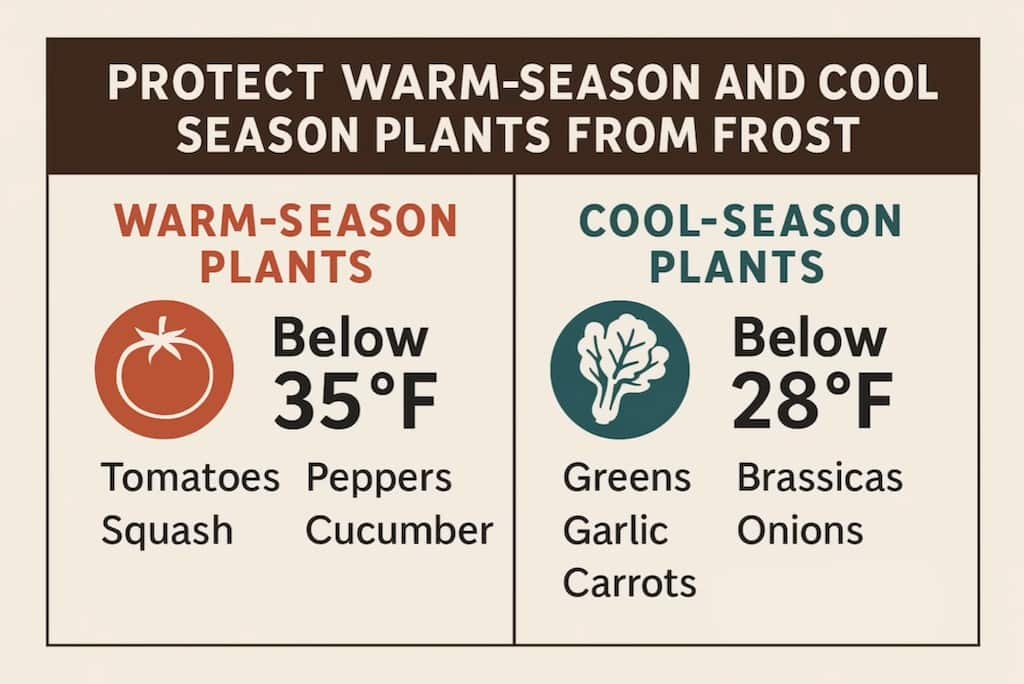
For warm and hot weather crops like tomatoes, peppers, squash, cucumbers, beans, okra, eggplant, sweet potatoes, cowpeas, corn, these handle cool nights better than people think.
- Some gardeners start covering at 40°.
- I wait until 35°.
There is always a little risk because forecasts are not perfect. If it says 35°, you might wake up to 31°.
Cold Weather Crops
When it comes to cold hardy veggies like Brassicas, leafy greens, carrots, onions, garlic, turnips, rutabagas, and radishes; these are incredibly tough.
I have had them handle 26°, uncovered, for a couple of hours two nights in a row. Leaves may get a little damaged, but the plants recover completely. Some even taste better after a frost, including:
- Kale
- Celery
- Brussels sprouts
- Carrots
If you are expecting snow or deep freezes into the mid to low 20s, protection is a good idea. It’s best to provide a light frost cloth or sheets to protect them.
Peas and Potatoes
These deserve their own category since they technically are cold hardy but just not as much as the brassica crops mentioned above.
- Peas: tops can freeze and sustain damage at temps in the low 30s so succession plant as soon as you see low temps in the forcast or provide a cove for them during the coldest nights.
- Potatoes: the foliage may die if temps dip below 30 but the tubers should remain alive. When temperatures warm back up, they should resprout in a few weeks and usually produce just fine.
How I Decide When To Protect Plants
I ask myself one question: “Do I care enough about this plant to put in the effort tonight?”
If the answer is yes, I protect it. If the answer is no, I let it go and harvest whatever I can before the frost hits.
The reason is simple. You only get a few frosts each year in Florida, and not every plant is worth saving. Sometimes letting something finish its season naturally makes more sense.
How To Protect Warm Season Crops
Here are the protection methods I actually use in my garden.
Frost Blankets
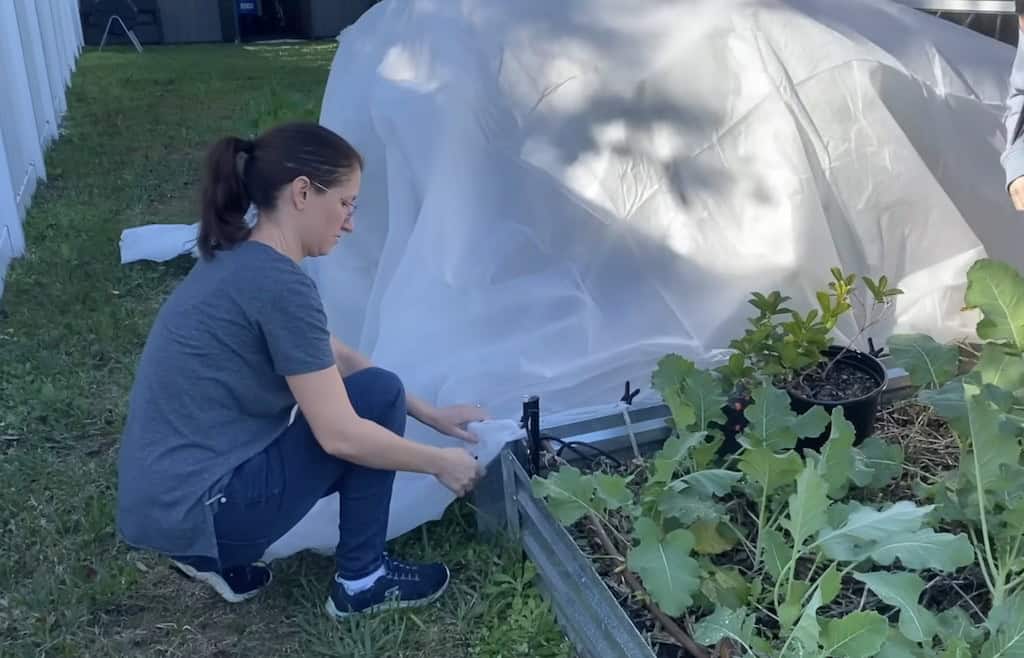
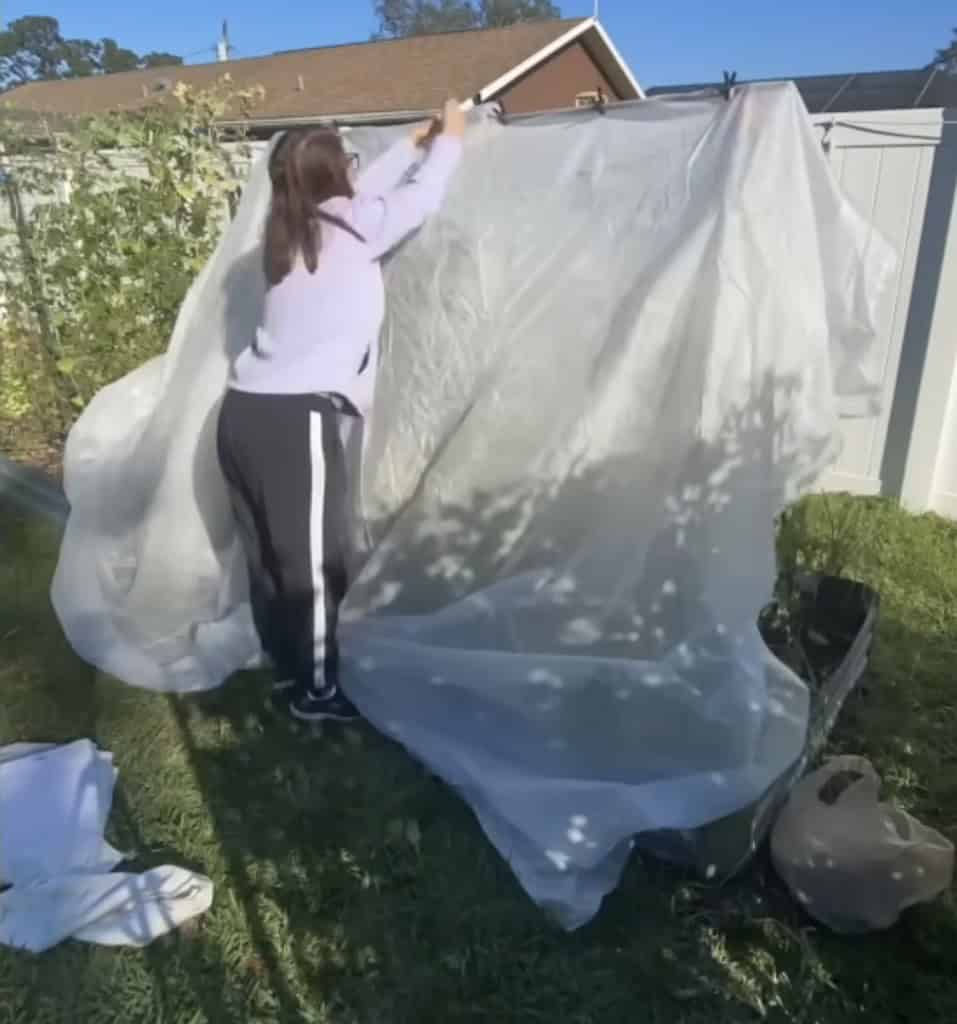
The brand I like best for frost blankets is called Planket. I’ve used a lot of different kinds and this one was the thickest that provided the best protection. If you want to skip the forst cloth, sheets and blankets also work. Avoid plastic since it can overheat the plants underneath and if touching the plant leaves, it can still cause frost burns.
The important part is how you apply frost protection:
- Cover all the way to the ground with no gaps
- Secure the edges with clips, sandbags, bricks, or pavers to reduce drafts
- Do not drape loosely since cold drafts will ruin your whole setup
Heat radiates from the ground, so anything short of a full “tent” is not going to work.
Incandescent Christmas Lights
This is a fun trick that has worked very well for me in the past. decorate your frost sensitive plants with old school Christmas lights but be sure to only use incandescent bulbs and not LEDs since they do not put off any heat. You can set these up at the beginning of the season and just plug them in when the time comes. These help best when temperatures drop below 32°. Make sure to drape them inside the covering, focusing on the outer canopy and the top.
Hand Warmers (new experiment)
This was a new suggestions from a viewer which is using hand warmers. I bought a pack to test this year and so far it seems to help. Depending on the size of the warmers, place 2-3 in a pan or plate at the base of the plant, under the covering. I don’t believe this would help without the other protections like sheet and lights but it’s another option for those very frigid nights.
How To Protect Cold Weather Crops
Most of the time… you don’t.
If your temperatures are in the upper 20s for just a few hours, brassicas and leafy greens take it like champs. A little leaf burn is normal but they should recover and produce with no problems. If temperatures drop into the low 20s or you see snow (hello, Pensacola), cover them.
Before A Frost: What To Harvest
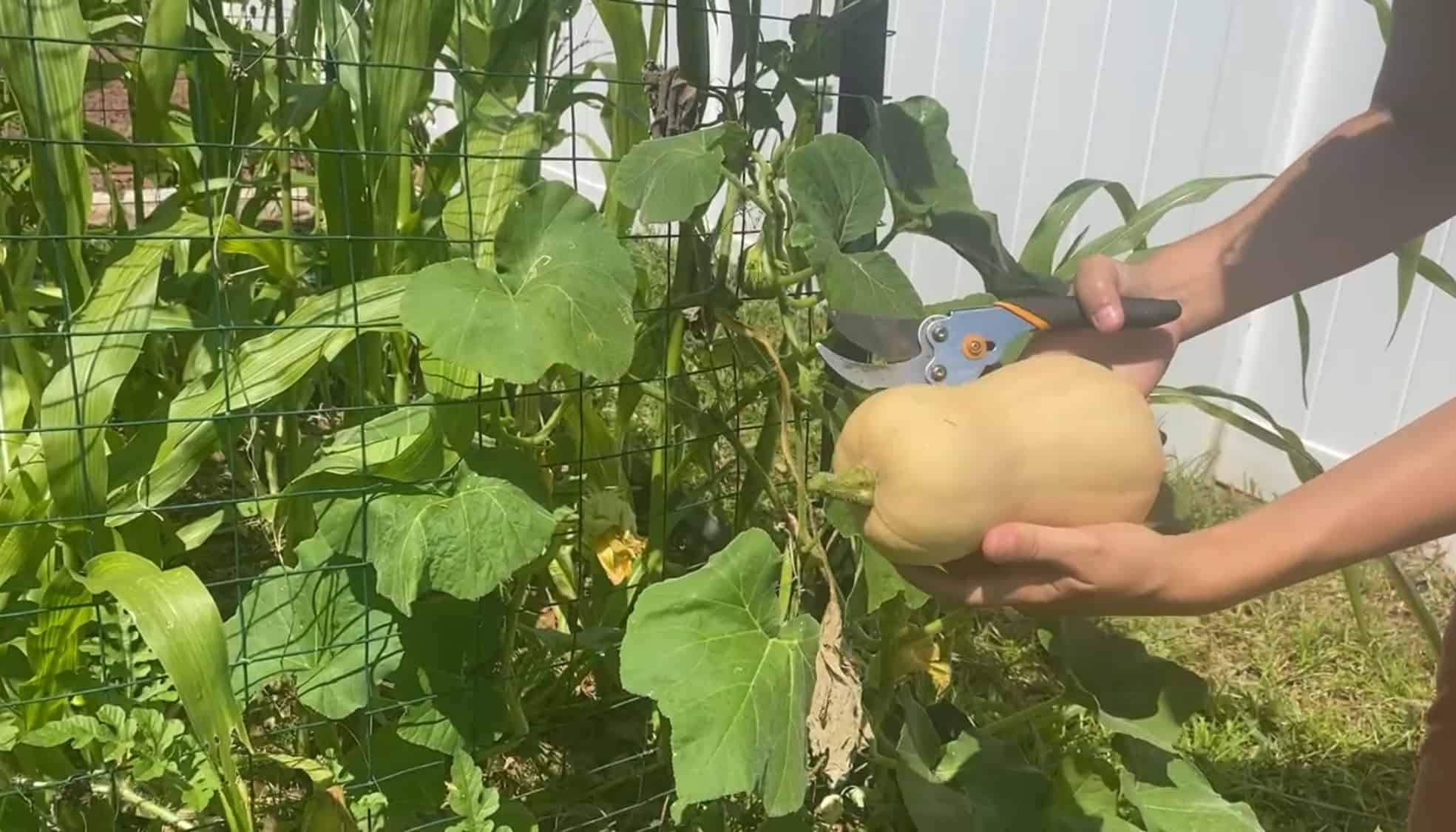
Even with all the protections in place, I always recommend that you harvest as much as possible before a frost just in case. This step saves so much heartbreak.
Harvest anything that:
- is nearly ripe
- has full size but is still green
- might not survive the night
That means it’s best to pull:
- partially colored winter squash
- green but full size tomatoes
- green peppers
- small squash
Tomatoes and squash ripen beautifully indoors on a counter or windowsill. They do not ripen well after frost damage. The texture gets mushy and the flavor gets weird.
Protecting Potted Plants

Containers lose heat fast. Much faster than plants in the ground or raised bed so they always need protection.
It’s best to move pots and containers to:
- a shed
- a covered patio
- a garage
- touching the house
If you don’t have a covered area to move your potted plants, move them to the east or west side of your house and make sure the plant leaves are physically touching the house. Many Florida homes are made of concrete block which radiates warmth for hours and makes a huge difference in protecting the plant from cold.
Do not leave potted plants in enclosed spaces for too long if the next day is shooting back into the 80s. Florida swings are no joke, and the rapid hot-cold-hot cycle stresses them out. Only bring them out of their protected space once the temps raise above 50 degrees.
Protecting Fruit Trees
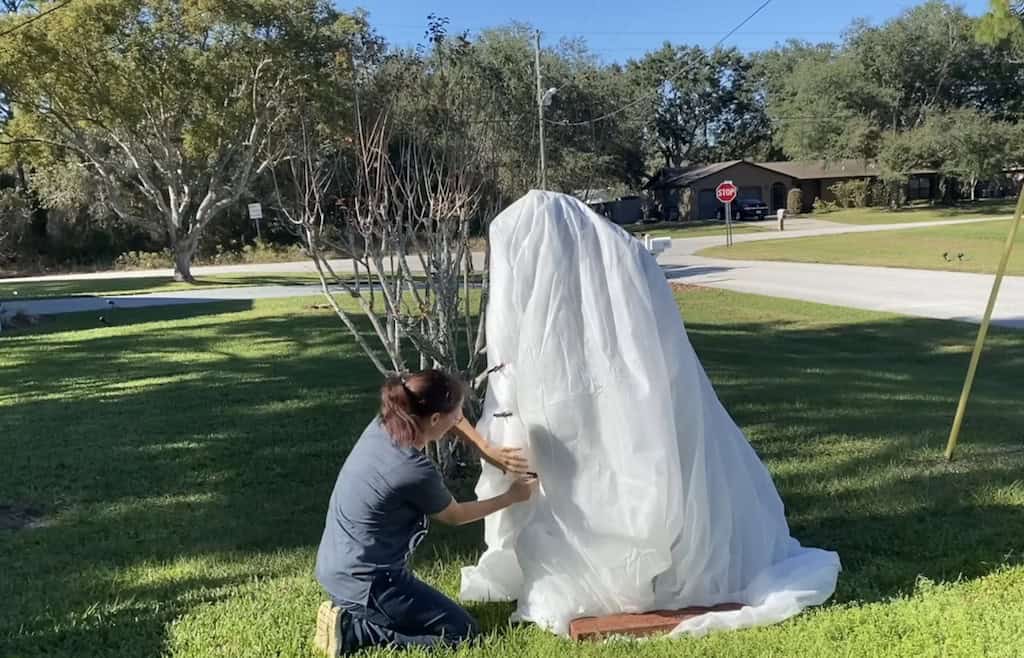
I place fruit trees into two categories to determine the protection needed. For traditional fruit trees that require chill hours to fruit, no protection is needed. It’s normal for them to lose their leaves after a cold snap. This is normal and expected. This includes trees like apples, peaches, plums, and berries.
For tropical fruit trees, I only protect the trees if they have been planted in the ground less than 2 years. Anything over 3 years in the ground, I no longer provide Florida frost protection. Make sure you are only growing varieties that are rated for your planting zone to avoid any unesseary heartbreak.
How to protect younger trees:
- Cover the entire canopy.
- Bring the cover all the way to the ground.
- Secure the edges completely.
If your tree is too big to cover:
- Cover the ground under the canopy.
- Wrap the trunk up past the graft line.
- Protect at least the lower canopy.
My avocado lived through a significant freeze this way. It looked rough but recovered beautifully the following season.
What About Seedlings?
Cool weather seedlings can be tucked directly into the ground or moved inside for a night. Warm weather seedlings, tropical seedlings, and young potted trees must come inside or in a protected area. They cannot handle temperatures in the low 30s at all. Trays are easy to move so it’s best to just bring them in overnight and take them back out as soon as temps rise above 50°.
Final Thoughts
Florida frost protection is less about panicking and more about knowing what actually needs help. Once you understand temperature thresholds and which plants are naturally tough, winter becomes a lot easier to manage. A couple freezes won’t ruin your garden. You just need a plan and a few simple tools.