Last Updated on October 30, 2025 by Homegrown Florida
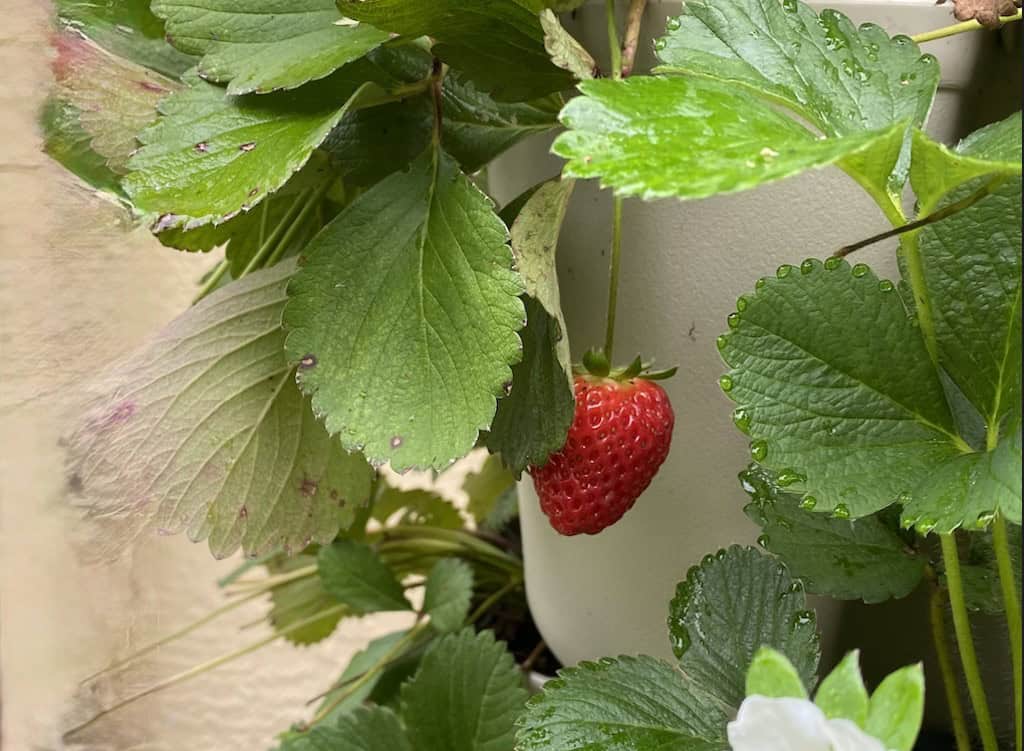
For years, bare root strawberries have given me a hard time. No matter how carefully I planted or hydrated them, the results were always disappointing, especially in Florida’s warm, humid climate. After repeating the same struggle season after season, I finally decided to make a change. This year, I switched from bare roots to strawberry plugs. And after growing both, I can confidently say plugs are the better option for Florida gardeners who want less frustration and better harvests.
Table of Contents
This post may contain affiliate links. Read full disclosure here.
Preparing the Soil
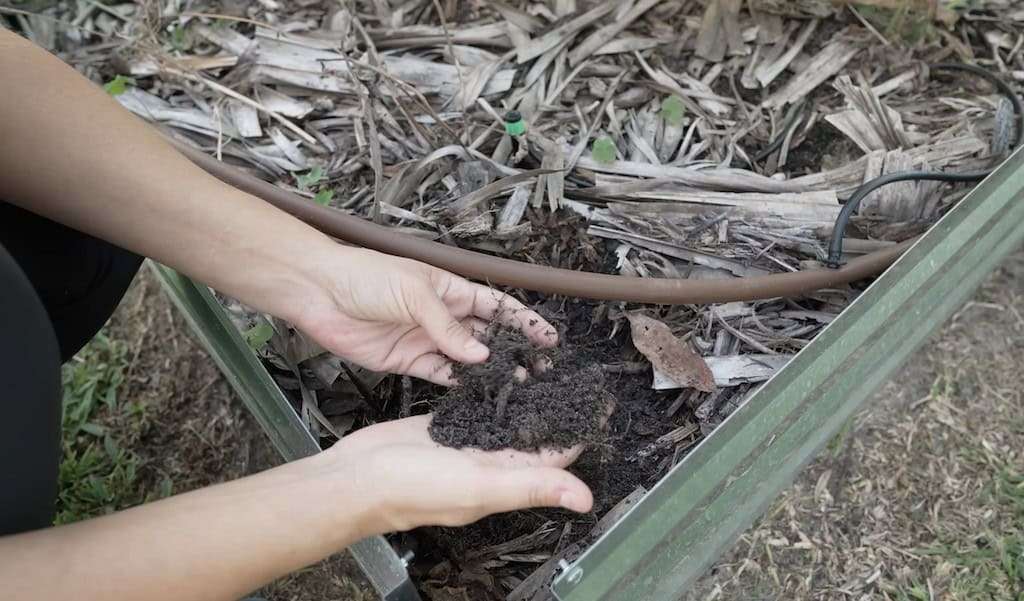
Before planting, I turned to my Homegrown Florida Gardening Guide for a quick soil refresh. Strawberries like slightly acidic, well-draining soil that stays evenly moist but not soggy. I reused some of my older potting mix and added four key ingredients:
- Peat moss for moisture retention and gentle acidity
- Compost for nutrients
- Fertilizer for long-term feeding
- Perlite for drainage
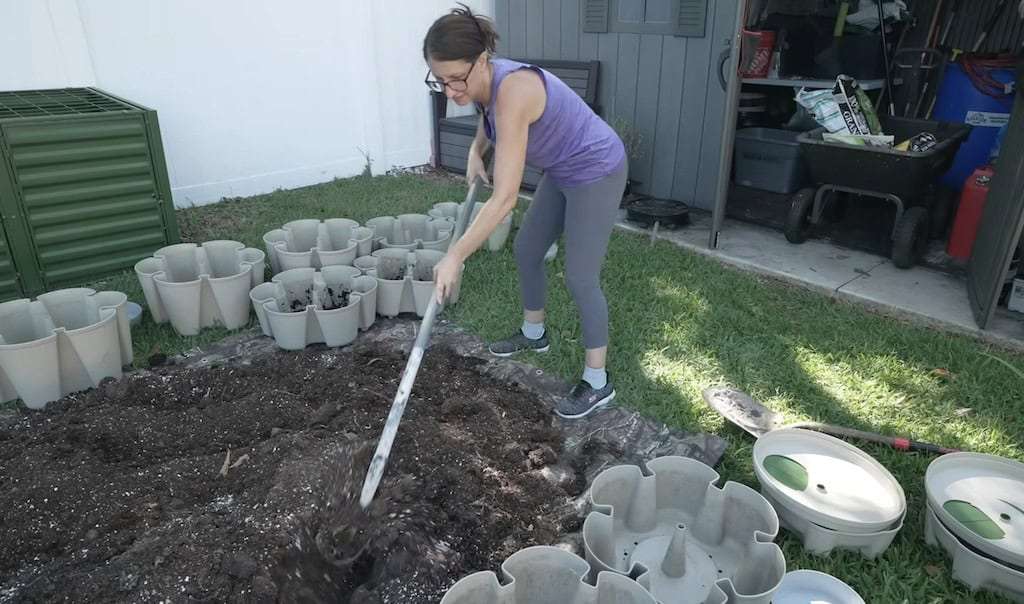
BerryTone fertilizer is ideal, but I substituted with NutriRich and let the peat moss handle the acidity. To prepare the mix, I combined everything in a large pile, stirred in extra perlite for drainage, and then filled my GreenStalk planter.
Instead of blending compost evenly through the soil, I layered it right below where the roots of the strawberry plugs will sit. Since strawberries have shallow roots, this method keeps nutrients exactly where the plants can reach them. It’s the same trick that gave me an incredible harvest a few years ago.
The Case for Bare Roots
Let’s start with the good because bare roots do have some advantages.
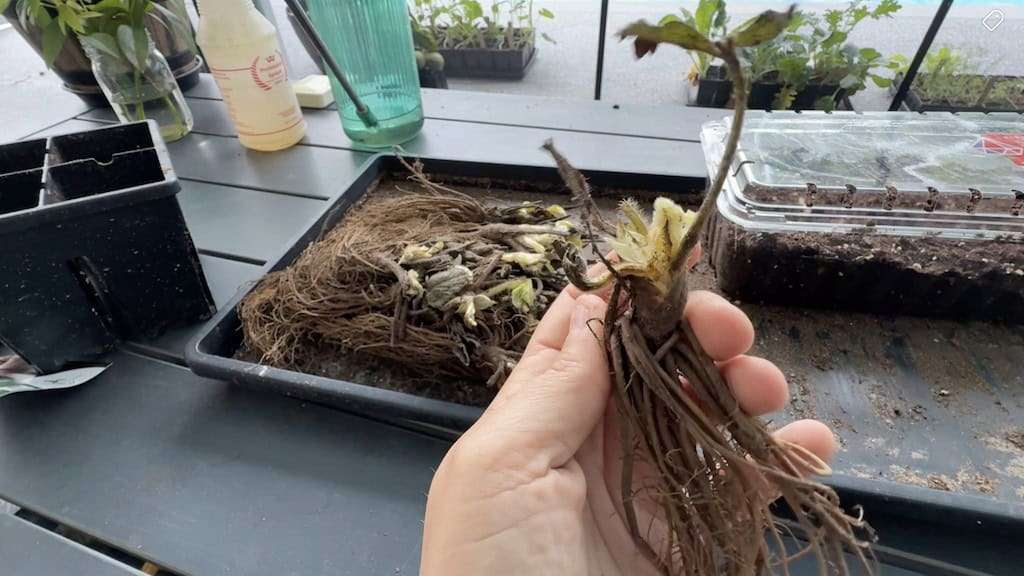
- Cost: They’re cheap. Usually about 50 cents per plant, compared to over a dollar for strawberry plugs.
- Variety: You’ll find the widest selection of types and suppliers. For Florida, look for early maturing, heat-tolerant, short-day varieties like Brilliance, Sweet Sensation, Festival, and Camarosa.
- Shipping: They can be shipped anywhere, stored briefly in the fridge, and don’t require immediate planting.
But that’s where the benefits end for me. In Florida’s heat, bare roots have the highest failure rate of all strawberry options. They’re dug up from cool climates, dried out, shipped across the country, and then “wake up” in 90° heat with high humidity. That’s a shock most of them can’t recover from.
Bare roots also have to be planted just right. Too deep and the crown rots; too shallow and the roots dry out. Even with experience, I still lose most of them each year. One season I ended up with just a single surviving plant from a $25 order which is definitely not the savings I was hoping for.
Hardening them off is another challenge that gardeners in northern states don’t usually face. Their mild fall temperatures help plants transition easily, but in Florida, our September and October heat can quickly fry tender bare roots before they’ve even adapted.
Why Strawberry Plugs Are Easier
This year, I switched to plugs and it was a completely different experience. Strawberry plugs are small, rooted starter plants that are usually propagated from runners. They already have leaves and roots, which means they skip several stressful stages that bare roots have to go through.
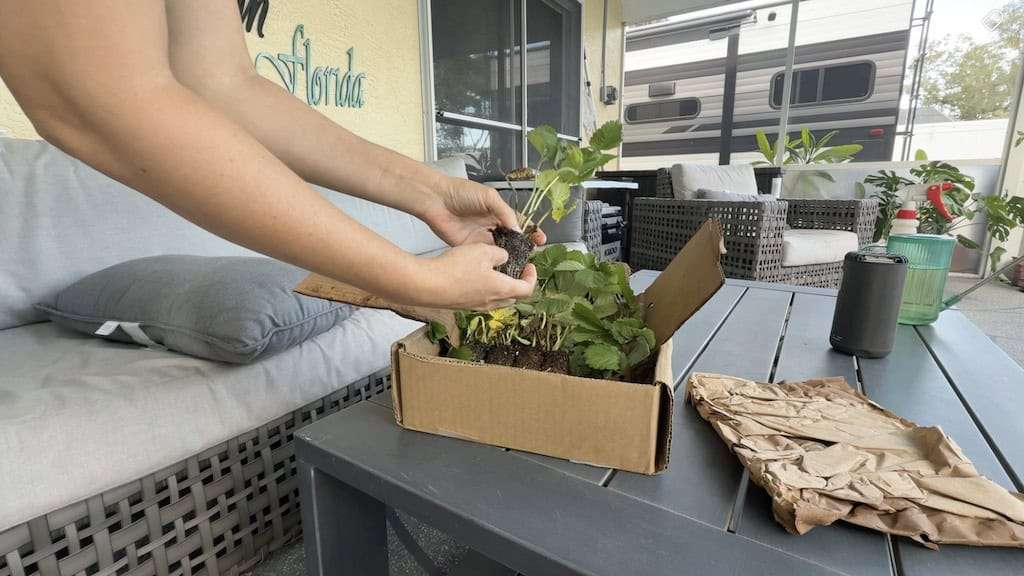
Advantages of strawberry plugs:
- They’re already growing and ready to take off once transplanted.
- They experience minimal transplant shock.
- They’re easy to plant at the right depth since the crown is already at the perfect spot on the plug.
- They fruit faster since they’re already established plants.
It’s almost impossible to plant a strawberry plug incorrectly. Set the plug into the soil so the top is even with the surface, gently firm the soil around it, and make sure the crown stays visible. That’s it. No guessing, no special soaking, no waiting for new roots to form.
I also noticed the plugs handled our heat much better. They didn’t wilt, and many already had runners forming when they arrived which is proof of how mature they were. These plants felt strong and resilient right from the start.
Where I Bought My Plugs
I bought strawberry plugs from Hoss and Ison’s Nursery and Vineyard, both located in Georgia. Shipping was fast, and the plants arrived in great condition; no damage, no wilting. Since Georgia’s climate is similar to Florida’s, these plugs didn’t need much hardening off.
The Camarosa plugs from Hoss looked perfect and are one of UF’s top recommendations for Florida gardens. They’re an early variety, similar to Brilliance but with better runner production. My Chandler plugs came from Ison’s, and they arrived with beautiful root systems and even a few double plants in the same cell. Both sources offered healthy, vigorous plants.
Cost and Variety Comparison
Here’s how the costs compare:
- Bare roots: ~$0.50 each
- Plugs: $1.25–$1.50 each
- Potted plants: $3–$10 each
At first glance, bare roots seem like the better deal. But once you factor in their high failure rate, the savings disappear. Even if you lose half your bare roots, which is common in Florida, plugs often end up costing the same or less per surviving plant.
The tradeoff is variety. Bare roots give you dozens of options, while strawberry plugs usually offer only a few choices per supplier. Still, if you find a nursery in your region, chances are the varieties they carry already perform well in your local climate. That’s more valuable than being able to pick from a long list of options that might not thrive in Florida’s warmth.
Planting in the GreenStalk
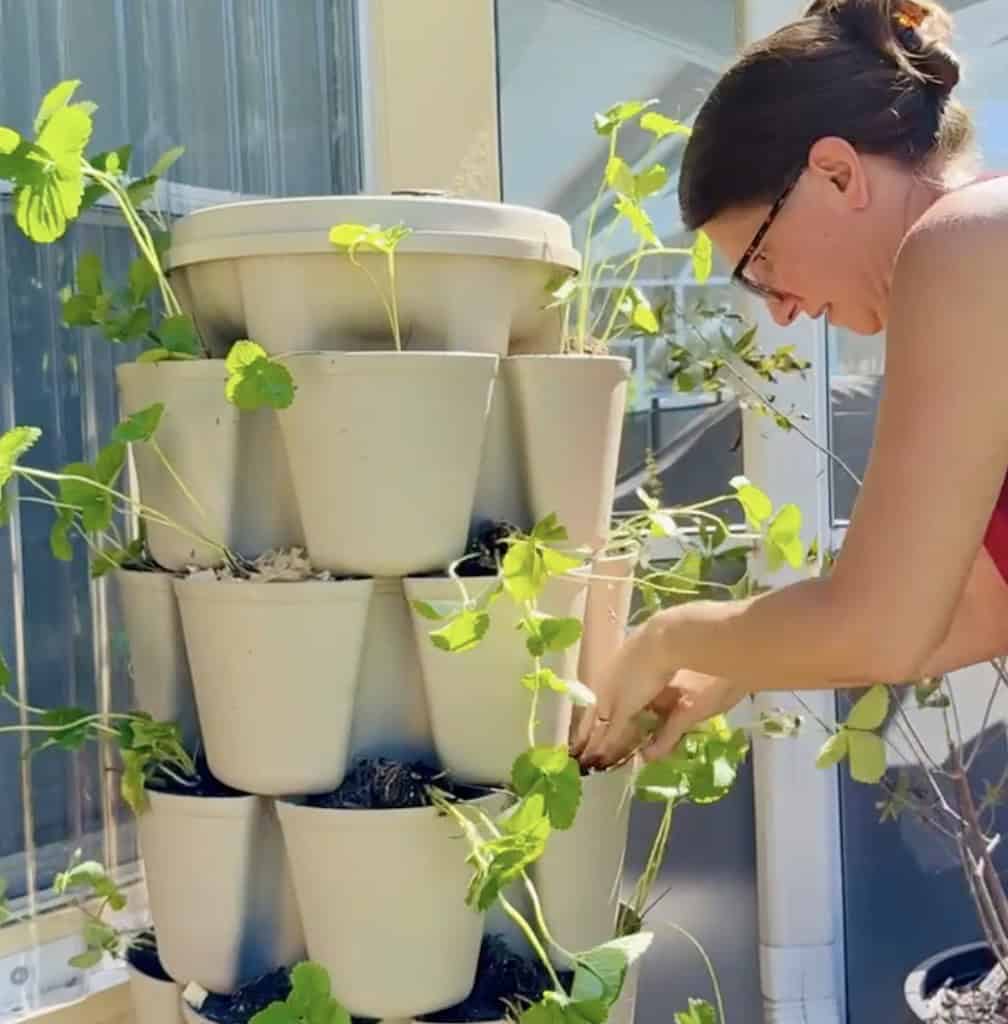
Once my soil mix was ready, I filled a seven-tier GreenStalk planter, my first time stacking it that high. Strawberries are lightweight, so the structure handled it easily. I started by layering soil, adding a scoop of compost in each pocket, and then planting one plug per pocket.
Each plug went in at soil level with its crown slightly visible. After planting, I added mulch around each plant to retain moisture and keep the crown dry. Then I watered gently from the top to help the compost settle around the roots.
By the end, I had about 42 strawberry plugs in one tower, using only a few square feet of space. For anyone short on garden room, this setup is hard to beat.
How Many Plants You Really Need
If you’re new to growing strawberries, plan for about 30 plants per person for steady harvests through the season. That’s enough for fresh eating, desserts, and a few small batches of jam.
Last year I grew 30 plants total, and while it was plenty for fresh fruit, it wasn’t enough for preserving. With two seven-tier towers, I’ll have closer to 80 plants this season with finally enough to eat fresh and make several jars of jam.
The Downsides of Plugs
Plugs aren’t perfect. They do cost more upfront, and they need to be planted soon after arriving. Unlike bare roots, you can’t leave them sitting in the fridge or shade for a week. These are living plants that outgrow their small cells quickly, so you’ll want your containers or beds ready when they arrive.
You’ll also have fewer variety choices, especially if you order in small quantities. Some suppliers sell a minimum of 50 plugs, which might be more than you need unless you’re filling multiple planters or can share with a friend or neighbor. But in exchange for fewer options, you get plants that are already adapted to growing conditions similar to yours.
Final Thoughts
After years of trial and error, the verdict is clear: plugs outperform bare roots in Florida. They cost a little more, but they transplant easily, grow faster, and are far more likely to survive the heat and humidity of early fall. Bare roots might still be a good option for cooler climates, but here, the success rate just isn’t worth the effort.
If you’re planning to grow strawberries this season, skip the bare roots and go with plugs instead. Prepare your soil with peat, compost, perlite, and fertilizer, and focus on Florida-friendly varieties like Camarosa, Brilliance, Chandler, and Sweet Sensation.
With healthy plugs, you’ll have a harvest much sooner and far less frustration along the way. For more details on Florida strawberry growing, you’ll find a full chapter inside my Homegrown Florida Gardening Guide.