Last Updated on October 22, 2026 by Homegrown Florida
One of the biggest misconceptions about growing fruit is that you need a huge yard. You really don’t. I grow a lot of container fruit trees, and some of them can get enormous if you let them. But there are also plenty of fruits that can be kept surprisingly small through variety selection, pruning, and container growing. Some can even spend their entire lives in pots and still produce a really good harvest.
That’s great news if you have a small backyard or patio. It’s also useful if you live somewhere that’s too cold to grow a particular fruit outdoors year-round because a container gives you the option to move the plant somewhere protected during winter.
I’ve grown all kinds of fruit in containers here in Florida, and some definitely perform better than others. So these aren’t just fruits that will technically survive in a pot. I’m looking for plants that can actually grow well and, with the right conditions, give you fruit.
Here are 11 of my favorites.
Table of Contents
This post may contain affiliate links. Read full disclosure here.
What Makes a Fruit Tree Good for Container Growing?
There are a few things that make some fruit trees much better container candidates than others. The first is naturally compact growth. If you start with a dwarf or semi-dwarf variety, you’re already making your life easier.
The second is how well the tree responds to pruning. Some fruit trees can be pruned pretty aggressively without missing a beat. That’s important because you’re trying to keep the canopy proportional to the root system contained inside the pot.
Growth rate matters too. A naturally slow-growing tree may eventually become large in the ground, but it can spend many years happily growing in a container. And finally, there’s the most important question:
Will it actually fruit?
I’ve grown plants that look perfectly happy in containers but never produce because their roots don’t have enough room. A beautiful tropical plant on the patio is great, but if I’m growing a fruit plant, eventually I want some fruit.
How Container Size and Pruning Keep Fruit Trees Small
Don’t assume that every fruit tree needs an enormous pot from day one.
Starting a small tree in a huge container can actually make watering more difficult because all that unused soil can stay wet for a long time. I generally increase container size as the tree grows.
Some of the fruits on this list can live in surprisingly small pots. Others may eventually need 20, 30, or even 40 gallons.
Pruning is the other half of the equation. When you reduce the canopy, you’re also reducing how much root system the tree needs to support. That’s one of the reasons a tree that could become enormous in the ground can sometimes remain manageable in a container for years.
So don’t be afraid to prune. When you’re growing fruit in a small space, you’re not trying to see how large you can make the tree. You’re trying to keep it at a size where you can manage it and still get fruit.
1. Figs
Figs are probably one of the easiest fruit trees to grow in a container. Depending on the variety, figs can grow outdoors in roughly zones 7 through 10. Gardeners in colder areas can still grow them, but container growing gives you the ability to move the plant somewhere protected during winter.
The really surprising part is how little space they need. You can grow a fig tree in something as small as a 5-gallon container.
Why Figs Grow So Well in Containers
Figs tolerate having their roots confined better than many fruit trees, and they respond incredibly well to pruning.
If you’ve never pruned a fig before, you may be shocked by how aggressive you can be. I can cut mine way back, leaving just a few lower branches, and it comes right back. They are determined little trees.
That makes it easy to control both the height and width of the plant. Keeping the top smaller also helps keep the root system manageable, which is exactly what we want when we’re growing in containers. If you have very little space but want to start growing fruit, figs would be high on my list.
2. Mulberries
Mulberries are another great option, but variety selection matters tremendously.

There are red, white, and black mulberries, along with many different varieties and hybrids. Depending on the type, mulberries can grow across an enormous range of climates, roughly zones 4 through 11. But some mulberry trees get huge. So don’t walk into a nursery, grab the first mulberry you see, and assume you’ll be able to keep it in a little patio pot forever.
Choose a Dwarf or Naturally Smaller Mulberry Container Fruit Variety
If space is limited, look specifically for a dwarf or semi-dwarf variety. I grow Thai Dwarf and World’s Best. Both can be maintained at a much more manageable size than some of the enormous mulberries you may have seen. Thai Dwarf is probably one of the more popular choices for warm-climate gardeners who want a smaller mulberry.
Mulberries also tolerate pruning very well, so you can continually control their size.
Another thing to research before choosing one is flavor. Different mulberries can have noticeably different flavor profiles, so size isn’t the only consideration. And if you’re considering a white mulberry, be aware that white mulberry can be invasive in parts of the United States. The varieties I grow are hybrids, but this is still something I would research for your particular area before planting one.
3. Loquats
Loquat is one of those fruits I wish I had discovered sooner. Mine is a Yehuda loquat, and I planted it in the ground. It took about three years before I finally got fruit. Then I tasted it.
Where have you been all my life?
Mine is now allowed to get pretty large because I want a lot of loquats. But you absolutely do not have to let yours become a giant tree. Loquats respond well to pruning, and cutting back the top can keep the tree much more compact for a small garden or container.
The Problem With Winter Flowering in Colder Climates
There’s one important catch with loquats. The tree itself can handle colder conditions than the flowers and developing fruit.
Loquats flower and set fruit during the coolest part of our year. Mine is usually one of the first fruit trees I harvest, often around December or January. That means the tree may be perfectly capable of surviving your winter while the flowers or young fruit are damaged by freezing temperatures.
If you’re toward the colder end of its growing range, keeping a loquat in a container gives you the ability to protect it while it’s flowering and fruiting. For gardeners in warmer climates, especially around zones 9 and 10, you have much more flexibility.
4. Lemons, Limes, and Calamondins
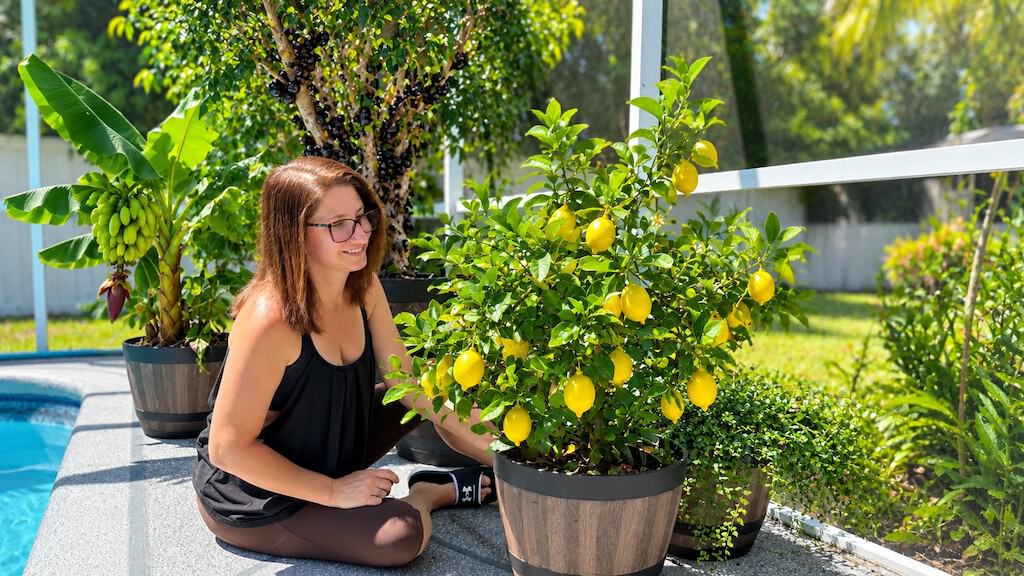
If you want citrus in a container, lemons, limes, and calamondins are fantastic places to start. These are naturally warm-climate trees, generally happiest outdoors in zones 9 through 11, but container growing allows gardeners in much colder climates to grow them too. Move them outside when conditions are warm and bring them into a protected location when freezing weather arrives.

Why Citrus Is So Well Suited to Containers
One of the things I love about citrus is that it’s evergreen. If you’re bringing a citrus tree inside or putting it into a greenhouse for winter, you’re not staring at a bunch of bare sticks for several months. You still have a beautiful green tree.
They’re also capable of producing a surprising amount of fruit in containers. Small trees can start in pots around 4 or 5 gallons, but as they mature, you’ll want to move them into larger containers. Eventually, I prefer something closer to 20 gallons for many of mine.
You don’t need to jump directly to that size. Pot them up gradually as they grow. And yes, a relatively small citrus tree can produce a ridiculous amount of fruit when it’s happy.
5. Jaboticaba
Jaboticaba is probably the strangest fruit tree on this list. It’s tropical, generally suited to outdoor growing around zones 9 through 11, and in nature it can eventually become a fairly substantial tree.
So why am I recommending it for a container? Because it grows so slowly.
Why This Surprisingly Large Tree Works in a Container
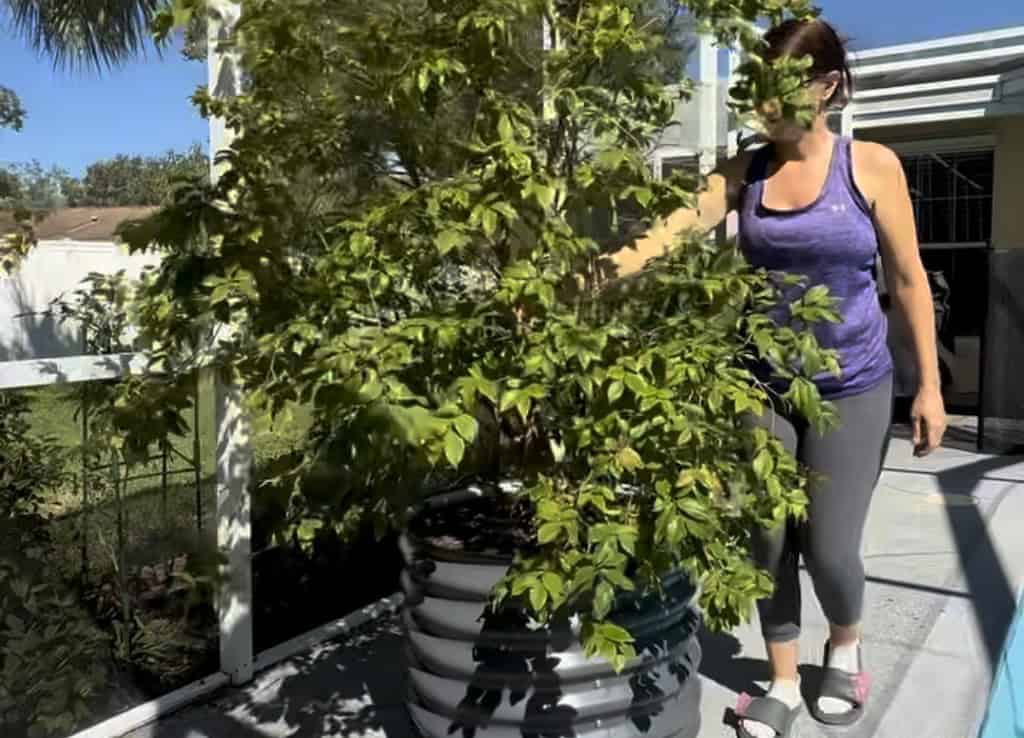
I have jaboticaba trees that are around two years old and still look like little ferns. If you’re used to growing fruit trees, a two-year-old tree usually looks like a tree. Not jaboticaba. It takes its time.
That incredibly slow growth is exactly what makes it so useful for container growing. It doesn’t immediately overwhelm the space you’ve given it. The downside is that you’re going to need some patience.
Jaboticaba can take approximately five to eight years to fruit, depending on the variety and growing conditions. This isn’t the fruit tree you buy because you want dessert next summer.
What Jaboticaba Fruit Tastes Like
Once it fruits, though, this is a really unique tree. The fruit grows directly along the trunk rather than hanging from the ends of branches like most of the fruits we’re familiar with. They look a little like large dark grapes. The inside has a sweet, jelly-like texture that reminds me of a grape, while the skin provides more tartness.
It’s unusual, delicious, and one of my favorite tropical fruit trees. Just don’t buy one if you’re impatient.
6. Mandarins and Oranges
Mandarins and oranges can also be grown successfully in containers, and I actually prefer growing some of mine that way even though I live in Florida. Normally, you would think living in Florida means I’d want every citrus tree planted directly in the ground.
Unfortunately, Florida citrus has another problem.
Why I Grow Citrus in Containers Even in Florida
We have citrus greening disease, which is spread by Asian citrus psyllids. That’s one of the reasons I keep some of my citrus in containers inside my pool cage. It isn’t a guarantee that the tree will never encounter a psyllid, but I’m trying to reduce its exposure.
I also pay attention to variety. One of the mandarins I grow is Sugar Belle, which was developed through the University of Florida’s citrus breeding program and has shown improved tolerance to citrus greening. Tolerance doesn’t mean immunity. A tree can still become infected. But choosing varieties that can remain productive despite disease pressure gives us a better chance of keeping citrus alive and producing here in Florida.
For container-grown mandarins and oranges, I generally move into larger pots as the trees mature, often around 30 to 40 gallons for my bigger trees. If you’re growing citrus somewhere cold, remember that a 40-gallon container isn’t something you’re casually picking up and carrying through the living room. Plan how you’re going to protect or move the tree before it gets that big.
If you’re growing fruit specifically in Florida and trying to figure out which varieties can handle North, Central, or South Florida, I also cover these climate differences and container suitability in my book, The Florida Fruit Garden.
7. Guava
My guava is a Ruby Supreme, and guava is another tropical fruit that can adapt surprisingly well to container growing.
Depending on the type, guavas can grow in approximately zones 8 through 11. Gardeners near the colder end of that range need to pay much closer attention to variety. Pineapple guava, for example, is considerably more cold tolerant than many tropical guavas.
Why You Should Taste Guava Before Growing It
Here’s my recommendation before you dedicate years to growing a guava: Eat one.
Guava seems to be one of those fruits people either really love or really don’t. It’s extremely popular here in the Tampa Bay area and shows up frequently in pastries and other foods. I happen to enjoy it, but the flavor isn’t for everyone. Try the fruit first and then decide whether it deserves precious garden space.
Protecting Guava Fruit From Pests
Unfortunately, we’re not the only creatures that like guava. Fruit flies and other pests can go after the developing fruit pretty aggressively, so this is one crop where you may need to protect or cover the fruit as it develops.
The tree itself can do very well in a container, and if you live somewhere colder, that container gives you the ability to move it into protection during winter.
8. Berries
I’m grouping berries together because they give you a ton of fruit-growing options without requiring traditional fruit-tree space. Blueberries, strawberries, blackberries, and raspberries can all work in containers, but your climate determines which varieties will actually produce.
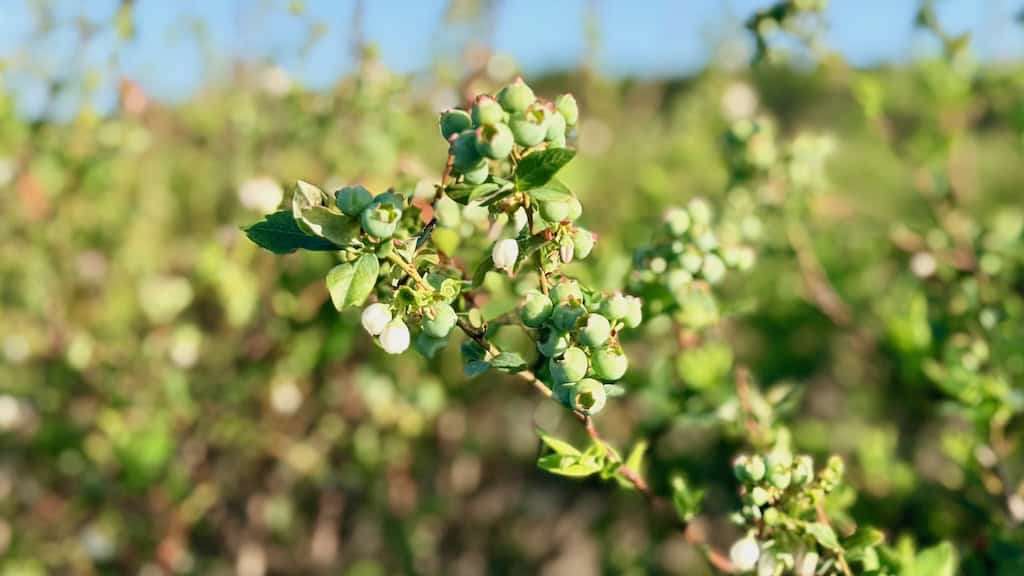
Growing Blueberries in Containers
Blueberries are particularly well suited to container growing. There are varieties adapted to climates from roughly zones 2 through 10, but don’t choose based on the berry picture on the plant tag. Look at chill hours.
Blueberry varieties need a certain amount of cold weather to fruit properly. A variety bred for a northern climate may never receive enough chill in Florida, while a low-chill Southern variety may be completely inappropriate for a northern gardener. Extremely warm areas with essentially no chill hours have far fewer options.
Blackberries and Raspberries in Small Spaces
Blackberries generally have options across approximately zones 4 through 10, while raspberries are usually better suited to zones 3 through 9. Here in zone 9, raspberry choices become much more limited. Mysore raspberry is one option for warmer areas. Both blackberries and raspberries can take up space while actively growing, but they can also be pruned substantially. That makes their permanent footprint much smaller than you might expect. I’ve grown them in containers successfully.
Growing Strawberries as Annuals in Warm Climates
Strawberries might be the easiest berry to squeeze into a tiny garden. You can grow them in pots, raised beds, hanging containers, or vertical planters such as a GreenStalk. The major difference is how we grow them in warm climates.
In colder areas, strawberries can behave as perennials and return for multiple years. Here in zones 9, 10, and even 11, I treat them much more like annuals. I plant them for our cooler growing season, harvest the berries, and don’t expect them to happily survive a Florida summer. I’ve tried. Florida summer usually wins.
9. Star Fruit
Now we’re getting into fruits that are particularly exciting for warm-climate gardeners. Star fruit, or carambola, is a genuinely tropical fruit, but I’ve successfully grown mine in a container. And it fruits.
Why Star Fruit Can Grow and Produce in a Container
A star fruit tree would prefer to be planted in the ground. Given enough space, warmth, and water, an in-ground tree can become much larger and produce an incredible amount of fruit. But if you don’t have the room, a container works. You’re trading some production for the ability to keep the tree smaller and more manageable.
Why Star Fruit Is Better Suited to Warm Climates
This isn’t one I’d recommend highly for someone in a very cold climate just because you technically could move the pot indoors. Star fruit is sensitive to cold and really appreciates tropical conditions: heat, humidity, and plenty of water.
If you’re constantly fighting your climate to recreate those conditions, there are easier fruits on this list. For Florida and other genuinely warm climates, though, star fruit is a fun option for a patio or small-space fruit garden.
10. Pineapple
Pineapple isn’t a fruit tree at all, but if we’re talking about producing fruit in tiny spaces, it absolutely deserves to be on the list. You can grow a pineapple plant in a surprisingly small container.

A plant can survive and look attractive in something as small as a 1- or 3-gallon pot, but if my goal is actually producing a pineapple, I want to give it at least a 5-gallon container.
Why Pineapple Is So Easy to Keep in a Container
Pineapples don’t require a huge root zone, which makes them ideal for patios and small gardens. They’re also beautiful plants even when they aren’t producing fruit.
Mine can tolerate quite a bit of shade. More light generally encourages faster growth and fruiting, but they don’t necessarily need to sit in blazing sun from sunrise to sunset.
Why Heat and Humidity Matter if You Actually Want Fruit
Pineapples are tropical. They like warmth, humidity, and consistent moisture. I’ve heard from gardeners in northern climates who successfully grow beautiful pineapple plants indoors or move them in and out seasonally. The challenge is getting them to actually produce fruit.
Without enough heat, humidity, and light, growth can be very slow and fruiting may take much longer or not happen at all. So again, there’s a difference between keeping a plant alive in a container and giving it the conditions it needs to produce.
11. Truly Tiny Banana
Bananas are another one that I’m sneaking onto a fruit list even though they aren’t technically trees. A banana is actually a giant herb. I’ve tried several supposedly dwarf bananas in containers over the years. The plants grew. They looked healthy. But getting bananas was another story.
Why Most Dwarf Bananas Still Struggle to Fruit in Containers
Bananas grow from a large underground rhizome, and that root structure wants room. I’ve grown dwarf varieties in 20- and 30-gallon containers, and they still didn’t have enough space to reliably reach their full fruiting potential. That’s the problem with the word “dwarf.” Dwarf doesn’t necessarily mean tiny. It might just mean smaller than a banana that would otherwise become enormous.
Why Truly Tiny Is Different
Then I found Truly Tiny. This is an extremely compact banana variety that only reaches around five feet tall at maturity and is small enough to live in a 20- or 30-gallon container while still having the potential to fruit.
The bananas themselves are tiny too. That’s fine with me. I just want bananas.
Bananas are also interesting because each pseudostem fruits once. After it produces its bunch, that stalk is finished and can be cut down. But the plant isn’t gone.
Bananas continually send up pups around the original plant, and those pups become your future fruiting stems. Buy one banana plant and, assuming it’s happy, you’ll eventually have an ongoing supply of new banana plants.
How to Protect Container Bananas From Cold
Like pineapple and star fruit, bananas want tropical conditions. They appreciate heat, humidity, water, and plenty of light, although they can tolerate some shade.
If you’re outside zones 9 through 11, container growing gives you the ability to protect the plant from winter cold. A greenhouse or another warm protected location can also work. The important thing is choosing a banana that’s genuinely small enough to fruit within the root space you’re giving it. I’ve grown plenty of “dwarf” bananas in pots. Truly Tiny is the first one that has made me think, okay, this might actually work.
What About Peaches, Plums, Mangoes, and Avocados?
These 11 aren’t the only fruits you can grow when space is limited. I also grow peaches, plums, mangoes, avocados, and other fruit trees that can be maintained in a relatively small garden. I just wouldn’t put all of them in the same category as something like a fig or calamondin when we’re talking about long-term container growing.
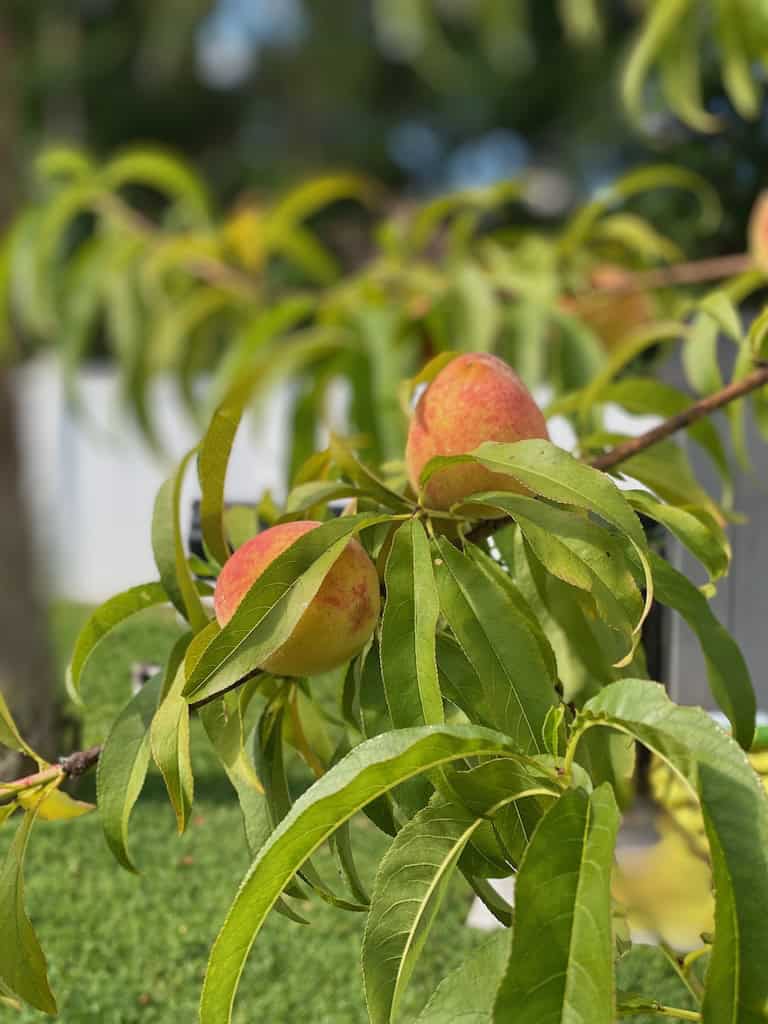
For those trees, I’d rather choose the right variety, plant it in the ground, and control its size through pruning. A dwarf or naturally compact variety can make an enormous difference.
You don’t have to allow a mango, peach, plum, or avocado to reach its maximum possible height just because the tag says it can get that big. Pruning allows you to create a tree that fits the space you actually have. But the smaller the yard, the more carefully I would research the mature growth habit before buying the tree.
There’s a big difference between a naturally compact variety that needs occasional pruning and a naturally enormous tree you’re constantly fighting to keep small.
You Don’t Need a Huge Yard to Grow Fruit
I think fruit trees intimidate people because we picture enormous trees with roots spreading through an entire backyard. Some fruit trees absolutely can become that. But that doesn’t mean every fruit has to.
A fig can live in a 5-gallon container. Strawberries can grow vertically. Blueberries can spend their lives in pots. Citrus can produce surprisingly well without ever going into the ground. Even unusual tropical fruits like jaboticaba and star fruit can work in containers when you give them the right conditions.
The key is choosing the right fruit and, just as importantly, the right variety.
Look for dwarf or naturally compact varieties. Learn how the plant responds to pruning. Increase the container size as the plant grows rather than immediately putting a tiny tree into an enormous pot. And make sure your climate can provide what that fruit needs to actually produce.
If you’re in a colder climate, containers can even let you grow fruits that would never survive your winters outdoors. Move them into protection when temperatures drop and bring them back outside when warm weather returns.
And if you’re gardening in Florida or another warm climate, container growing can solve a completely different set of problems. It can help you manage limited space, protect tropical plants during an occasional freeze, move trees away from extreme weather, and even provide an extra layer of protection for citrus.
You don’t need an orchard. Sometimes all you need is a patio, the right variety, and a really big pot.