Last Updated on September 25, 2025 by Homegrown Florida
I recently had a big wake-up call in my garden, and I want to share the valuable lessons I’ve learned along the way. If you’ve ever struggled with poor yields or puzzling plant health issues, there’s a good chance your soil might be part of the problem. For years, I relied on the wrong kind of soil testing, and it ended up creating more issues than it solved. Now, I test my soil every fall before the start of Florida’s biggest growing season, and it has completely changed the way I garden.
Table of Contents
This post may contain affiliate links. Read full disclosure here
Why Soil Testing Matters
Fall through winter is our most productive growing season in Florida. After surviving the summer heat, this is when we plant everything from broccoli to carrots to onions. But if your soil isn’t balanced, no amount of effort will make up for the wrong pH or excess nutrients. Florida’s sandy soils already leach nitrogen quickly, so it’s critical to know what’s really happening below the surface.
The trouble is not all soil testing kits are created equal. Some are wildly inaccurate. Others are confusing. And a few will give you exactly what you need to improve your soil without guesswork. Here’s my honest experience with four different soil tests, what worked, and what didn’t.
The At-Home Rapid Test: A Disaster Waiting to Happen
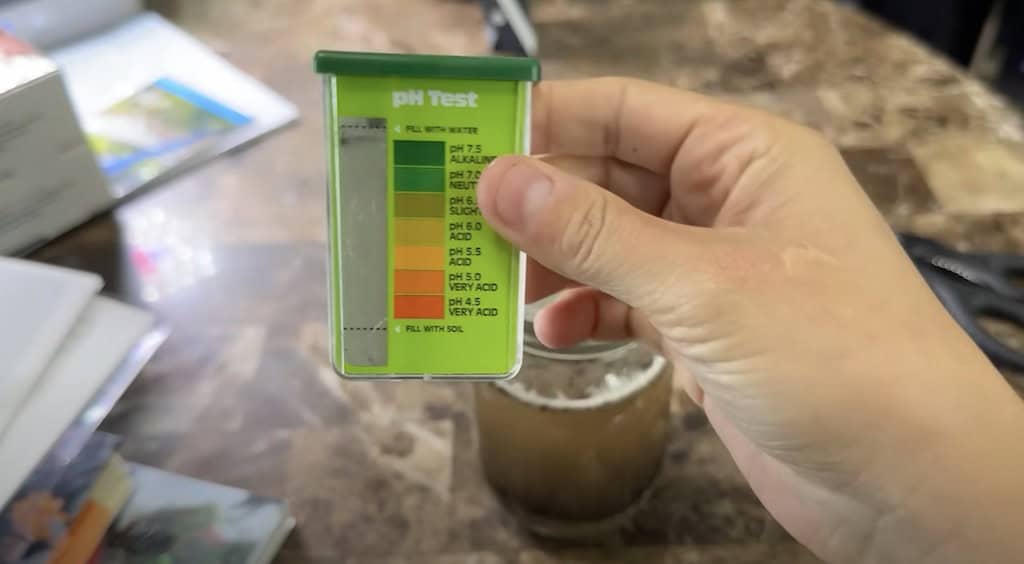
Like many gardeners, I started with an inexpensive Rapid At Home kit from Amazon. It came with colorful pills and little vials that supposedly measured nitrogen, phosphorus, potassium, and pH. Every time I used it, the test told me I was deficient in nitrogen and phosphorus.
So I did what anyone would do; I kept adding blood meal and bone meal, season after season. Pounds of it. Yet the test never showed improvement. Looking back, those kits were flat-out wrong. My soil actually became overloaded with phosphorus, which stressed my plants and set me back years.
Lesson learned: Skip the cheap at-home soil testing kits. They may look simple, but the results are unreliable and can cause serious long-term damage.
The UF Extension Office Test: Confusing and Contradictory
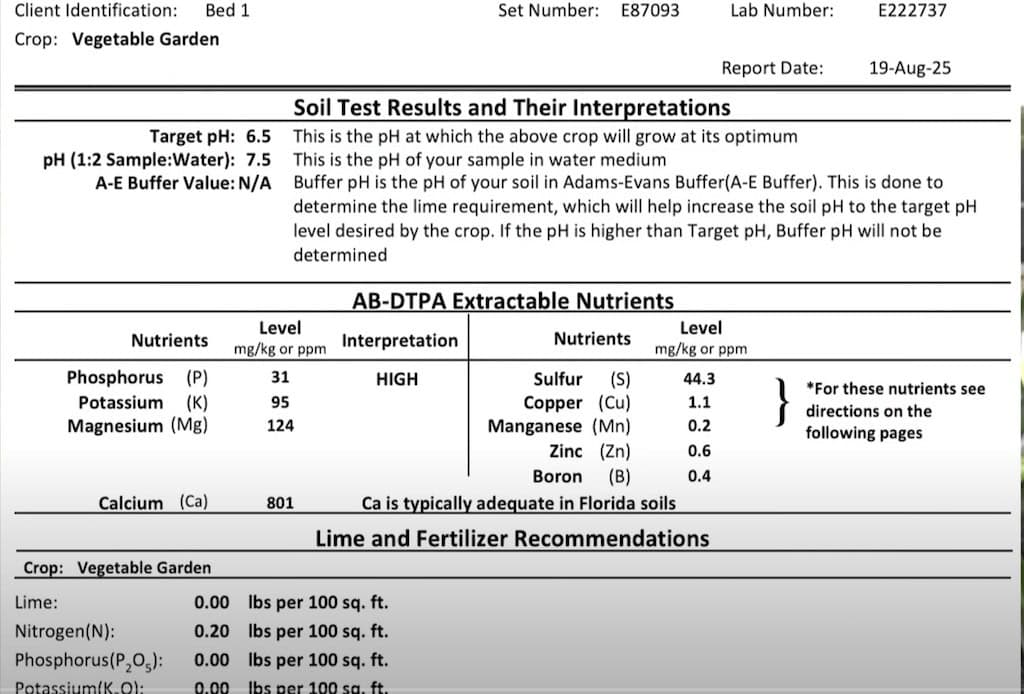
Next, I tried a professional soil testing through the University of Florida’s extension office. This one is often called the “gold standard,” but my results left me scratching my head.
- My calcium came back 60 times higher than the year before despite never adding calcium.
- Micronutrients like zinc and boron dropped from “high” to “dangerously low” with no explanation.
- The test reported a high pH (7.5), but my plants weren’t showing any signs of stress.
The numbers simply didn’t line up with what I was seeing in my garden. My plants looked fine, and production was steady. It’s possible something went wrong during collection, drying, shipping, or processing, but I couldn’t trust the results enough to act on them.
The pH Meter: Helpful But Tricky
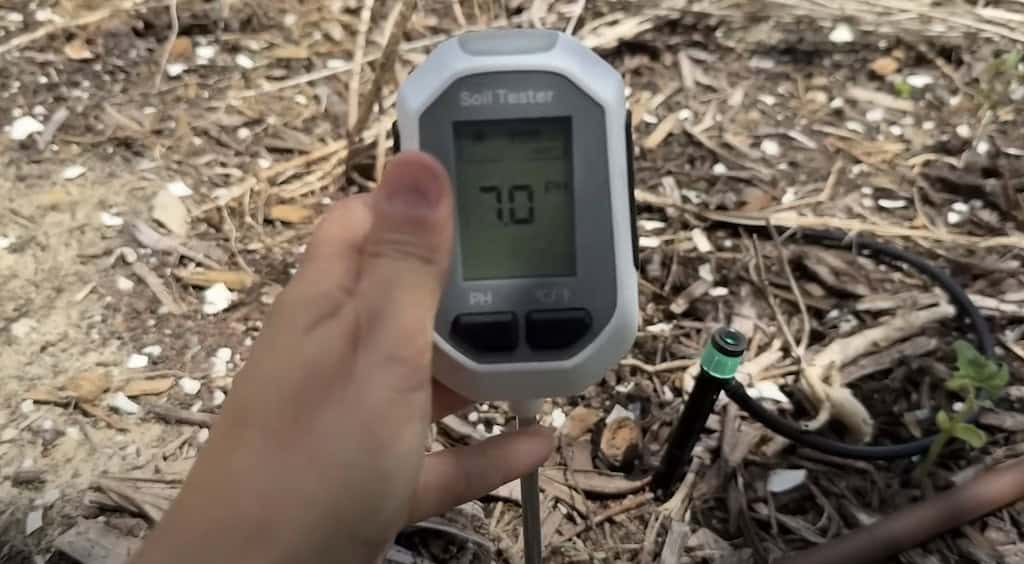
To double-check the UF results, I tried a handheld pH meter. These can work, but only under very specific conditions. The soil has to be moist (but not wet), the weather can’t be too hot, and you need to test multiple times for consistency.
After several nights of careful testing, my soil pH consistently measured between 6.5–6.6, exactly where it should be. This matched what I was seeing in the garden and gave me confidence that the UF results weren’t accurate.
The MySoil Test: Clear, Accurate, and Easy to Read
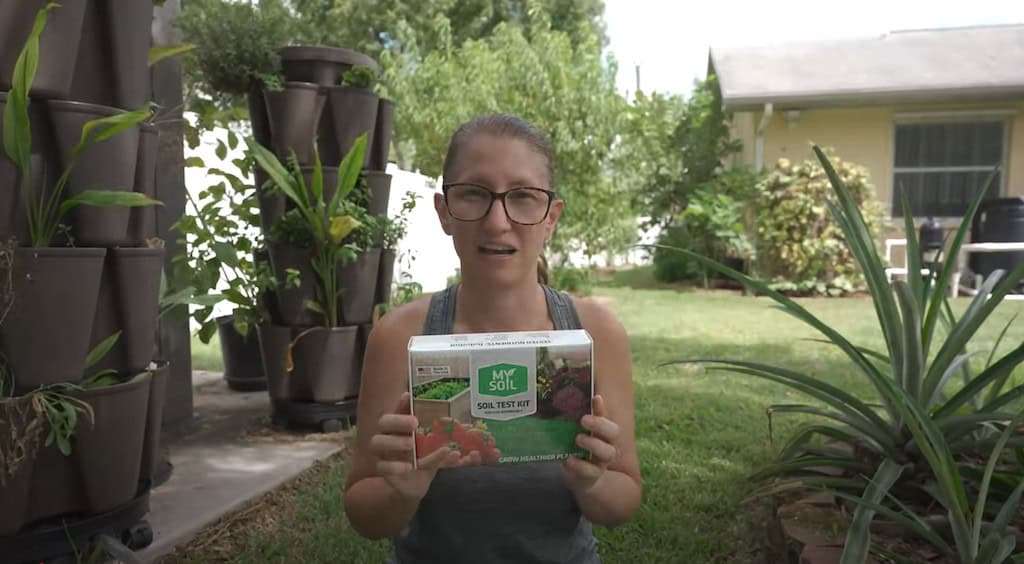
Finally, I used the MySoil test kit, and it was a completely different experience. The kit comes with a solution-filled container for your sample, which reduces the chance of contamination. The results arrived quickly, and unlike UF’s report, they were incredibly easy to read.
- Nitrogen: Low (expected in Florida after rainy season).
- Phosphorus: Still high, but trending down from the bone meal disaster.
- Potassium: On the low side, which made sense based on what I was seeing in my plants.
- Micronutrients: Most were in the optimal range, with a few slightly low.
The results lined up perfectly with my gardening experience and with last year’s Epic Gardening soil testing kit. Everything was trending in the right direction, which gave me confidence in the MySoil test.
The Ultimate Test: Green Beans Don’t Lie
Even with numbers on paper, the best test is always your plants. To confirm, I seeded Blue Lake bush beans directly into the soil. Beans are very sensitive to pH and micronutrients, so they show problems quickly.
They germinated fast, grew healthy leaves, and showed no signs of nutrient stress. This confirmed that my soil pH was fine and that the MySoil results matched reality.
My Fall Amendment Plan
Armed with the right information, I made a simple plan for my fall beds:
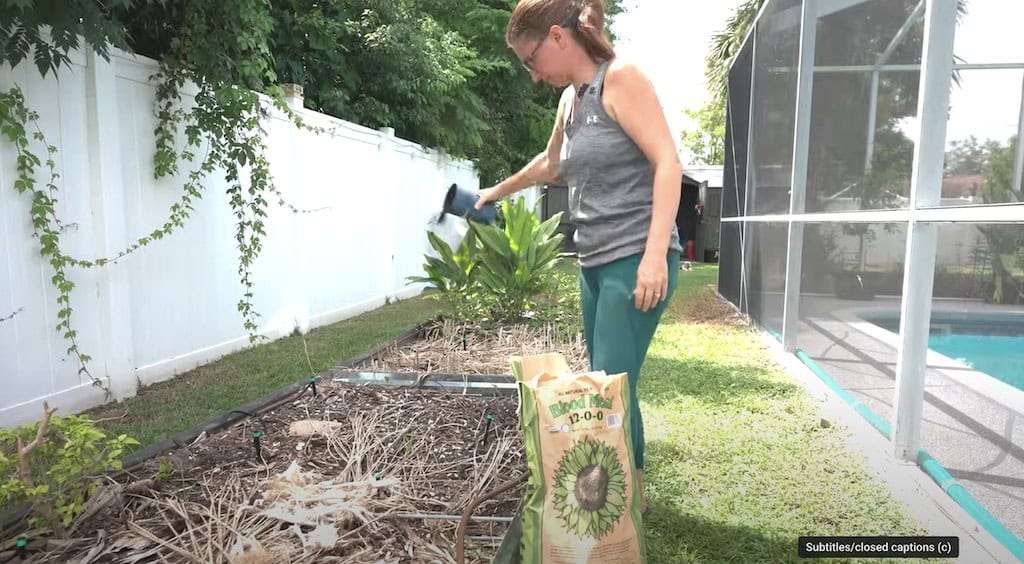
- Blood Meal – 3 cups per 8×4 ft bed to boost nitrogen for heavy feeders like broccoli and Brussels sprouts.
- Kelp Meal – A gentle, organic source of potassium without spiking the soil.
- Compost – 1-2 inches of homemade compost to increase water retention, micro nutrients, and stabilize ph.
- Whitwam Organics Micro Plus – A micronutrient drench to address minor deficiencies and support healthy growth.
- Hold the Amendments – No phosphorus this year since my levels are still too high.
Key Takeaways for Florida Gardeners
- Don’t waste time on cheap at-home kits. They’re misleading.
- Use caution with university tests if the results don’t match what your plants show.
- MySoil has been the most reliable and easy to understand for me.
- Always compare results with real plant growth before making big changes.
- Test your soil at least once a year, especially before Florida’s fall season.
Gardening is one big learning process, and soil testing is one of the most valuable tools we have. I made the mistake of trusting the wrong kit for years, and it set my soil back. But by finding the right test and paying attention to both numbers and plants, I’ve been able to get my soil back on track.
If you’re looking for even more detailed guidance on growing veggies here in Florida—like when to start seeds, how to manage pests, and what varieties really thrive—don’t forget to check out my ebook! It’s got a chapter for every single vegetable and is packed with everything I’ve learned over the years gardening in Florida.