Last Updated on April 16, 2026 by Homegrown Florida
Getting started with gardening can feel overwhelming fast. Raised beds cost money, in-ground gardening comes with soil issues, and sometimes you just want the quickest possible way to start growing food without making it a whole project.
That is where containers come in.
Container gardening is one of the fastest, easiest ways to start an edible garden. But here is the part that gets overlooked. Not every plant actually wants to grow in a container. Some do great. Some will tolerate it. And some act like you personally offended them by making them live in a pot.
So if you want the easiest wins, it helps to start with the plants that naturally do well in containers. These are some of my favorite edible plants to grow this way, along with a few things to keep in mind so you are not fighting the container the whole time.
Table of Contents
This post may contain affiliate links. Read full disclosure here.
The Biggest Rule with Container Gardening
Before we get into the actual plants, there is one simple rule that will help you more than almost anything else.
The bigger the plant gets on top, the more root space it usually needs below.
That sounds obvious, but it saves a lot of frustration. Small compact plants usually do better in containers because they naturally have smaller root systems. Big vigorous plants can still be grown in containers, but they usually need more volume, more water, more fertilizer, and more support.
That is really what container gardening comes down to. Matching the plant to the pot.
Tomatoes
Tomatoes are one of the best things to grow in containers, but only if you choose the right kind.
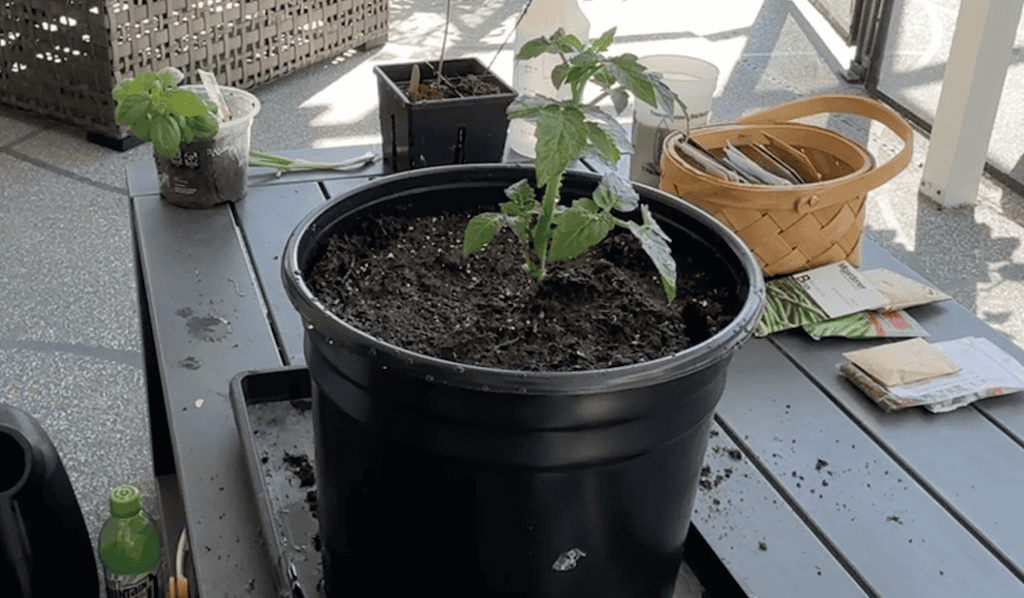
This is where a lot of people go wrong. They grab any tomato, stick it in a pot, and then wonder why it becomes a dramatic tangled mess that never quite performs the way they hoped.
The easiest tomatoes for containers are bush, patio, dwarf, and micro dwarf types. These stay more compact, need less support, and handle container life much better than large indeterminate tomatoes.
Indeterminate tomatoes can still be grown in containers, and I absolutely do it sometimes, but they usually want more than you think. Bigger pot, more water, more fertilizer, stronger support, more maintenance. If you want the easiest path, go with the compact types first.
For container size, I would say five gallons minimum for most tomatoes. If you are growing an indeterminate, I would lean closer to ten gallons. A micro dwarf can get away with less, but in general, bigger pots make life easier. You water less, fertilize less, and the plant stays happier.
If you want tomatoes in a small space, cherry types are especially good because they tend to produce quickly and heavily.
Strawberries
Strawberries are one of the easiest fruits to grow in containers because their root systems stay relatively small.
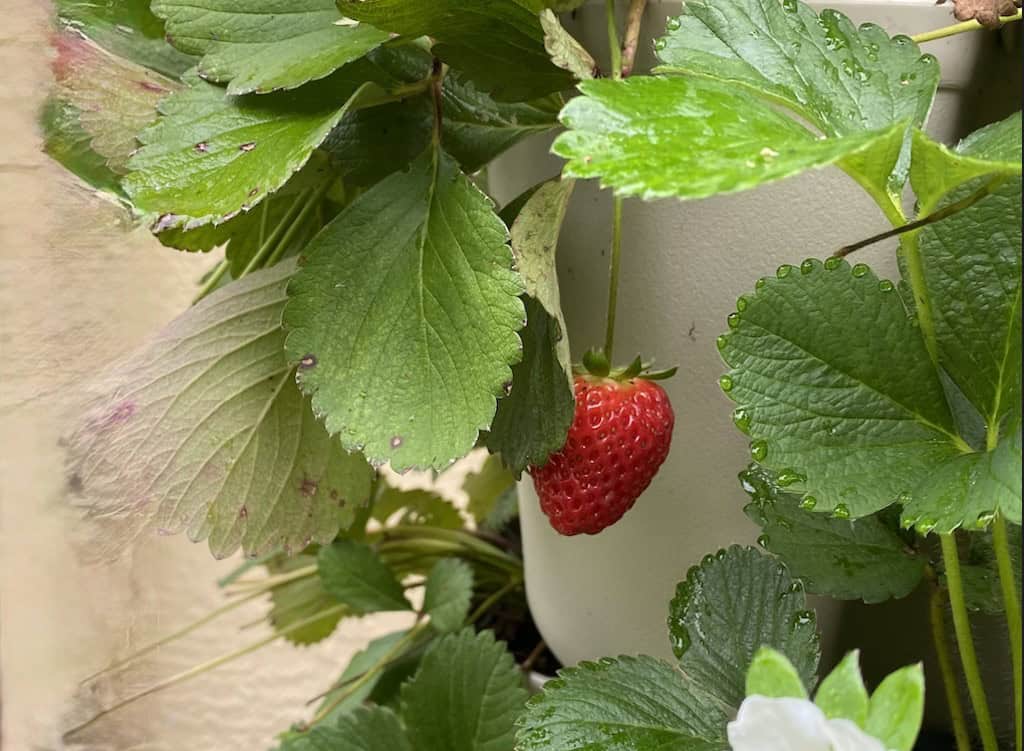
That is really the secret. The plant itself stays compact, and so do the roots. That means you do not need a huge deep pot to make strawberries happy. They do great in vertical planters, stacked systems, hanging containers, and shallow pockets as long as they have consistent moisture and feeding.
This is why strawberries are such a good match for tiered planters and vertical systems. You can grow a lot of them in a small footprint, and they do not need the kind of deep root space that bigger crops do.
If someone is just starting container gardening and wants a fruit that does not need a giant pot, strawberries are one of the best places to begin.
Lettuce
Lettuce is another great container crop, especially if you choose the right kind.
Loose leaf lettuces are usually the easiest because they do not need as much depth as heading lettuces. They are also more forgiving and easier to harvest with the cut and come again method, which is one of my favorite ways to grow greens in containers.
You can snip what you need and let the plant keep producing instead of pulling the whole thing at once. That makes a container feel a lot more productive.
You can grow heading lettuces in containers too, but they usually do better in a deeper and slightly larger container. If I am trying to keep things easy, I usually go with loose leaf types first.
The nice thing about lettuce is that it grows quickly, does not need a massive root system, and works really well in containers, raised planters, and vertical systems.
Carrots
Carrots surprise people, but they can actually do really well in containers.
The main thing to think about is depth. Carrots are not difficult in containers because they hate containers. They are difficult because the container needs to match the kind of carrot you are growing.
If you put a long carrot variety in a shallow pot, it is going to stop when it hits the bottom. That means you might still get a carrot, but it will be shorter than it would have been in the ground.
So if you want to grow carrots in containers, you have two good options.
Use a deeper container, or choose a shorter carrot variety.
The shorter, stubbier carrots are usually the best fit for containers because they can size up well without needing as much depth. If you do have a deeper pot, you can grow longer types too, but in general, matching the carrot to the container makes a big difference.
Blueberries
Blueberries are one of the few edible plants that I strongly prefer to grow in containers.

The reason is simple. They want acidic soil, and my native soil does not naturally stay in the range they prefer. Blueberries usually want a soil pH around 4.5 to 5.5. My soil stays much more alkaline than that, which makes containers the easiest way to control their environment.
In a container, I can build the right mix and keep it acidic with the materials blueberries actually like, things like peat moss, pine bark, pine needles, coffee grounds, and soil acidifiers when needed.
You can absolutely grow blueberries near pine trees if that soil tends to stay more acidic, but containers give you a lot more control. And with a plant as picky about pH as blueberries are, control makes a big difference.
If you have tried blueberries in the ground and they just seem unhappy, containers may solve that problem.
Green Beans
Green beans do really well in containers, especially bush types.
Bush beans are compact, productive, and do not need much root space compared to a lot of other crops. They are one of those plants where the top and bottom match pretty well. They stay fairly tidy, so the root system stays fairly manageable too.
Pole beans can also be grown in containers, but that changes things a little. Once you go with a vining bean, you need a real trellis or support system. Not just a cute little stake and good intentions. They want to climb, and if you do not give them something sturdy, they are going to become a mess.
The other thing to know is that beans need inoculant, especially in containers. That is the beneficial bacteria that helps them process nitrogen properly. In ground soil that has grown legumes before, it may already be there. In fresh potting soil, it usually is not.
So if you are growing beans in containers, inoculant is one of those small things that makes a big difference.
Potatoes and Sweet Potatoes
Both white potatoes and sweet potatoes can be grown in containers, and yes, I know some people get very opinionated about this.
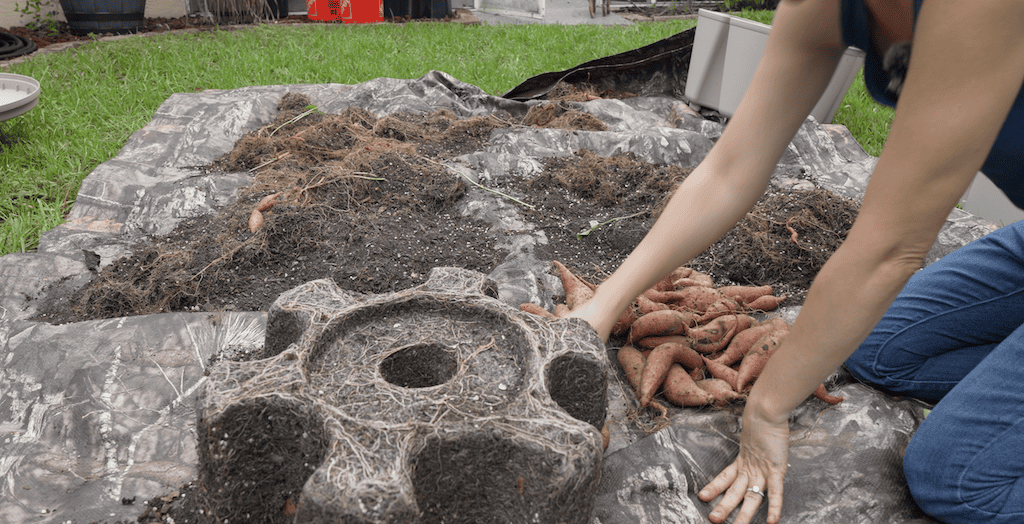
Do they grow better in the ground or a raised bed if given plenty of room? Usually yes. But can they still do well in a container? Also yes.
The main tradeoff is size.
When you grow potatoes or sweet potatoes in containers, you often get smaller tubers than you would in a larger in-ground space. That does not mean the crop failed. It just means the container limits how much room they have to spread.
What I love about sweet potatoes in particular is that they can be incredibly productive in a small footprint. I have grown them in vertical systems and gotten a lot of sweet potatoes from very little square footage. They are usually smaller than in-ground ones, but the overall harvest still makes it worth it for me.
So if you want to grow potatoes in containers, just go in with healthy expectations. You may not get giant baking potatoes, but you absolutely can still get a useful harvest.
Fruit Trees
Fruit trees in containers surprise people too, but I grow a lot of them this way.
The key is choosing the right tree and giving it a large enough pot. This is not the category where you get away with a tiny decorative container and hope for the best. Fruit trees want room.
I grow citrus, jaboticaba, mango, jujube, starfruit, plums, and more in containers. Some of them eventually move into the ground, but a lot of them stay in pots long term.
For most fruit trees, I would say 20 gallons is the bare minimum, and bigger is often better. I really like 30 gallon containers for fruit trees because they give enough volume for strong growth without becoming completely unmanageable.
The reason I keep so many fruit trees in containers is partly space, but also mobility. In Florida, being able to move a plant matters. Cold snaps happen. Hurricanes happen. Containers let me protect trees that would otherwise just have to take whatever the weather throws at them.
So yes, fruit trees can absolutely be container plants. You just have to think bigger when it comes to the pot.
Flowers
Flowers might not be the first thing you think of in an edible container garden, but I still think they belong here.
Not because they are food for most people, but because they make the edible garden work better.
Flowers bring in pollinators, attract beneficial insects, help with trap cropping, and in some cases help with pests like root knot nematodes. Marigolds are a great example of that.
When I grow flowers in containers, I usually prefer perennial flowers over annuals. Annuals are lovely, but I often feel like they are taking up a valuable container spot for a plant that is going to be gone quickly. If I am giving up a pot, I usually want a longer-term payoff.
Perennial flowers feel more worth it in containers. They create a more permanent support system around the edible garden.
Herbs
If I had to choose the best edible category for containers overall, herbs would be very hard to beat.

Herbs are compact, productive, fragrant, useful, and many of them live for years. That is about as container friendly as it gets.
Rosemary, oregano, mint, chives, garlic chives, lemon balm, and many others do beautifully in pots. Some annual herbs like basil, dill, parsley, and cilantro also work well, but I tend to especially love containers for the perennials.
A lot of herbs are not just easy in pots, they actually seem to like the slightly more controlled root space. Rosemary in particular is one of those plants I have had thrive in a container with almost embarrassing levels of neglect.
If you are just starting out and want an easy edible container garden, herbs are one of the smartest places to begin.
Choosing the Right Container
Once you know what you want to grow, the next step is choosing the right kind of container.
There is no single perfect type. It really depends on what you are growing and how you garden.
Traditional nursery pots work well and are easy to find. Vertical planters are amazing for strawberries, lettuce, shallow rooted herbs, and some smaller crops. Deeper vertical systems can also handle bigger plants better than people expect.
Grow bags are inexpensive and popular, and I know a lot of people love them. My main issue with them is that they dry out quickly here in Florida, and I do not enjoy watering that often. They can be a great option in cooler climates or for gardeners who do not mind more frequent watering.
Hanging baskets can be useful for strawberries and certain flowers. Large decorative pots work well for herbs and smaller crops. Big raised containers or stock tank style pots can work beautifully for fruit trees and larger vegetables.
When I think about containers, I ask myself a few questions.
Is this plant annual or perennial?
How big does it get at full size?
How deep are the roots likely to go?
How quickly will this container dry out?
Can I move it if I need to?
A Few Beginner Rules
If you are just getting started, here are the rules I would keep in mind.
- Go bigger than you think you need
- Choose compact plants whenever possible
- Make sure the container drains well
- Remember that smaller pots dry out faster
- Perennials deserve deeper, more permanent homes
- If you are in a hot climate, be honest about how often you want to water
That last one matters a lot. A container you hate watering is probably not the right container for your lifestyle.
Start Simple
You do not need the perfect setup to start container gardening. You do not need ten beautiful matching pots, a whole irrigation system, and a complicated plan.
You just need one decent container, a plant that actually wants to live in it, and enough consistency to keep it happy.
That is why container gardening is such a good entry point. It is portable, flexible, forgiving in a lot of ways, and a great way to learn fast. You will learn more from growing one tomato, one herb, and one strawberry planter than from reading a hundred posts and never getting started.
Pick something small. Pick something productive. Match the plant to the pot. And go from there. Happy gardening.