
Last Updated on May 14, 2026 by Homegrown Florida
I went most of my life not even realizing Loquat trees was edible. I had seen them all over neighborhoods growing up, and I just assumed they were ornamental. Pretty leaves, nice shape, maybe some messy fruit the birds liked, end of story. I had no idea they were producing one of the most delicious, easygoing fruits a home gardener could ask for.
Now that I grow one, I genuinely do not understand why more people are not planting them.
Loquat trees are ones that quietly checks a ridiculous number of boxes. It tastes amazing, handles cold better than most people expect, supports pollinators, has very few serious pest or disease issues, and gives you a harvest at a time of year when not much else is happening. If you are looking for a fruit tree that earns its keep without a lot of drama, this is one worth paying attention to.
Table of Contents
This post may contain affiliate links. Read full disclosure here.
The flavor is hard to describe, but in the best way
The first reason to grow loquat trees is simple. The fruit is really, really good.
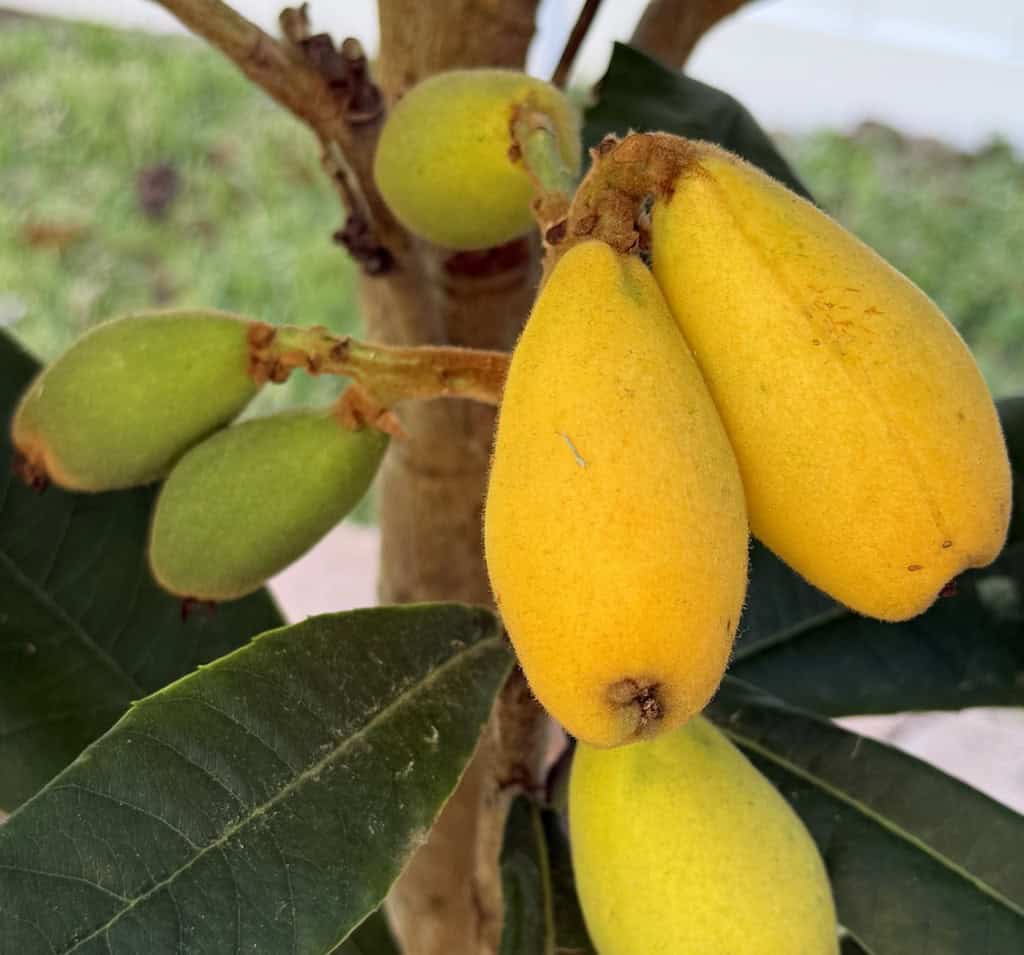
And not just good in a “well, it’s homegrown so I’m making myself like it” kind of way. I mean actually delicious.
The flavor reminds me of citrus, which is part of what makes it so special to me. In Florida, citrus is not the easy crop it once was because of citrus greening disease. So having a fruit that gives those bright, tropical, citrusy notes without being a citrus tree is a big deal.
Loquat has this mix of flavors that is hard to pin down exactly. Mine tastes a little like lemon, orange, and mandarin, but with something tropical behind it, almost like mango, while the texture leans softer, more like papaya or apricot. It is juicy, fragrant, and refreshing in a way that feels very different from the average fruit bowl fruit.
You can eat the skin and the flesh, and then inside you will find a few large seeds. Once you’ve had a really good loquat, especially one fully ripened on the tree, it is hard not to fall for it.
Loquat Trees are tougher than they looks
One of the things I appreciate most about loquat trees is how durable it is.
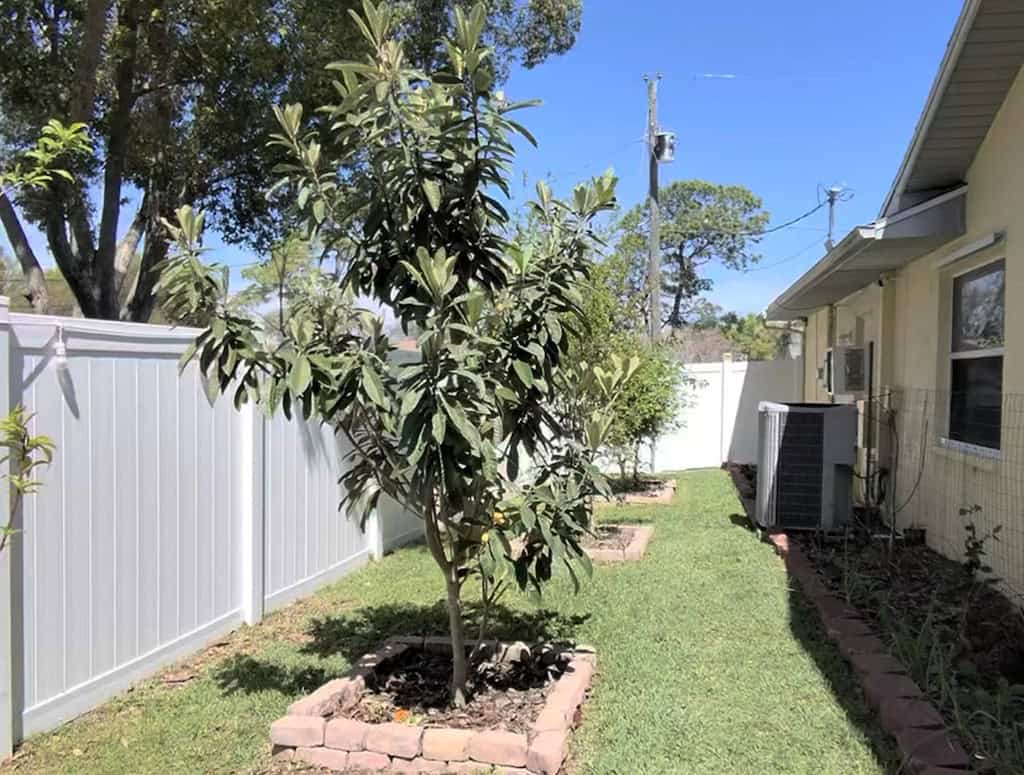
This tree is evergreen, which already gives it an advantage in the landscape. It holds its leaves beautifully, even through weather that knocks back more tender plants. And after the kind of winter we had this year in Florida, that toughness became impossible for me to ignore.
We had one of the strangest and harshest winter events I’ve ever seen here. Temperatures dropped unbelievably low for Florida, winds were intense, and the cold lasted longer than usual. My loquat trees never dropped its leaves. It never showed the kind of panic or damage I would expect from many tropical or subtropical fruit trees.
Now, the flowers and some of the fruit did take a hit, especially on the outer edges and upper parts of the tree where the wind and cold had the most access. But the tree itself stayed strong, and a surprising amount of fruit still made it through, especially in the interior parts of the canopy where it had a little protection.
That told me a lot. A fruit tree that can take that kind of weather event and still show up with a harvest is worth paying attention to.
It fruits at a really useful time of year
Another thing I love about loquat trees is its timing. In my garden, loquat flowers and starts setting fruit around late fall into winter, which feels so different from a lot of the other fruit trees I grow. That can vary depending on where you live, but the point is the same. It fruits at a time when a lot of other plants are either asleep, resting, or not doing much at all.
That alone makes it valuable in a home orchard. When you are trying to stretch your harvest season and have something edible coming in more months of the year, trees that fill odd little gaps in the calendar become incredibly useful. Loquat trees are one that fills the gap.
It can be both ornamental and productive
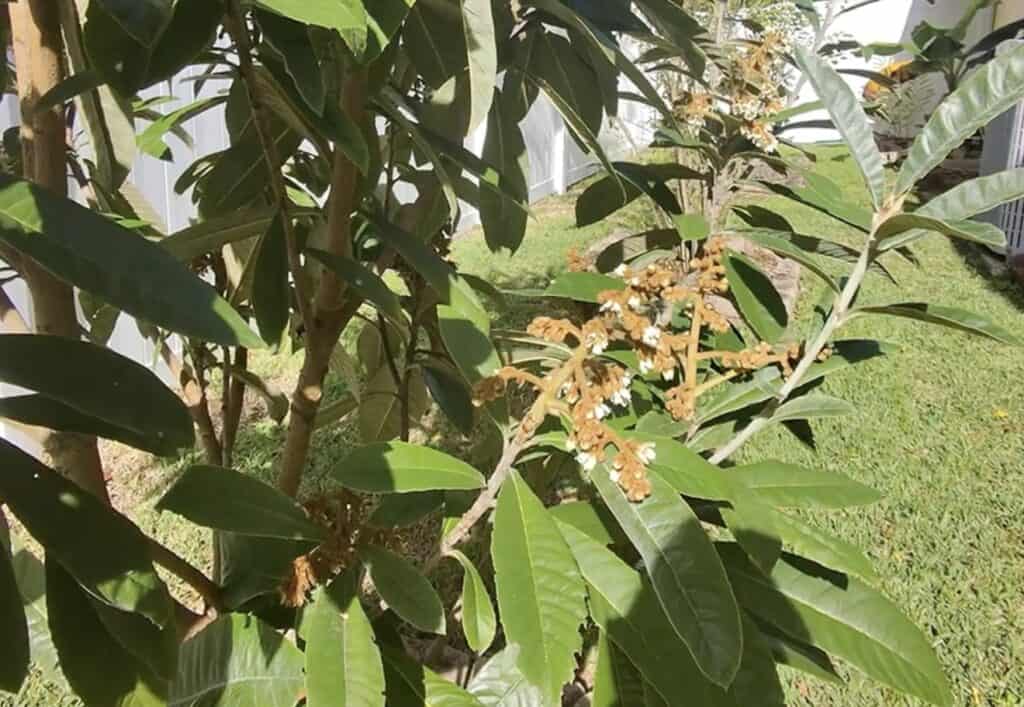
This is one of the sneakiest benefits of loquat trees. Even people who do not know the fruit is edible often plant it because it is a beautiful tree. It has big, bold, tropical-looking leaves and a naturally attractive shape. Some stay more upright, while others soften into a fuller, bushier form that looks really nice in a front yard or side garden.
That means loquat often gets a pass in places where a more obvious fruit tree might raise eyebrows. If you live in an HOA neighborhood or somewhere with rules about what you can plant, loquat can sometimes blend in better because people see it as an ornamental tree first. Meanwhile, you know it is also feeding you. That is a pretty great combination.
Many varieties are self-fertile
This is another reason loquat is beginner-friendly. Some loquats are self-fertile, which means they can set fruit on their own without needing a second tree to pollinate them. Others benefit more strongly from having another loquat nearby, and in general, all of them will produce better with a pollinator partner around.
But if you only have room for one tree, you are not automatically out of luck. That matters for smaller yards and beginner gardeners who do not want to commit to multiple trees right away.
And depending on where you live, there may already be loquats growing nearby in neighborhoods, parks, or landscaped areas. Since these trees are so often used ornamentally, there is a decent chance your tree may have a pollination buddy somewhere within range without you even planting one.
It supports pollinators when they need it most
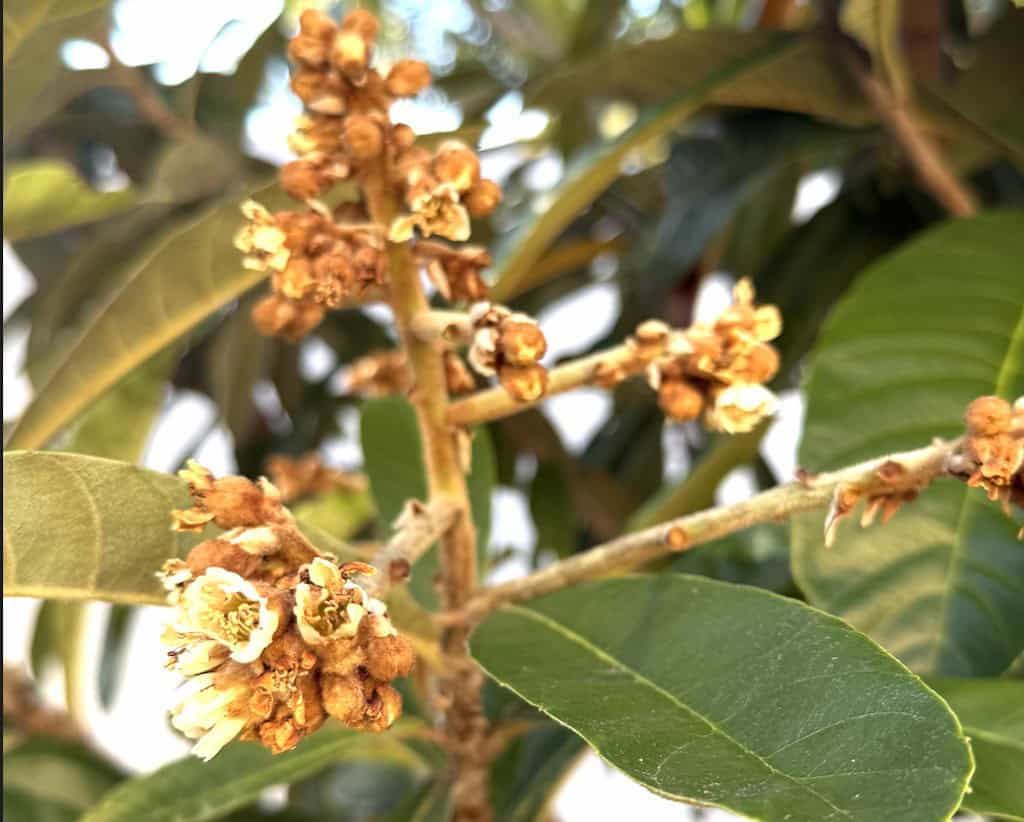
This is one of those benefits that makes me love the tree even more. Loquat flowers at a time when very few other things in my garden are blooming. And because of that, it becomes an important pollen source for bees and other pollinators that are still active through our mild winters.
Here in Florida, we do have native bees that don’t fully disappear the way people in colder climates might expect. When food is scarce, a blooming loquat becomes a really valuable stop for them.
That means the tree is not just feeding me. It is also supporting the larger ecosystem in the garden when not much else is available. And the more I garden, the more I value plants that do that kind of double duty.
It has medicinal uses too
Loquat is not just about the fruit. The leaves have a long history of use in herbal preparations, especially teas. A lot of people use loquat leaf tea as a soothing herbal support during coughs, scratchy throats, and general cold season misery.
I am not saying it replaces medical care or anything dramatic like that, but it is one of those old-fashioned garden plants that has been appreciated for more than one reason for a very long time. I always love when a plant can feed you and support your home in other ways too.
The fruit is a lot more nutritious than people realize
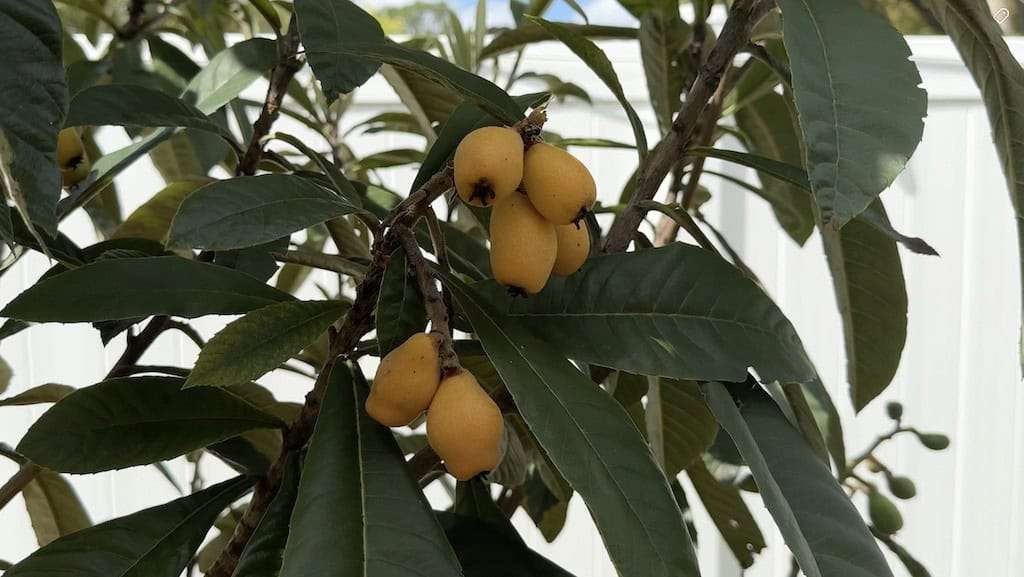
Loquat is one of those fruits that feels almost underrated nutritionally. A serving is low in calories, very high in water content, and gives a good boost of vitamin A. It also has a relatively low glycemic impact compared to some sweeter fruits, which makes it appealing for people who are trying to be more mindful about blood sugar.
This means this is not some novelty fruit that only looks pretty on the tree. It is genuinely useful food. And honestly, I think that matters more and more when you are deciding what earns a place in the garden.
It can be incredibly productive
A healthy tree can produce a serious amount of fruit. Depending on the size of the tree, the variety, and how well pollination goes that year, you can be looking at anything from a modest harvest to a truly heavy one.
That is one of the reasons I think more people should consider it. This is not a fruit tree you wait on forever only to get five sad little fruits and a lecture about patience.
It may take a few years to start producing well, but once it gets going, it can really deliver.
Mine took about four years to set its first fruit, which is pretty reasonable for a fruit tree. And while this year’s harvest was reduced because of the cold damage, a good mature loquat can produce enough fruit that you will absolutely need a plan for what to do with it all.
There are plenty of ways to use the harvest

You can absolutely eat loquats fresh right off the tree, and honestly that may still be my favorite way to use them.
But if you have a bigger harvest, there are plenty of other options. Loquats make great jam, juice, syrup, fruit leather, dehydrated snacks, and concentrates. The texture and flavor when preserved remind me a little of apricot in some forms, especially when dried. It is one of those fruits that is useful enough to justify the space because it is not a one-note crop.
It is one of the easiest fruit trees to recommend
At the end of the day, this is why I keep coming back to loquat. It tastes amazing. It is attractive. It handles weather better than you might expect. It supports pollinators. It has very few serious issues. It can fit into ornamental landscapes. It can be self-fertile. It has medicinal uses. It produces a meaningful harvest. And it fruits at a time of year when the garden can really use something exciting.
That is a lot for one tree. If you are looking for a low-fuss fruit tree that gives you a lot back, loquat is one I would absolutely put on the shortlist.
And if you grew up around these trees like I did without realizing the fruit was edible, just know you are not alone. I missed out on this tree for way too long too. Now I’m making up for lost time.

Christina V Demers
We have two of these in my yard as a kid. I loved the fruit so much. Well I grew one from seed and it’s been in the ground for 4-5 years now. I’m hoping it’ll flower and set fruit one day soon. And hopefully it’s a self pollinator.