Last Updated on August 27, 2026 by Homegrown Florida
Timing is probably the hardest thing to learn when you start gardening in Florida. Figuring out what to plant in August versus October versus January can make you question everything you thought you knew about gardening. But once you finally figure out when to plant, another problem shows up pretty quickly: where are you going to put everything?
Garden layouts matters because we’re trying to fit a lot into a relatively small space without creating so much competition that nothing performs well. We have to think about the mature size of each plant, root space, trellising, companion plants, pollination, and even which crops might shade the plants around them.
Table of Contents
This post may contain affiliate links. Read full disclosure here
I’ve been growing food on my quarter-acre property for the last decade, and I’ve gardened in just about every setup imaginable. These four sample fall garden layouts include an 8 x 4 raised bed, a five-tier GreenStalk, an eight-container grow bag garden, and a 3 x 15-foot in-ground garden.
You don’t have to copy any of them exactly. Think of them as starting points you can adjust based on your space and, more importantly, what your family actually likes to eat.
Why Fall Garden Layouts Are Different in Florida
One of the confusing things about planning a Florida fall garden is that our fall doesn’t look much like the fall gardens you’ll see in most gardening books or online planting plans. While much of the country is transitioning into cold-weather crops, many Florida gardeners are still planting warm-season vegetables.
Tomatoes, peppers, beans, squash, and cucumbers all have a place in our fall gardens because we’re planting them as our brutal summer temperatures begin heading toward more comfortable weather. Crops like lettuce and bulbing onions, which gardeners farther north associate with fall, are generally better suited to our winter gardens.
Exactly when that transition happens depends on where you live in Florida. North Florida begins cooling before Central Florida, while South Florida stays warm considerably longer. For these layouts, I’m concentrating primarily on crops that can handle the warmer beginning of our fall season, with a few heat-tolerant cool-season crops like kale and collards mixed in.
Florida Fall Garden Layout #1: An 8 x 4 Raised Bed
Let’s start with an 8 x 4-foot raised garden bed. If you have a smaller bed, you can use the same basic design and reduce the number of plants. A 4 x 4 bed, for example, would hold roughly half as much.
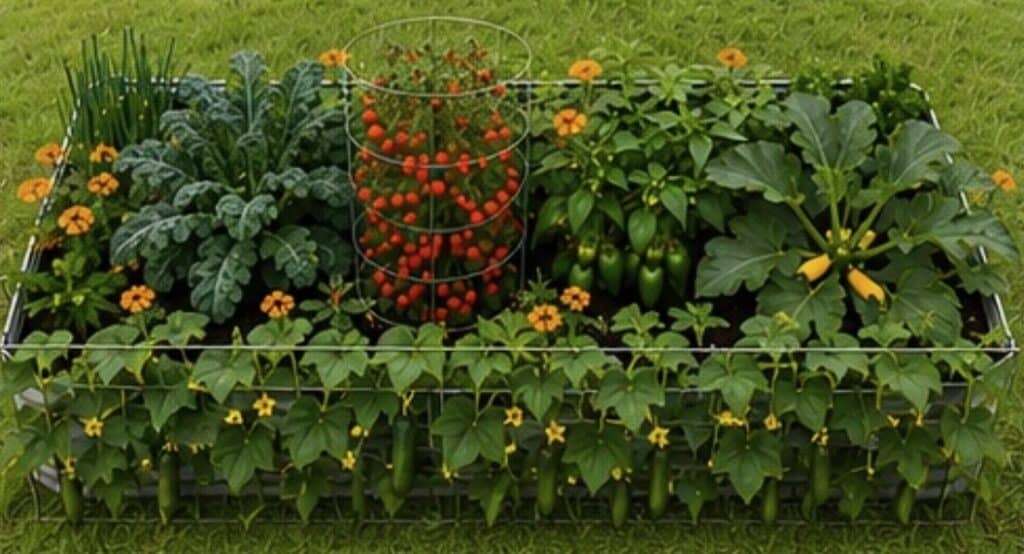
The basic layout includes:
- Green onions
- Parsley or basil
- Bush beans
- Kale or collards
- One cherry tomato
- One or two peppers
- One bush squash
- Cucumbers
- Calendula or another flowering companion plant
The important part isn’t just fitting everything into the bed. We’re placing plants based on how large they’ll become, whether they need support, and how they can share the available space.
Building the Raised Bed Around Companion Plants
In the back left corner, dedicate approximately one square foot to green onions, with around six plants in that space. Bulbing onions are an option later in the season, but I consider those more of a winter crop because I generally plant my onion transplants around November.
On the opposite back corner, plant parsley. I usually grow one parsley plant per square foot, although you could comfortably fit two. Basil can also work here, and dill becomes an option once temperatures cool. I’d be cautious about oregano because it has a tendency to spread beyond the little space you originally assigned it.
Between the green onions and parsley, use the remaining six feet for bush beans. At approximately four plants per square foot, that gives you room for around 24 bean plants. Blue Lake, Contender, Provider, and Jade are all good options.
I’m using bush beans rather than vining beans because we’re already dedicating the front of the bed to a trellised crop. You can absolutely grow pole beans instead, but you’ll need to adjust your trellising accordingly.
What to Plant in the Center of the Raised Bed
The center is where our larger plants go. Start with one kale or collard, then add a cherry tomato such as Large Red Cherry, Super Sweet 100, or another cherry or grape variety. An indeterminate tomato can work well here, but it will need a sturdy trellis.
Next to the tomato, plant a pepper. A large hot pepper such as cayenne or habanero can easily occupy the entire space, while smaller bell or snacking peppers may allow you to fit two plants.
At the far end, give the remaining space to one bush-style squash. Some of my options would be:
- Sunburst pattypan
- Gray zucchini
- Dunja zucchini
- Early Prolific Straightneck
Putting squash at the edge is intentional because these plants can easily spread across several square feet. The foliage can hang over the side of the bed instead of smothering its neighbors.
Use the Front of the Bed for a Productive Cucumber Trellis
The entire front row of this particular garden belongs to cucumbers. I’d install two T-posts with a cattle panel or sturdy animal fencing between them to create a flat vertical trellis.
Quarantine, Mercury, Sweet Success, and Boston Pickling are all possibilities. If you don’t want to build a trellis, choose a bush cucumber such as Bush Champion or Pickle Bush instead.
With trellised cucumbers spaced approximately six inches apart, you could fit around 15 or 16 plants across an eight-foot bed. That’s a lot of cucumbers, but I’m trying to make pickles for the next two years, so I’m perfectly fine with that.
Add Flowers Without Giving Up Valuable Growing Space
Once the vegetables are planted, broadcast flower seeds throughout the remaining open soil instead of dedicating another large section of the bed to flowers. Calendula is my first choice, but sweet alyssum, petunias, and other fall-friendly flowers can work.
These flowers act almost like a living ground cover while also attracting pollinators and beneficial insects. Calendula has the added advantage of being harvestable. I use the flowers in homemade salves, lotion bars, body butters, and other skincare products, so it’s doing quite a few jobs without demanding its own section of the garden.
Florida Fall Garden Layout #2: A 5-Tier GreenStalk
A vertical garden requires a different strategy because every pocket has limited root space. For this layout, I’m using a five-tier Original GreenStalk, which has deeper pockets than the Leaf model and gives us more flexibility with larger vegetables.
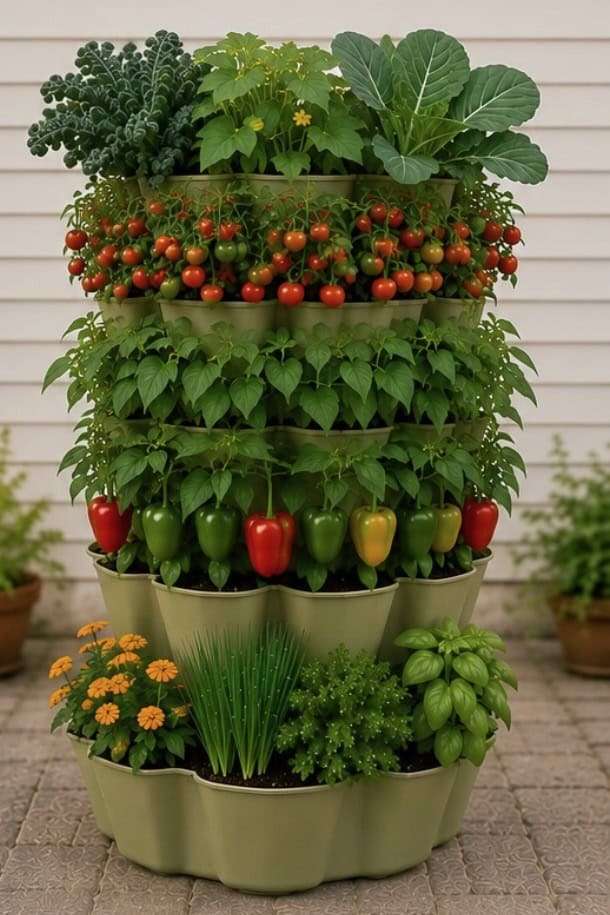
Here’s the plan from bottom to top:
- Tier 1: herbs, green onions, and flowers
- Tier 2: bell and snacking peppers
- Tier 3: bush beans
- Tier 4: dwarf tomatoes
- Tier 5: kale, collards, and bush cucumbers
Variety selection is particularly important here. Compact, dwarf, and bush varieties allow us to get more production without overwhelming the available root space.
Tier 1: Herbs, Green Onions, and Flowers
The bottom tier is dedicated to companion plants. I’d put basil, parsley, green onions, and calendula into four pockets, leaving two additional pockets for other herbs.
A vertical planter is a great place for more aggressive plants such as oregano, mint, lemon balm, or bee balm because the container keeps them from spreading throughout the garden. Together, these companion plants can attract pollinators and beneficial insects while some may help deter or distract pests.
Tier 2: Peppers
The second tier belongs to bell and snacking peppers. Many cayennes, habaneros, and other hot peppers eventually develop large plants and root systems that I think are better suited to larger containers or garden beds.
You could plant all six pockets, but that means considerably more demand for water and fertilizer. I’d probably plant every other pocket for three peppers.
Another option is succession planting. Start three plants and add another three later as the first group begins producing. This spreads out your harvest while reducing the number of mature, heavy-feeding plants competing at the same time.
Tier 3: Bush Beans
For the third tier, plant bush beans such as Blue Lake, Contender, Provider, or Jade. I’ve experimented with one, two, and three beans per GreenStalk pocket, and one has performed best for me. Two can work, but at three I noticed considerably less production because of the increased competition.
Beans grown in potting mix may also benefit from a bean and pea inoculant. Bagged potting mixes don’t necessarily contain the rhizobia bacteria legumes use to fix nitrogen, so adding the appropriate inoculant when planting beans or peas can help.
Tier 4: Dwarf Tomatoes
For tomatoes, look for dwarf, micro-dwarf, or compact determinate varieties such as:
- Dora’s Heartbreaker
- Patio Choice
- Tiny Tim
Again, you can plant all six pockets, but I’d rather succession plant them. Start three tomatoes in alternating pockets, then add the remaining three once the first group is flowering and setting fruit. As the first group finishes producing, the next group will be coming along behind it.
Tier 5: Kale, Collards, and Bush Cucumbers
I put the largest plants on top so their foliage doesn’t grow up and block other tiers. Plant one kale and one collard on opposite sides. Red Russian and Lacinato, also known as dinosaur kale, are two of the more heat-tolerant kale choices for the beginning of Florida’s fall season.
Use some of the remaining pockets for bush cucumbers such as Pickle Bush or Bush Champion. The cucumbers, tomatoes, and peppers may still need a little support even though they’re compact. A short bamboo stake and plant clip are usually enough.
You could experiment with a compact bush zucchini on the top tier, but I’ve had mixed results. Squash develops a substantial root system, and I think there are better places to grow it.
Florida Fall Garden Layout #3: A Grow Bag Garden
You don’t need permanent raised beds to grow a substantial fall garden. For this sample layout, I’d use eight 10-gallon grow bags.
Five-gallon bags can work for smaller vegetables, but 10 gallons gives these plants more room to develop. I generally save 20-gallon bags for larger root crops such as potatoes, sweet potatoes, and ginger.
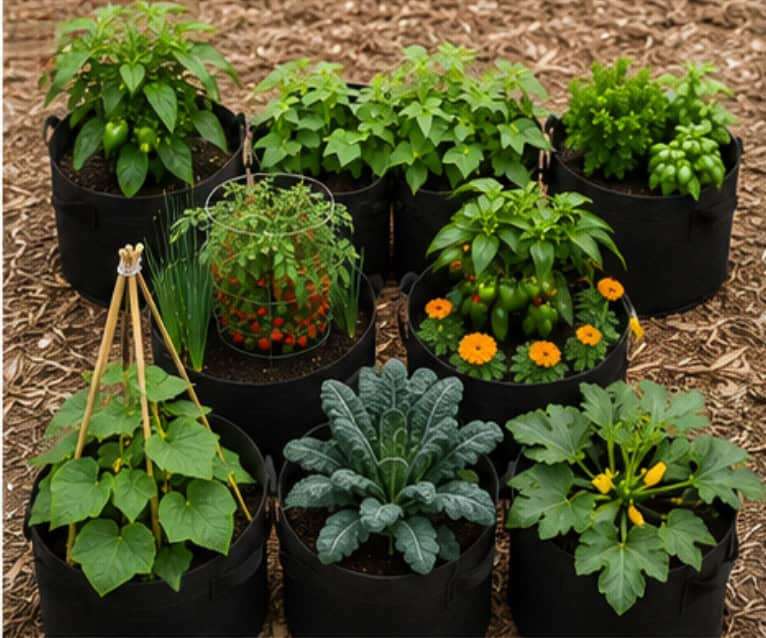
A Simple Eight-Bag Fall Garden Layout
Here’s how I’d use the eight bags:
- Bag 1: bell pepper and snacking pepper
- Bag 2: approximately five bush beans
- Bag 3: basil and parsley
- Bag 4: tomato with green onions underneath
- Bag 5: one hot pepper with calendula underneath
- Bag 6: three cucumbers with a teepee trellis
- Bag 7: one kale or collard
- Bag 8: one bush zucchini or squash
For the bean container, I prefer around five plants, with four spaced around the outside and one in the middle. You can squeeze in more, but I’d rather give each plant enough room to produce well.
The kale or collard gets an entire bag because both the plant and root system become surprisingly large. The same goes for zucchini. Fill that grow bag all the way to the top with potting mix because a mature squash will use every bit of root space you give it.
Supporting Tomatoes, Peppers, and Cucumbers in Grow Bags
A 10-gallon bag gives you enough soil to grow almost any type of tomato, but supporting a large indeterminate can become challenging. A tall tomato attached to a trellis anchored only in a grow bag can become top-heavy and unstable.
If you have an external trellis, an indeterminate can work. Otherwise, I’d choose a determinate, dwarf, or micro-dwarf variety. Underneath the tomato, plant green onions as a living ground cover. They’ll help cover the soil and may also help discourage some pests.
The hot pepper gets its own bag because those plants can become quite large. Plant calendula or another flowering companion underneath, where it can attract pollinators and beneficial insects without competing heavily for space.
For cucumbers, build a simple teepee trellis using bamboo poles and twine spaced about every three inches. I’d plant around three cucumbers in a 10-gallon bag, although you could push that closer to five if you’re prepared to keep up with their water and nutrient needs.
Watering and Fertilizing a Container Garden
Grow bags and vertical planters require more attention than in-ground or large raised-bed gardens because there’s less soil available to hold water and nutrients. As tomatoes, cucumbers, squash, and peppers mature, their demands increase considerably.
Monitor both watering and fertilizer throughout the season rather than assuming the routine that worked for young transplants will still be enough once those plants reach full size. That’s particularly important during a Florida fall that can still feel suspiciously like summer.
Florida Fall Garden Layout #4: An In-Ground Garden
An in-ground garden is one of the fastest and least expensive ways to create growing space because you don’t need a raised-bed frame or containers. Florida soil can make in-ground gardening more challenging, but it can absolutely work.
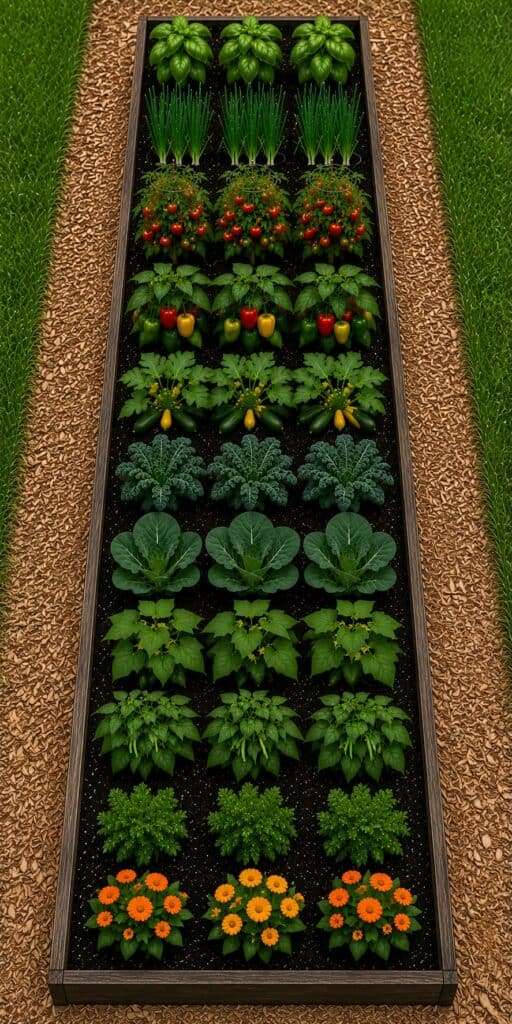
For this sample, I’m using a garden approximately 3 feet wide by 15 feet long. You can make the row considerably longer if you have space. If you’re creating multiple rows, leave roughly 3-foot pathways between them so you can comfortably work in the garden.
How to Space an In-Ground Garden
I still use square-foot gardening concepts even when I’m planting directly in the ground. It gives me an easy framework for deciding how much space each crop needs.
This layout includes:
- Basil
- Green onions
- Tomatoes
- Peppers
- Squash
- Kale
- Collards
- Cucumbers
- Bush or pole beans
- Parsley
- Flowers
Start one end with companion plants. Basil can be planted approximately one per square foot, while green onions can be planted around six per square foot.
Using Trellises to Get More From Your Space
One advantage of an in-ground garden is that you can drive T-posts directly into the ground and build sturdy trellises capable of supporting much larger plants. Instead of choosing only bush varieties, you could grow vining squash, indeterminate tomatoes, pole beans, and vining cucumbers along one shared trellis system.
You can also use individual tomato cages, cattle-panel trellises, teepees, or movable A-frames. Cucumbers especially perform well on an A-frame, and because the structure is temporary, you can move it when you rotate crops.
Where to Put Tomatoes, Peppers, Squash, Greens, Cucumbers, and Beans
In-ground growing gives you the most freedom when choosing tomatoes. Indeterminate, determinate, cherry, plum, and slicer tomatoes are all possibilities because you have the root space and trellising options to support them.
For a Florida fall garden, I’d lean toward varieties capable of handling the heat at the beginning of the season. Florida 91, Floridade, and Heatmaster are examples because we’re starting these plants while temperatures are still high.
Peppers need approximately one square foot each, so three adjacent spaces could give you one bell, one snacking pepper, and one hot pepper.
Squash needs more room. Even bush varieties shouldn’t be treated like peppers and expected to politely remain inside one square foot. Give each plant roughly 1½ to 2 square feet when possible, or use vining varieties to take advantage of vertical space.
Kale and collards can generally be planted around one per square foot. For trellised cucumbers, I prefer around three plants per square foot. Bush beans can be planted more densely, while pole beans should be incorporated into your vertical growing area.
Finish the Garden With Herbs and Flowers
At the opposite end of the row, finish with another group of companion plants. Parsley is an easy choice, or you can repeat basil using a different variety, such as purple basil on one end and green basil on the other.
I’d avoid planting aggressive herbs such as mint, lemon balm, and oregano directly into the ground unless you’re comfortable with them potentially becoming permanent residents. Containers are much better places for plants that have trouble respecting property lines.
Then add flowers. Calendula is one of my favorites for Florida’s fall season, but other possibilities include:
- Sweet alyssum
- Petunias
- Scabiosa
- Asters
- Bachelor’s buttons
- Dahlias
As temperatures cool toward winter, borage and dill become additional options. These flowers aren’t there just to look pretty. They can attract pollinators and beneficial insects, provide some ground coverage, and in the case of calendula, give you another useful harvest.
Choose the Layout That Works for the Space You Have
There isn’t one perfect way to lay out a Florida fall garden. Someone with a single GreenStalk on a patio has very different growing conditions than someone with a 50-foot in-ground row, but both can grow an impressive amount of food when the space is used intentionally.
The biggest thing to remember is that you’re planning for mature plants, not the adorable little transplants you’re putting into the garden. Squash needs room to spread, tomatoes need support, kale and collards develop substantial root systems, and vining crops can either take over your garden or become some of its most productive plants depending on how you use vertical space.
You also don’t have to grow everything in these sample layouts. If your family hates kale, please don’t grow kale just because I put it in a garden plan. Replace it with something you’ll actually harvest and eat. If you’re obsessed with cucumbers like I am this year, dedicate more space to cucumbers.
Your garden should reflect the space you have and the food your household actually eats. Get those two things right, and you have the foundation for a very productive Florida fall garden.