Last Updated on August 27, 2026 by Homegrown Florida
Peppers are supposed to be one of those vegetables that love Florida’s summer heat. At least, that’s what we’re always told. Unfortunately, that hasn’t exactly been my experience with common pepper problems.
I can usually keep my pepper plants growing through summer, but that doesn’t mean they’re particularly happy about it. I’ve dealt with plants wilting even though the soil is moist, beautiful green plants that refuse to flower, flowers that never turn into peppers, tiny bell peppers that look more like snacking peppers, and some seriously strange-looking fruit.
Table of Contents
This post may contain affiliate links. Read full disclosure here
The problem is that there’s a difference between a plant tolerating heat and actually thriving in it. Peppers like warm weather, but Florida summers can push them beyond their ideal conditions, especially when high daytime temperatures are combined with warm nights and extremely high humidity.
The good news is that a struggling pepper plant doesn’t necessarily need to be pulled out. If you can identify what’s causing the problem, you may be able to keep it healthy enough to make it through summer. And once our temperatures begin dropping in fall, those established plants can become considerably more productive.
Here are five of the most common problems I’ve experienced growing peppers through a Florida summer and what you can do about them.
Why Florida Summer Is Harder on Peppers Than You Might Think
Peppers definitely like heat, but exactly how much heat they tolerate depends partly on the type you’re growing.

Sweet peppers and bell peppers tend to perform best when temperatures are roughly between 70°F and 85°F. Hot peppers generally tolerate higher temperatures and may be perfectly comfortable into the upper 80s or around 90°F.
Florida regularly blows right past that.
We can have daytime temperatures in the mid-90s or higher, and the bigger problem is that our plants don’t necessarily get much relief overnight. Nighttime temperatures can remain extremely warm, leaving peppers under almost constant heat stress.
That’s why I notice the problems most dramatically with my bell peppers. Hot peppers generally handle summer better, while bell peppers can continue growing but produce smaller, misshapen fruit or struggle with pollination.
If your peppers aren’t performing in July and August the way they did earlier in the year, that doesn’t necessarily mean you’re doing something wrong. The first step is figuring out whether you’re dealing with a problem you can correct or simply a plant responding to extreme summer conditions.
Common Pepper Problems #1: Your Pepper Plants Keep Wilting
Wilting is often one of the first signs that something isn’t right with a pepper plant, but don’t automatically grab the hose.
A wilted plant can mean it needs water. It can also mean it has too much water. And just to make things extra fun, it can mean the soil moisture is absolutely perfect and the plant is simply hot.
This is why I don’t diagnose watering problems based on what the leaves look like alone.
Not Enough Water vs. Too Much Water
Peppers like consistently moist soil, but they don’t want to stay saturated.
Florida’s sandy soil complicates things because it drains extremely quickly. Sand itself isn’t necessarily a problem for peppers, but our native soil can contain so much of it that water moves through before the roots have enough time to use it. Adding compost and other organic matter can improve the soil’s ability to retain moisture.
Containers can have the same problem. A pepper growing in a pot may dry surprisingly quickly during summer, particularly once the plant is mature and has filled much of the container with roots.
The opposite problem is keeping the roots constantly wet. If the soil remains saturated, the roots don’t have access to enough oxygen, and the plant can wilt even though there’s plenty of water around it.
That means “my pepper is wilted” isn’t enough information to decide whether it needs more water.
I’ve started using a moisture meter rather than guessing. For my peppers, I’ve had good results keeping the growing medium around 40 to 60% moisture. It gives me something more objective to work with instead of watering every time the leaves look unhappy.
How to Tell if Wilting Is Just Heat Stress
Before changing your watering routine, look at when the wilting happens.
I’ve checked my soil moisture plenty of times during summer, found that it’s exactly where I want it, and still had pepper plants with drooping leaves in the afternoon.
In that situation, I leave them alone and check again later.
If the plant perks back up in the evening or overnight as temperatures drop, the problem probably wasn’t a lack of water. The plant was responding to the heat of the day.
Adding more water every time this happens can actually create the overwatering problem you were trying to avoid. Check the soil first, then check the plant again after temperatures cool.
If it’s still wilted in the morning, that’s when I’d start looking more closely at soil moisture and root health.
Common Pepper Problems #2: Your Pepper Plants Are Growing but Not Flowering
Sometimes the pepper plant looks fantastic. It’s big, bushy, green, and apparently determined to become the prettiest ornamental plant in your vegetable garden.

There’s just one little problem. No flowers.
When I see lots of healthy green growth without flowering, one of the first things I look at is nutrition.
What Your Pepper Plant Is Telling You About Nitrogen
Peppers need nitrogen, phosphorus, and potassium, but those nutrients play different roles in the plant.
Nitrogen is important for leafy green growth. If you’re giving a pepper too much nitrogen, you can end up with a beautiful plant that keeps putting its energy into stems and leaves rather than flowering and producing fruit.
That’s why I don’t want nitrogen to dominate the fertilizer I’m using once I’m trying to get peppers into production.
When choosing a fertilizer, look at the three numbers on the package, which represent nitrogen, phosphorus, and potassium, or N-P-K. For fruiting peppers, I look for a fertilizer with lower nitrogen and stronger phosphorus and potassium, with the middle number higher than the first.
Tomato fertilizers can work well for peppers for this same reason. Both are fruiting vegetables with similar nutritional needs.
How to Correct Phosphorus and Potassium Deficiencies
If you’re building fertility with individual organic amendments rather than using a complete fertilizer, it helps to understand what each amendment contributes.
For specific needs, some options include:
- Nitrogen: blood meal or feather meal
- Phosphorus: bone meal
- Potassium: kelp meal for a smaller boost or potash when considerably more potassium is needed
Compost is an important part of building healthy soil, but compost alone doesn’t automatically provide the nutrient balance a heavily producing pepper needs.
Animal-manure-based compost, for example, can contribute plenty of nitrogen without necessarily providing enough phosphorus and potassium for heavy flowering and fruit production. That’s why a plant can look beautifully green while still not producing the way you expected.
Rather than throwing random amendments at the plant, look at what it’s doing. Lots of foliage without flowers points you in a different direction than a pale, stunted plant that isn’t growing well at all.
Common Pepper Problems #3: Your Pepper Plants Are Flowering but Not Setting Fruit
Now we have a healthy green pepper plant and we’ve managed to get it flowering. But instead of those flowers turning into peppers, they fall off.
During a Florida summer, pollination is one of the first things I’d consider.
How Pepper Flowers Pollinate
Pepper flowers are considered complete, or perfect, flowers because each individual flower contains both the male and female reproductive parts.
That means a bee doesn’t necessarily need to carry pollen from one pepper flower to another the way it does with plants that have separate male and female flowers.
Instead, the pollen needs to move within the flower.
Wind can create enough movement for that to happen. Buzzing insects can also vibrate the flower and help release the pollen. The important part is movement.
Under good conditions, pollen is released and reaches the receptive female portion of the flower, allowing fruit development to begin.
Why Florida Heat and Humidity Interfere With Pollination
Unfortunately, Florida summer isn’t exactly known for providing ideal pollen conditions.
Extreme heat can reduce pollen quality and viability. Then we add our high humidity, which can make pollen sticky rather than allowing it to release and move easily within the flower.
The result may be flowers that never successfully pollinate or flowers that are only partially pollinated.
You’ll often see the plant flower normally, then drop those flowers without setting fruit. You may also get fruit that develops but looks smaller or strangely shaped, which we’ll get into later.
And sometimes you can do everything right and still have reduced fruit set during the hottest part of summer. That’s important to recognize because you don’t necessarily need to start fertilizing, watering, and spraying a perfectly healthy plant in an attempt to “fix” something caused primarily by the weather.
How to Help Pepper Flowers Pollinate in Summer
You can give those flowers a little assistance.

Some gardeners use an electric toothbrush to vibrate the flowers. I keep it even simpler and tap the flowers or their stems fairly firmly.
That vibration helps shake pollen loose inside the flower.
It won’t magically turn bad pollen into good pollen, so you may still have lower fruit set during periods of extreme heat and humidity. But it can improve the chances of successful pollination when conditions aren’t ideal.
If your pepper plant is healthy, flowering, and properly watered but keeps dropping flowers during the hottest, most humid part of summer, I’d try helping with pollination before assuming the plant needs more fertilizer.
Common Pepper Problems #4: Your Peppers Are Much Smaller Than They Should Be
This one can be particularly noticeable with bell peppers.
Earlier in the season, you might harvest perfectly respectable bell peppers. Then summer arrives and the same plant starts producing tiny little peppers that look like somebody accidentally swapped your bell pepper seeds for a snacking variety.
Heat stress is a major reason.
Why Homegrown Bell Peppers May Be Smaller Than Grocery Store Peppers
Before blaming Florida weather for everything, it’s worth adjusting our expectations a little.
The giant bell peppers at the grocery store are produced using varieties selected specifically for commercial production. Growers are choosing plants for qualities like large fruit, uniformity, productivity, shipping durability, and shelf life. They’re also growing them under managed commercial conditions designed to maximize production.
Your backyard pepper may be a completely different variety growing under completely different conditions.
I grow organically, and even during good growing conditions, I don’t necessarily expect every bell pepper from my garden to match the enormous ones at the grocery store. I’ve grown plenty of large bell peppers, but I’m also perfectly happy with slightly smaller ones.
What gets my attention is when a variety that normally produces large peppers suddenly starts giving me tiny fruit.
That’s when I look at heat.
Why Bell Peppers Struggle More Than Hot Peppers in Extreme Heat
Not all peppers respond to summer the same way.
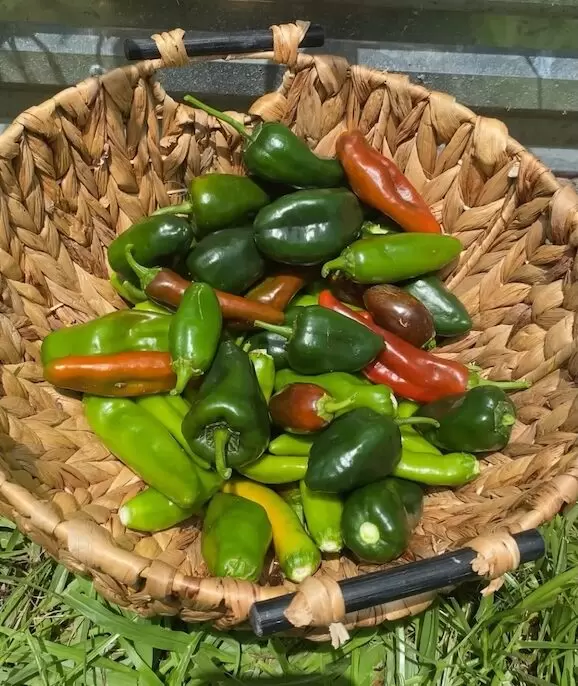
Sweet peppers and bells generally prefer temperatures somewhere around 70°F to 85°F. Hot peppers can tolerate warmer conditions, with many handling temperatures closer to 85°F to 90°F.
Once we’re regularly hitting 95°F or higher, even heat-loving peppers are being pushed.
Then there’s the nighttime temperature. Our plants aren’t necessarily cooling down significantly overnight, so they’re experiencing prolonged stress day after day.
Under those conditions, the plant’s priority isn’t producing the biggest, prettiest pepper you’ve ever seen. It’s surviving and reproducing. Smaller fruit is one way that stress can show up.
I’ve even had younger peppers grow larger after a few cooler, rainy days while older fruit that developed during hotter conditions stayed tiny. The variety didn’t change, and my fertilizer didn’t suddenly become magical. The weather improved.
If your plant otherwise looks reasonably healthy, don’t assume small summer peppers mean the plant is finished. Keeping it alive until fall may give you dramatically better fruit once temperatures become more favorable.
Common Pepper Problems #5: Your Peppers Are Misshapen or Damaged
Small fruit isn’t the only strange thing peppers can do when they’re stressed.
You may get peppers that are rounded when they should be elongated, fruit that looks like only half the pepper developed, bell peppers without their normal lobes, or peppers with odd scars and malformed sections.
They aren’t going to win a beauty contest, but they can tell you quite a bit about what the plant has been dealing with.
How Heat and Incomplete Pollination Create Misshapen Peppers
This problem ties directly back to heat stress and pollination.
A severely stressed plant is trying to reproduce under conditions that aren’t ideal. At the same time, high temperatures can reduce pollen quality while humidity makes that pollen harder to distribute properly.
If the flower isn’t fully pollinated, the resulting fruit may not develop evenly.
That’s when you can get some seriously weird-looking peppers. One side develops normally while another doesn’t, the lobes are uneven, or the entire pepper grows into a shape that looks nothing like the picture on the seed packet.
The fruit is still trying to develop. It’s simply doing it with less-than-ideal pollination under less-than-ideal growing conditions.
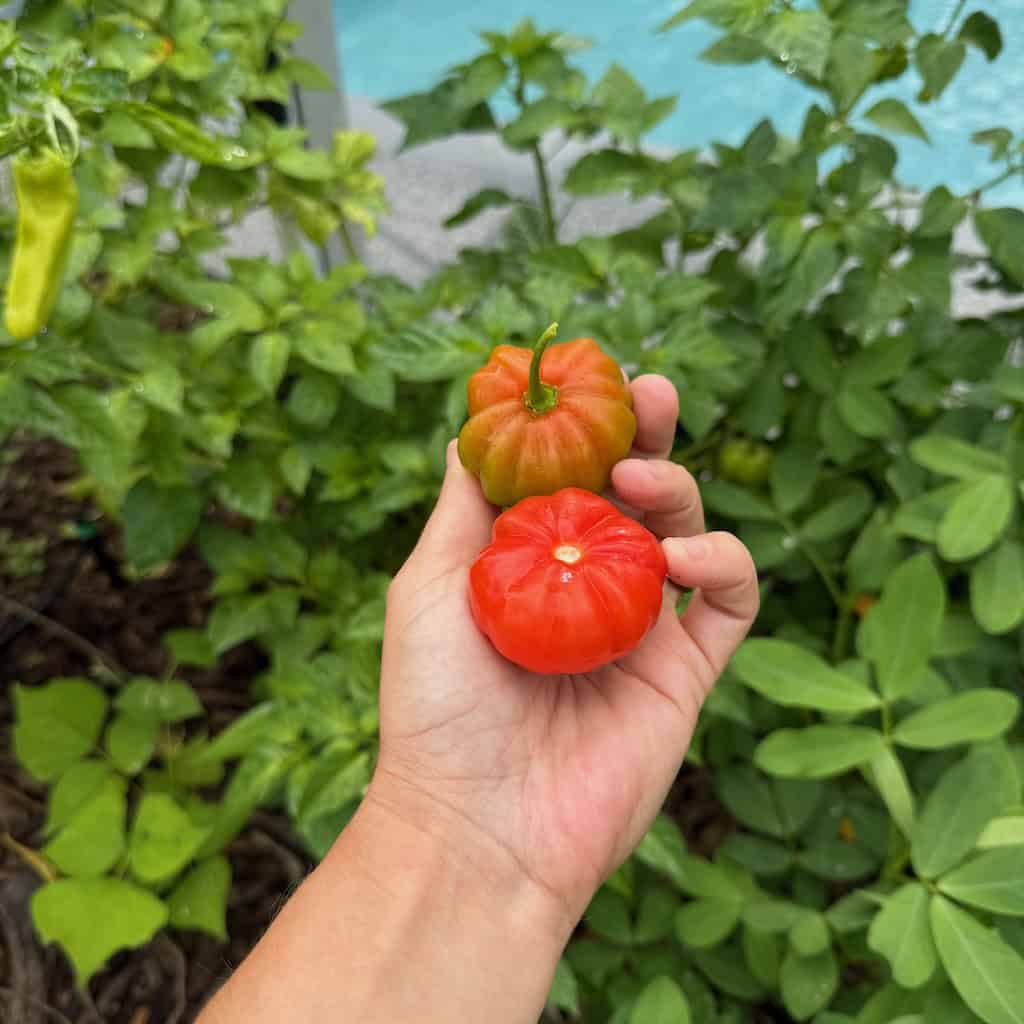
My Ozark Giant bell pepper has been a good example of this. The plant has dealt with wilting, nutritional stress, and intense heat, yet it has continued producing fruit. Some of those peppers aren’t particularly pretty, but the fact that the plant is still producing gives me a good reason to keep it going into fall.
Why Stressed Pepper Plants Can Lead to Sunscald
Heat stress can create another problem indirectly.
A stressed pepper plant may begin dropping some of its leaves. Once that happens, developing fruit that was previously shaded by foliage can suddenly be exposed to intense direct sunlight.
That can lead to sunscald.
Sunscald often appears as a pale, thin, leathery, or damaged area on the side of the fruit receiving the strongest sun. It can look like the pepper is beginning to rot from the outside, but the initial damage is caused by sun exposure.
This can become especially noticeable on already stressed plants because they’re losing some of the foliage that would normally protect the fruit.
Are Misshapen and Sunburned Peppers Still Edible?
An ugly pepper isn’t automatically a bad pepper.
Misshapen fruit caused by incomplete pollination is generally still perfectly usable. A pepper with a small area of sunscald can also often be harvested and used by cutting away the damaged section, as long as the remaining fruit is firm and healthy and there’s no sign of secondary rot.
Maybe don’t save that one for your picture-perfect stuffed pepper dinner.
Chop it up for fajitas, sauces, stir-fries, freezing, pickling, or another recipe where nobody cares what shape it started in.
How to Reduce Heat Stress With Afternoon Shade
If extreme heat is behind several of these problems, one of the most useful things you can do is reduce the intensity of the afternoon sun.
That doesn’t mean peppers should spend summer growing in deep shade. They still need plenty of light.
What I want is good direct sunlight earlier in the day followed by some protection during the hottest part of the afternoon.
Shade cloth is probably the most obvious solution, but it isn’t the only one. You can use:
- Shade cloth
- A fence
- The side of your house
- A patio or garden umbrella
- Existing trees and shrubs
- Taller plants positioned strategically around the garden
My own garden takes advantage of natural afternoon shade. The beds receive direct sunlight as the sun moves across the sky, but trees begin blocking the strongest western sun around 2:00 or 3:00 in the afternoon.
That gives the peppers plenty of light without forcing them to endure the most intense part of the day completely exposed.
Using Your Garden Layout to Create Natural Summer Shade
One of my favorite long-term strategies is designing the garden so the plants themselves help create seasonal shade.
The west side of the garden is particularly useful because that’s where you can block some of the hottest afternoon sunlight. Fast-growing shrubs and plants can provide summer protection while also benefiting pollinators, wildlife, and beneficial insects.
Some possibilities include:
- Hibiscus
- Firebush
- Elderberry
- Florida native shrubs suited to your specific conditions
What I especially like are plants that can be cut back heavily or naturally die back during winter.
During summer, they grow tall enough to shade the vegetable garden during the hottest part of the afternoon. When winter arrives, they can be cut back so your cool-season vegetables receive the full sun they need.
Instead of fighting Florida’s changing seasons, the garden layout changes with them.
If permanent plantings aren’t an option, don’t overcomplicate it. Shade cloth or even a strategically positioned outdoor umbrella can accomplish the same basic goal. The objective is simply to take the edge off that intense late-day heat.
Don’t Give Up on Your Pepper Plants Before Fall
A Florida pepper plant can look pretty questionable in the middle of summer and still have plenty of life left in it.
If it’s wilting, check the soil before automatically watering. If it’s beautifully green but refusing to flower, look at your fertilizer balance. If it’s flowering but dropping everything, heat and humidity may be interfering with pollination. And if the plant is producing tiny or misshapen peppers, extreme heat may simply be limiting what it can do right now.
Sometimes the solution is something you can correct. Other times, the solution is keeping the plant reasonably healthy and waiting.
That’s exactly what I’m doing with several of mine. They’re getting as much afternoon shade as I can give them, I’m staying on top of their watering and nutrition, and I’m continuing to harvest whatever they produce.
Because fall is right around the corner.
If these established plants can make it through summer, they don’t have to start from scratch when temperatures finally improve. They already have mature root systems and established growth, and they can put that energy into flowering and producing better peppers.
So I’m not particularly worried if every summer pepper isn’t enormous or beautiful. I’ll happily chop up the weird ones and eat them.
The plants that survive summer are the ones I’m really interested in seeing once Florida finally turns the heat down.