Last Updated on March 19, 2026 by Homegrown Florida
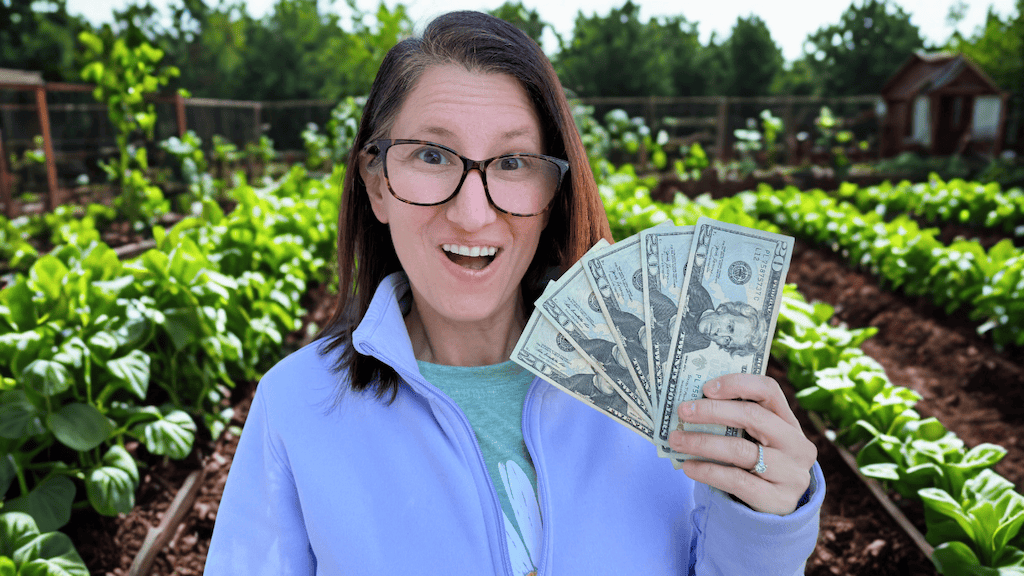
If I had to restart my garden tomorrow, I mean the whole thing gets leveled, nothing is left, and I only had $100, this is exactly how I would rebuild it with budget gardening in mind.
We are going to break it down dollar for dollar, exactly what I would spend my money on and where. But first, we need to talk about what I would skip, because this is where most people blow the budget before the first seed even hits the soil.
Table of Contents
This post may contain affiliate links. Read full disclosure here.
What I Would Skip (Even Though It Hurts My Feelings)
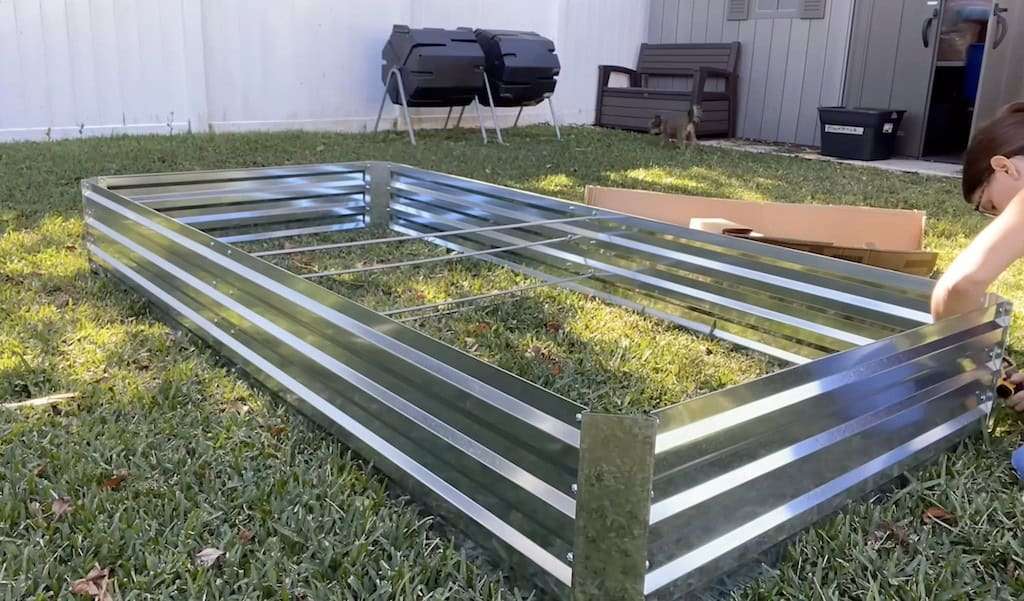
1. Raised beds
This one breaks my heart because I love raised beds. They let you grow more in a smaller space since the soil stays loose and never gets compacted. You can build a perfect growing mix, you can control weeds better, and the accessibility is great.
But raised beds are expensive, and if you are rebuilding on $100, they are not where the money goes first.
2. Bulk soil
I love bulk soil too. If you are in Central Florida, Whitwam Organics has a great bulk mix, and there are other nurseries that sell solid bulk soil. Bulk is usually a smarter buy than bags.
But it is still an added expense, and on this budget gardening we can build soil cheaply with free materials and a little strategy.
3. Irrigation
This is the one I miss the most. Irrigation is my favorite upgrade in my whole garden because I cannot stand hand watering. But if we only have $100, I am watering with a hose, buckets, or a pitcher from the kitchen. No shame.
Also, hand watering teaches you something valuable fast: plants can live with less water than most people think, and a lot of us overwater. I know I did.
4. Trellises
Also painful. I love vertical growing. But you do not have to buy trellises in the beginning. For the first few years I did not use a single store bought trellis.
You can trellis with sunflower stalks, bamboo from a neighbor, twine you already own, dead branches, even random fence scraps. Store bought trellises are a “later” purchase.
So what do we spend the money on?
The $100 Budget Gardening Breakdown
$30 on seeds (high yield, Florida friendly, and fast payoff)
If I am rebuilding using budget gardening, the first thing I buy is seeds. Seeds are how you start reducing your grocery bill, and the garden only grows if you have something to plant.
I like MIgardener for budget gardening seeds because many packs are around $2, and they do free shipping over a certain amount, which matters when you are trying to stretch every dollar.
The goal with seed choices is simple: volume. I want crops that produce a lot and keep producing, because the entire point is to save money, then reinvest those savings back into the garden.

Here is the exact seed list I would start with:
High producing staples
- Yard long beans (summer workhorse in Florida)
- Blue Lake pole beans (great spring and fall crop, you do not need many plants)
- Ashley cucumbers (strong, reliable producer)
- Cubanelles peppers (big yield, classic sweet pepper)
Squash and tomatoes
- Gray zucchini [Mexican zucchini]
- Waltham squash [good option, though there are other squashes that can outperform it in Florida]
- Florade tomato [solid slicer for Florida conditions]
- Large red cherry tomato [big producer, usually dependable]
Greens for real meals
- Jersey Wakefield cabbage
- Lacinato kale [will grow a long time, and can handle a lot]
- Paris Island romaine lettuce [more heat tolerant than many lettuces]
- Georgia Southern collards [one plant can feed a family, no exaggeration]
Flavor and bonus food
- Bunching onions [big payoff, low drama]
- Sugar snap peas [you eat the whole pod, more food per plant]
- Atomic red carrots [I have grown them, they do fine for me]
If someone wants a full list of Florida varieties, that is exactly what my Homegrown Florida Gardening Guide is for, but this is the “$100 rebuild” shortlist.
Free seed bonus moves
Just because I spent $30 on seeds does not mean I stop there. Free seeds exist everywhere if you ask.
- Join a local Buy Nothing group and ask for leftover seeds
- Check your library, many have seed libraries
- Go to plant swaps, people give away extras constantly
- Post in local Facebook gardening groups
- Ask gardeners directly, most of us hoard seeds like dragons hoard gold
If you ask someone to mail seeds, offer a self addressed stamped envelope [envelope inside an envelope, your address, stamps already on it]. Make it easy, people are way more willing to share.
$40 on soil supplies (plus free materials to build the bed)
Now we need somewhere to plant these seeds, and we are going to do it without raised beds and without buying piles of expensive soil.
Step 1: Get free wood chips
In Florida, a lot of counties offer free wood chips, and many also offer free compost. Not all do compost, but many do chips. You can also:
- Call tree companies
- Ask a crew chipping trees in a neighborhood if they will dump a load
- Use ChipDrop if you can handle a big delivery
- Ask neighbors who just had tree work done
Get a storage tub, buckets, a truck bed, whatever you have and start collecting.
Step 2: Pick the right spot
Find a spot that gets 6 to 8 hours of direct sun. Not dappled sun, not “kinda bright,” actual sun.
Step 3: Smother the grass, build the bed on top
- Dig out grass or perennial weeds if you can
- Lay down cardboard or newspaper if you have it
- Then pile on a ridiculous amount of wood chips
Enough to smother anything underneath.
This is not pretty at first, but it works. Those chips start breaking down, they feed biology, they hold moisture, and they set you up for better soil over time.
Now, wood chips alone are not where you plant seeds. We need a planting zone inside the mulch.
Step 4: Buy just enough soil to plant into
Here is what I would buy with that $40:
1. A small container of water soluble fertilizer
If you want to stay organic, it costs more. For budget gardening, I would go with a synthetic water soluble option because it is efficient and you use tiny amounts.
The key is buying small. You do not need a massive tub. A little goes a long way.
2. One bale of ProMix
This is doing double duty.
- It can be a seed starting mix
- It can also be a “planting pocket” mix inside the mulch

3. Two cheap bags of compost
Skip the pricey stuff. Grab the generic compost near Black Kow, usually cheaper per bag.
How to Plant Seeds Without “Real” Garden Beds Yet
You are not planting seeds straight into wood chips. You are making planting pockets.
Here is the method:
- Pull mulch aside where you want a plant
- Scoop in a little damp ProMix
- Make a small mound [like a mini volcano]
- Plant the seed into that mound
- Pull mulch back around it, but do not bury the mound
- Water it in well
Once the seed sprouts, you top dress a little compost around that mound to feed it as it grows.
This is cheap, it works, and it builds soil underneath as the months go on.
$30 on perennials that pay you back
Now we are at $70 spent. We have $30 left.
This is where I do something that most beginner gardens skip: I buy a tiny amount of perennials, because perennials keep feeding you without needing to be replanted constantly.
$10 on three perennial herbs
Only herbs you use all the time, and only perennial herbs.
My three would be:
- Oregano
- Chives
- Rosemary

Skip basil. Basil is great, but it is an annual, and on a tight budget I want plants that live for years.
How to buy them cheap:
- Local nurseries sometimes do 3 for $10 deals
- Extension office plant sales
- Facebook Marketplace [people sell extras for a couple bucks]
$20 on one fast, high yield fruit tree
If I had to pick one fruit tree to start with on a shoestring budget gardening, it is a mulberry.
They grow fast, they produce a lot, and you can often find them cheap:
- Facebook Marketplace
- Local plant swaps
- Cuttings from friends
If you cannot get one free, buy the smallest size you can. Mulberries grow so fast that starting small is fine.
You can also trade cuttings. I have literally traded cuttings through the mail. Gardeners love this stuff.
What Happens Next: The Reinvesting Phase
Now we have spent the $100:
- Seeds are in the ground
- Planting pockets are set up in mulch
- You have fertilizer, ProMix, and compost
- You have perennial herbs
- You have one fruit tree
Now you stop spending.
You hand water, you watch, you pick pests off manually, and you let the garden do what it does.
In 45 days to 4 months [depending on crops], you start harvesting. And that is where the real game begins.
Track your harvest like it is a paycheck
Every time you harvest something, write it down. Then subtract what you harvested from what you normally buy at the grocery store.
Even if it is only $20 saved per week, that is your rebuild money.
Two ways to grow your “garden budget”
- Savings from groceries you did not buy
- Selling extras
- seedlings
- herb cuttings
- rooted mulberry cuttings later on
- extra plants from seed starts
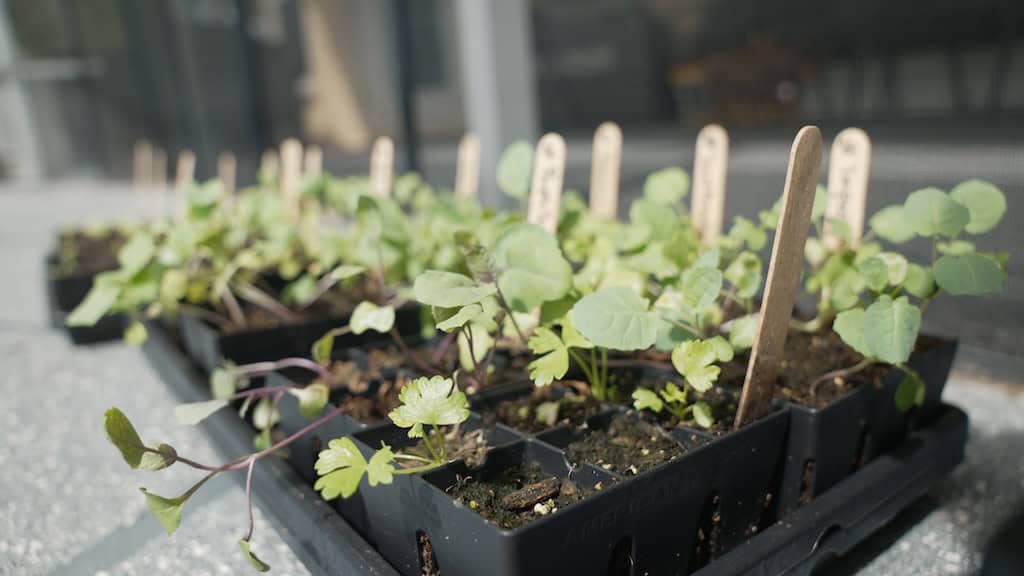
People will happily pay $3 to $5 for seedlings. More for herbs. Even more for fruit tree starts.
Put that money in an envelope. When it hits another $100, you buy your next upgrade.
What To Upgrade First [Pick the Thing That Annoys You Most]
This is the part that makes your garden grow fast.
Ask yourself: what is the biggest pain point right now?
- If watering is miserable, your next money goes to irrigation
- If you are saving on veggies but still buying a ton of fruit, buy another fruit tree
- If beans are annoying to keep replanting, swap to a perennial legume like pigeon peas
- If you are fighting sun and space, start building cheap vertical supports from scavenged materials
The garden grows based on solving the problem that is slowing you down.
The Real Goal: Productivity Over Perfection
The goal is not an Instagram worthy garden. The goal is a garden that feeds you, saves you money, maybe even makes you money, and gets better every season.
Five years from now, if you keep reinvesting, you will be the person giving stuff away on Marketplace and Buy Nothing because you have extras.
That is the cycle.