Last Updated on July 30, 2026 by Homegrown Florida
If you’ve been gardening in Florida for any length of time, you’ve probably noticed the same frustrating pattern of tomatoes stop producing.
Your tomatoes grow beautifully through the spring. They’re covered in flowers and producing more fruit than you know what to do with. Then summer arrives, and suddenly the flowers stop setting fruit. Existing tomatoes ripen, but new ones become harder and harder to find until eventually the plant seems like it’s just… done.
Or is it?
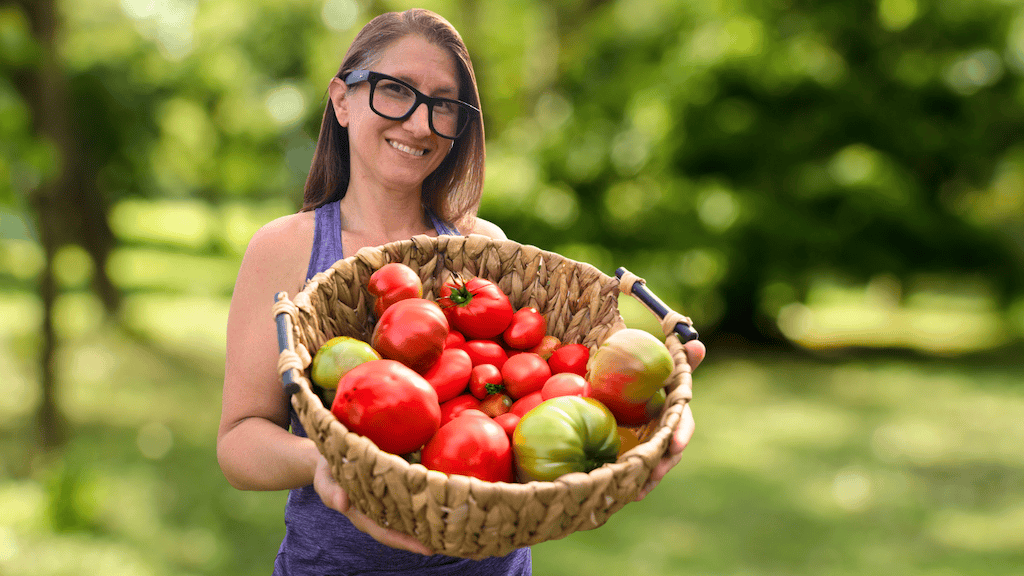
As I was harvesting tomatoes from my garden this summer, I realized I still had plants producing fruit despite weeks of hot temperatures and high humidity. One was a cherry tomato covered in ripe fruit, and another slicer was still hanging on much longer than I expected.
That got me thinking about why some tomatoes continue producing while others seem to quit as soon as summer arrives.
Table of Contents
This post may contain affiliate links. Read full disclosure here
Over the years, I’ve learned a few tricks that can help keep tomatoes producing longer into the season. Some require a little extra effort. Others are surprisingly simple. But before we talk about what works, it’s important to understand what’s actually causing the problem in the first place.
Why Tomatoes Stop Producing in Summer
Most gardeners blame the heat.

And while high temperatures certainly play a role, they’re only one piece of the puzzle.
What really makes growing tomatoes in Florida so challenging is the combination of high daytime temperatures, warm nighttime temperatures, and high humidity. Each one affects the plant differently, but together they create the perfect conditions for poor pollination, increased disease pressure, and stressed plants that struggle to keep producing.
But daytime heat alone doesn’t necessarily stop tomatoes from producing fruit.
The bigger issue is what happens after the sun goes down.
In many parts of the country, nighttime temperatures fall into the 50s or 60s, giving tomato plants a chance to recover from the heat of the day. Here in Florida, however, our nights often stay above 70°F for weeks or even months at a time. Without that cooler recovery period, the plants remain under constant stress, making it much harder for flowers to develop and successfully produce fruit.
Then there’s humidity. This is the piece that surprises most people.
Understanding these three challenges is the key to growing tomatoes longer into the summer. Once you know what’s working against your plants, you can start making changes that give them a much better chance of continuing to flower, pollinate, and produce fruit.
Problem #1: Heat Stress
Let’s start with the most obvious culprit: heat.

Tomatoes are warm-season crops, but that doesn’t mean they enjoy extreme heat. Once daytime temperatures consistently climb above 85°F, the plants begin experiencing stress. Push those temperatures into the mid-90s for extended periods, and that stress becomes much more significant.
One of the first things you’ll notice is the foliage. Leaves may wilt during the hottest part of the day or begin curling inward. While that can look alarming, it doesn’t necessarily mean your plant is dying. It’s simply trying to conserve moisture and protect itself from excessive heat.
The good news is that daytime heat by itself isn’t usually enough to stop tomato production.
In many western states, for example, daytime temperatures regularly climb well into the 90s or even over 100°F. Yet gardeners can still harvest tomatoes throughout the summer because their evenings cool down considerably. Those cooler nighttime temperatures give the plants a chance to recover before another hot day begins.
Here in Florida, we don’t get that break.
Our nighttime temperatures often stay above 70°F for weeks at a time. Instead of recovering overnight, tomato plants remain under constant stress around the clock. That continuous stress makes it much harder for the plant to produce flowers, successfully pollinate, and develop fruit.
That’s why two gardens experiencing the exact same daytime temperatures can have completely different results. One may continue producing tomatoes while the other seems to stall out entirely. The difference isn’t just the daytime heat. It’s what happens after the sun goes down.
Problem #2: Humidity Prevents Pollination
Heat gets most of the blame, but in my experience, humidity is often the bigger problem.

You can have a tomato plant that’s lush, healthy, and absolutely covered in flowers, yet every one of those flowers eventually drops without producing a tomato. If you’ve ever walked outside and found little yellow blossoms scattered beneath your plants, you’ve probably experienced this firsthand.
To understand why, it helps to know a little about how tomato flowers work.
Tomatoes have what’s called a “perfect flower,” meaning each flower contains both the male and female reproductive parts. Unlike some plants that require separate male and female flowers, tomatoes have everything they need in a single bloom. The only thing left is getting the pollen where it needs to go.
Normally, that’s easy.
A breeze blowing through the garden or a buzzing bee vibrating the flower causes dry pollen to shake loose. That pollen disperses like a fine powder throughout the flower, reaching the female parts and allowing pollination to occur.
Florida’s summer humidity changes that process.
Instead of being light and powdery, the pollen becomes damp and sticky. When the flower is shaken, the pollen doesn’t spread throughout the blossom like it normally would. Instead, it clumps together and simply falls. Without enough pollen reaching the female parts of the flower, pollination never happens. Eventually, the flower dries up, drops from the plant, and no tomato develops.
That’s why you’ll often see beautiful tomato plants in the middle of summer that look perfectly healthy but aren’t producing fruit. The plant isn’t necessarily the problem. The flowers simply aren’t getting pollinated.
The challenge, then, isn’t just keeping the plant alive. It’s creating conditions where those flowers have the best possible chance of successfully pollinating despite Florida’s heat and humidity.
How to Keep Tomatoes Cooler
Now that we know why tomatoes struggle in Florida’s summer heat, the next question is: what can we actually do about it?
The truth is, we can’t change the weather. We can’t lower the temperature or make the humidity disappear. But we can make our tomato plants a little more comfortable, and sometimes that’s enough to keep them producing longer.
One thing I’ve noticed over the years is that my biggest, bushiest tomato plants often perform the best.
Most gardening advice tells you to aggressively prune tomatoes to improve airflow. While there’s certainly a place for pruning, I’ve found that a large canopy of leaves also creates something incredibly valuable: shade. The upper portion of the plant takes the brunt of the afternoon sun, helping protect the flowers and fruit developing farther down inside the plant.
You can create that same effect by growing other crops nearby.
One of my best-performing cherry tomatoes was growing next to sweet potatoes, long beans, and Puerto Rican black beans climbing a trellis. Those neighboring plants provided afternoon shade, helping reduce some of the intense summer heat without blocking all of the sunlight.
Keeping the root zone cool is just as important.
A thick layer of mulch insulates the soil and helps prevent moisture from evaporating as quickly. I like applying at least 3 to 4 inches of mulch around my tomatoes during the summer. Dried leaves, straw, wood chips, grass clippings, or even chopped-up lemongrass all work well. The goal is to keep the soil cooler and reduce temperature swings around the roots.
If you really want to maximize production, shade cloth is another excellent option.
I’ve avoided using it for years because I wanted a setup that was quick to install, easy to remove before storms, and still looked nice in the garden. But it doesn’t have to be complicated. Even a simple frame with shade cloth stretched over the plants can reduce temperatures enough to make a difference during the hottest part of the summer.
None of these techniques completely eliminate heat stress, but together they can help create an environment where tomato plants have a much better chance of continuing to flower and set fruit.
How to Stay Ahead of Disease
Unfortunately, heat isn’t the only challenge Florida gardeners face.

Our high humidity creates ideal conditions for fungal diseases like blight and powdery mildew. Once those diseases become established, it’s very difficult to reverse the damage. That’s why I spend much more time thinking about prevention than trying to cure a plant that’s already infected.
One thing that surprised me this year was the difference between two of my tomato plants.
One had significant blight and was clearly declining. The other, a large cherry tomato growing nearby, had very little disease despite producing all summer long.
The biggest difference? I never pruned the cherry tomato.
That’s completely opposite of the advice you’ll often hear. Conventional wisdom says pruning improves airflow and reduces disease, and I do think there’s truth to that. But I’ve also noticed that every time I begin heavily pruning my tomatoes, disease seems to spread more quickly.
I’m not suggesting you never prune.
Instead, I’ve started leaning toward minimal pruning. I remove what I absolutely need to, but I also allow the plant to develop plenty of foliage. That larger canopy provides shade, and I’ve personally seen better results than when I aggressively removed leaves throughout the season.
Preventative fungicide treatments can also make a tremendous difference.
Whether you choose an organic copper fungicide, a diluted hydrogen peroxide solution, milk sprays, or another preventative treatment, the important part is starting before disease appears. Once fungal diseases take hold, you’re generally slowing them down rather than eliminating them. Applying preventative sprays regularly throughout the growing season gives your plants the best chance of staying healthy.
Watering practices matter, too.
Every time leaves stay wet for long periods, fungal spores have a better opportunity to spread. While we can’t stop Florida’s afternoon rainstorms, we can avoid making the problem worse by keeping irrigation at the base of the plant instead of spraying water over the foliage.
Switching from overhead sprinklers to drip irrigation was one of the biggest improvements I ever made in my garden. My tomatoes still get fungal diseases because that’s simply part of gardening in Florida, but the pressure is significantly lower than it was when I regularly soaked the leaves every time I watered.
Finally, remember that healthy plants are naturally more resilient.
Whether you build your soil with compost, cover crops, organic fertilizers, or another approach, well-fed plants are better equipped to tolerate stress and disease than plants struggling with nutrient deficiencies. Healthy soil leads to healthier plants, and healthier plants are much more likely to keep producing despite Florida’s challenging summer conditions.
The goal isn’t to create a disease-free garden because that’s simply not realistic here. The goal is to slow disease down enough that your tomatoes continue producing for as long as possible.
The Easiest Solution: Grow Better Varieties
Everything we’ve talked about so far can help tomatoes survive Florida’s summer. Mulch helps keep the roots cool. Shade cloth can lower temperatures. Preventative sprays slow disease pressure. Good watering practices and healthy soil all give your plants a better chance of making it through the hottest months.

But if you asked me which single change has made the biggest difference in my garden, it wouldn’t be any of those.
It would be growing tomatoes that actually want to grow here.
For years, I did what most gardeners do. I’d buy the newest variety from a seed catalog, plant it, enjoy a great spring harvest, and then watch it struggle once summer arrived. Eventually I realized I was asking those tomatoes to perform in conditions they simply weren’t bred for.
That’s why Everglades tomatoes have become so popular in Florida. Whether you consider them native or simply naturalized, they’ve spent generations adapting to our heat, humidity, and long growing season. While many larger tomatoes stop setting fruit, Everglades tomatoes often continue flowering and producing throughout the summer. Once you have one established, they’ll even reseed themselves, popping up in the garden year after year with very little help.
But this year, another tomato really caught my attention.
The tomato that produced the longest in my garden wasn’t an Everglades tomato at all. It was a volunteer. I have no idea what variety it originally came from. It could have started as a grocery store tomato, a Super Sweet 100, or something else entirely. At this point, it doesn’t really matter. What matters is that it has spent years adapting to my specific garden.
While many of my other tomatoes had already stopped producing, this one was still covered with fruit.
That was a reminder that sometimes the best tomato isn’t the one with the fanciest name. It’s the one that’s already proven it can thrive where you live.
The same idea applies to landrace tomatoes. Gardeners throughout Florida have been intentionally saving seed from their healthiest, most productive plants for years. Each generation becomes a little better adapted to local growing conditions. The goal isn’t preserving a perfectly pure variety. The goal is creating tomatoes that consistently perform in Florida’s heat and humidity.
How to Create Your Own Florida-Adapted Tomato
The good news is you don’t have to wait for someone else to breed a better tomato. You can start doing it in your own backyard.

Each growing season, pay attention to your plants. Which one stayed healthy the longest? Which one continued flowering after the others stopped? Which one handled the heat, humidity, pests, and disease better than everything else?
That’s the tomato worth saving.
Instead of collecting seed from every variety you grow, save seed from your best performer. Plant those seeds the following season and repeat the process year after year. Little by little, you’re selecting tomatoes that perform well in your own unique growing conditions.
I also like to let volunteer tomatoes have a chance.
Whenever a tomato splits after a heavy rain or drops to the ground, I’ll often leave it alone or even intentionally bury a few fruits in an empty bed. Some won’t survive, but the ones that do have already proven they can germinate and grow with very little help from me.
That’s exactly what happened with the tomato I’m growing now.
This season it outperformed almost every other tomato in my garden, so those are the seeds I’ll be saving. Next year I’ll grow them again, watch for the best-performing plant, and save seed from that one too. Over time, I’m hoping to create a tomato that’s even better adapted to my garden than it is today.
It’s a slow process, but gardening has never really been about instant results. Some of the best improvements we make happen one season at a time.
The Biggest Takeaway
Florida summers are never going to be easy on tomatoes.
Between the heat, warm nights, humidity, and constant disease pressure, we’re asking a lot from our plants. But understanding what’s actually happening gives us a much better chance of working with nature instead of constantly fighting against it.
You can cool the soil with mulch. You can provide afternoon shade. You can stay ahead of fungal diseases and improve the health of your soil. All of those things help, and together they can absolutely extend your tomato harvest.
But if there’s one lesson this season reinforced for me, it’s that genetics matter.
The tomatoes that thrive in your garden are telling you something. They’re showing you which plants are naturally suited to your climate. Instead of replacing those plants every year with something new, it might be worth listening to what your garden is trying to teach you.
That’s exactly what I plan to do. I’ll keep saving seed from the tomatoes that outperform everything else. I’ll keep letting volunteers surprise me. And little by little, I’ll build a collection of tomatoes that don’t just survive Florida summers, but actually thrive in them.
Sometimes the best tomato for your garden isn’t the newest variety in a seed catalog. It’s the one your garden has already chosen.