
Last Updated on November 19, 2026 by Homegrown Florida
It took me three years to have consistent success growing strawberries in Florida. Three years of buying plants, getting excited, making every strawberry mistakes, and starting over.
I do not want that pain for you. Strawberries can turn into a pretty expensive learning experience when you keep paying for plants that either die or produce berries for every bug in the neighborhood.
At one point, I actually gave up on growing them for a year. I had put in the money and the effort, only to watch so much of the harvest get chewed up before I could eat it. That will hurt your feelings.
Thankfully, I tried again. Once I changed the plants I bought, where I grew them, and how I fed them, I finally started getting the sweet strawberries I had been hoping for.
If you are getting ready to grow strawberries in Florida, these are the choices I would focus on first.
Table of Contents
This post may contain affiliate links. Read full disclosure here.
Why I Buy Strawberry Plants Instead of Starting Seeds
I love starting plants from seed, but strawberries are one crop where I would rather buy a plant that already has a head start.
The biggest reason is our summer.
Strawberries absolutely hate the heat here. You can put up shade cloth, move them into shade, keep them watered, and stay on top of feeding them. Some will still die.
That is what makes starting from seed such a gamble for me. You are waiting for a young plant to get to the point of producing, and somewhere along the way, you have to get it through our summer conditions.
Losing plants is frustrating enough when you have already enjoyed a harvest. Losing them while you are still waiting for the first berry is a whole different level of discouraging.
I would rather put my money and effort into bare roots or plugs. Of those two, I have a very clear favorite.
Strawberry Plugs vs. Bare Roots: What Worked Better for Me
Bare roots and plugs can both give you strawberry plants, but they arrive at very different starting points.
My Experience With Bare Roots
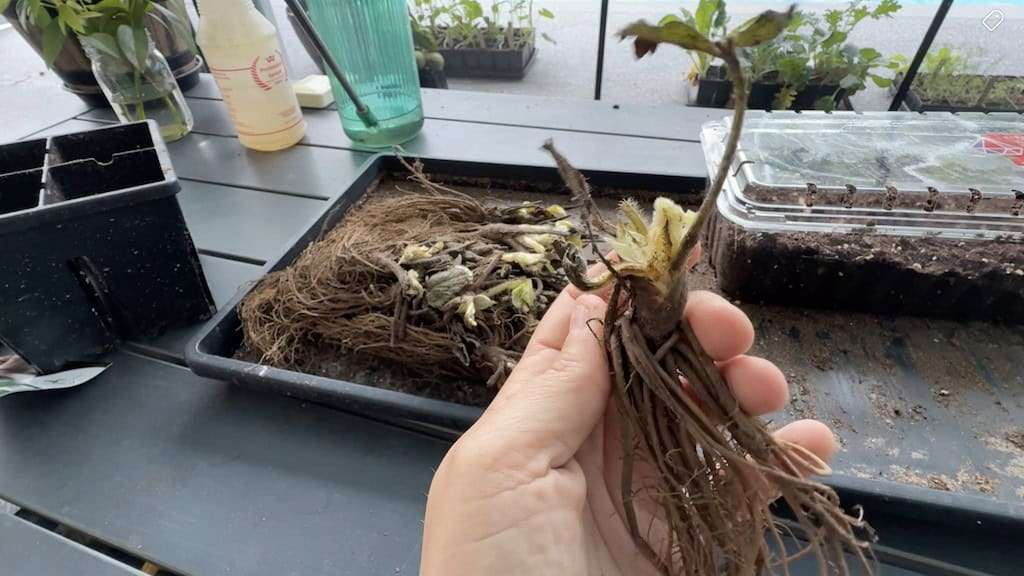
Bare root strawberries arrive without the little container of soil you would expect with a nursery plant. You are getting the roots of a dormant plant, which you then have to rehydrate and get growing again.
I understand the appeal. But I have had some rough experiences with them.
Usually, I would plant them, see those first little leaves, and get excited. They were alive! We were doing this!
Then they would start dying. One here, another there, until I was looking at a whole lot less than I had paid for.
I have had losses as high as 95 percent with bare roots. That has not happened every time, but once you have been through it, you start looking very closely at your other options.
One challenge is the adjustment to Florida. A plant that came from cooler conditions is suddenly dealing with our heat, humidity, intense sun, and pests. Getting it growing again while it adjusts to all of that has not always gone well for me.
Getting bare roots later in the season has sometimes helped, but there is a tradeoff. Wait too long and the varieties you wanted may already be gone. Sometimes everything is sold out.
So you are trying to balance better conditions with actually being able to buy the plants. It can be a gamble either way.
Why strawberry plugs are my first choice
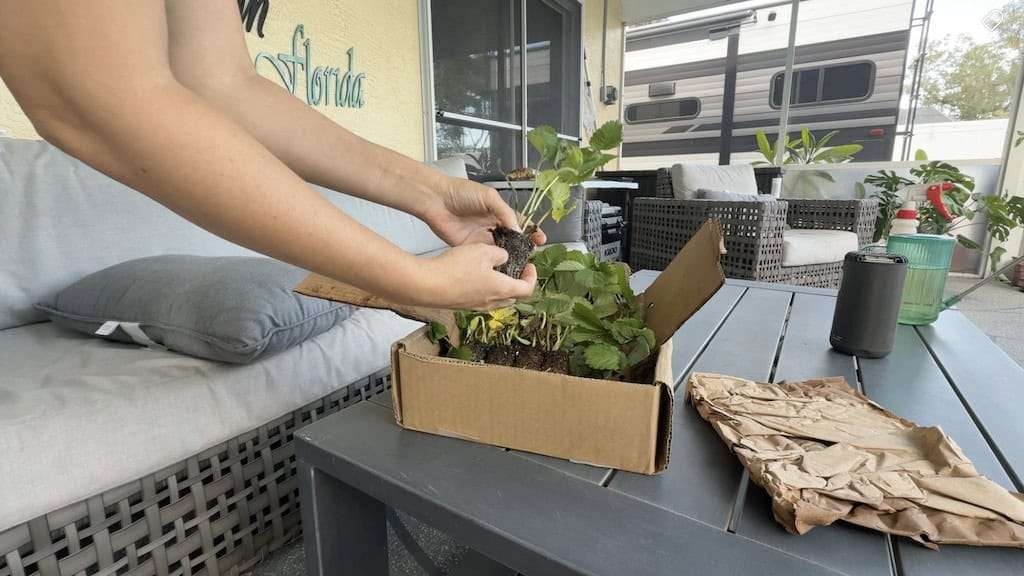
Plugs are already living, growing plants with roots established in a small plug of soil.
Strawberries make runners, and those runners produce daughter plants. A plug is one of those little daughter plants that has been rooted and allowed to grow.
You are starting with leaves and an established root system. That is a very different feeling from planting bare roots and wondering how many are going to wake up and stay with you.
I have been especially happy with the plugs I have gotten from Hoss. They are started in Georgia, which is closer to our growing conditions than a much cooler northern environment. With the ones I grew last year, I did not notice transplant shock or a difficult adjustment.
They just took off.
That head start also means I am closer to flowers and berries. The plant is already growing, so I am not waiting for it to break dormancy first.
For me, that has been worth choosing plugs over another round of bare root heartbreak.
Plan ahead if you want plugs
The frustrating part is that you have to get on these early.
By the time my latest order arrived, Hoss had already sold out of plugs for the season. That is the kind of detail that can catch you off guard if you wait until you are ready to plant before you start shopping.
Change block type or style
Move Image block from position 127 up to position 126
Move Image block from position 127 down to position 128
Change alignmentReplace
If you want a particular variety, keep preordering in mind. My newsletter includes reminders about ordering and preordering so you have a better chance of getting the plants you actually want.
The Strawberry Varieties I Have Grown in Florida
Choosing plugs is one piece of the puzzle. Choosing a variety you enjoy growing and eating is another.
My latest planting includes Chandler, Camarosa, Ruby June, and Albion. Some are returning favorites. Others still have to prove themselves.
Chandler
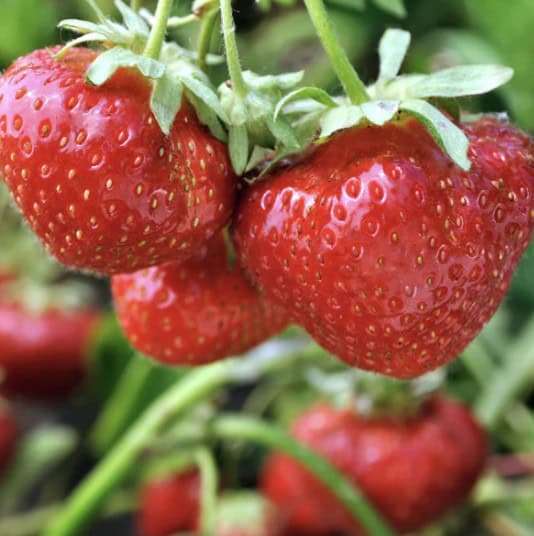
I really love Chandler. It has been one of the most consistent strawberry varieties for me, and it produces a fairly large berry.
I have also had some luck getting Chandler through the summer. I would not take that as a promise that every plant will survive, but it is one I have managed to carry over.
When I think about varieties I already trust from experience, Chandler is near the top.
Camarosa
Camarosa was a favorite in my garden last year.
The berries were a little smaller than Chandler, but the flavor was so good. Sweet, yummy berries that we kept eating more of than we normally would.
I am pretty sure Camarosa deserves a good portion of the credit for that.
I did not have great luck getting it through the summer, though. Loving the berry and successfully keeping the plant alive through Florida heat are two separate things.
Ruby June
Ruby June is new to me. I am trying it this season to see how it does in my garden.
Albion
Albion is getting another chance.
I grew it very early in my strawberry adventures, and those berries were awful. But I have heard wonderful things about Albion, and I was making plenty of mistakes back then.
Was it the strawberry, or was it me? Fair question. We are going to find out.
Brilliance
Brilliance is another variety I really like. It makes a very large berry, and the flavor reminds me of Chandler.
The downside is that it has not made runners well for me, and I have had zero luck getting it through summer.
If you want to keep your plants and grow more from runners, I would try a different variety. I enjoy the berries from Brilliance, but I have not had success keeping it going through summer or getting many daughter plants from it.
Can you keep strawberry plants through a Florida summer?
These strawberries are technically perennials, but getting them through summer here is difficult.
I have had different results with different varieties, and your location may make a difference too. Someone in a coastal area or North Florida may have better luck than I do if their growing environment is less hot.
I would pay attention to both summer survival and runner production. If you want more plants from the ones you already have, you need a variety that actually wants to make runners.
That is why I would not choose Brilliance specifically for that purpose, even though I enjoy the berries.
Where to Grow Strawberries Without Feeding All the Bugs
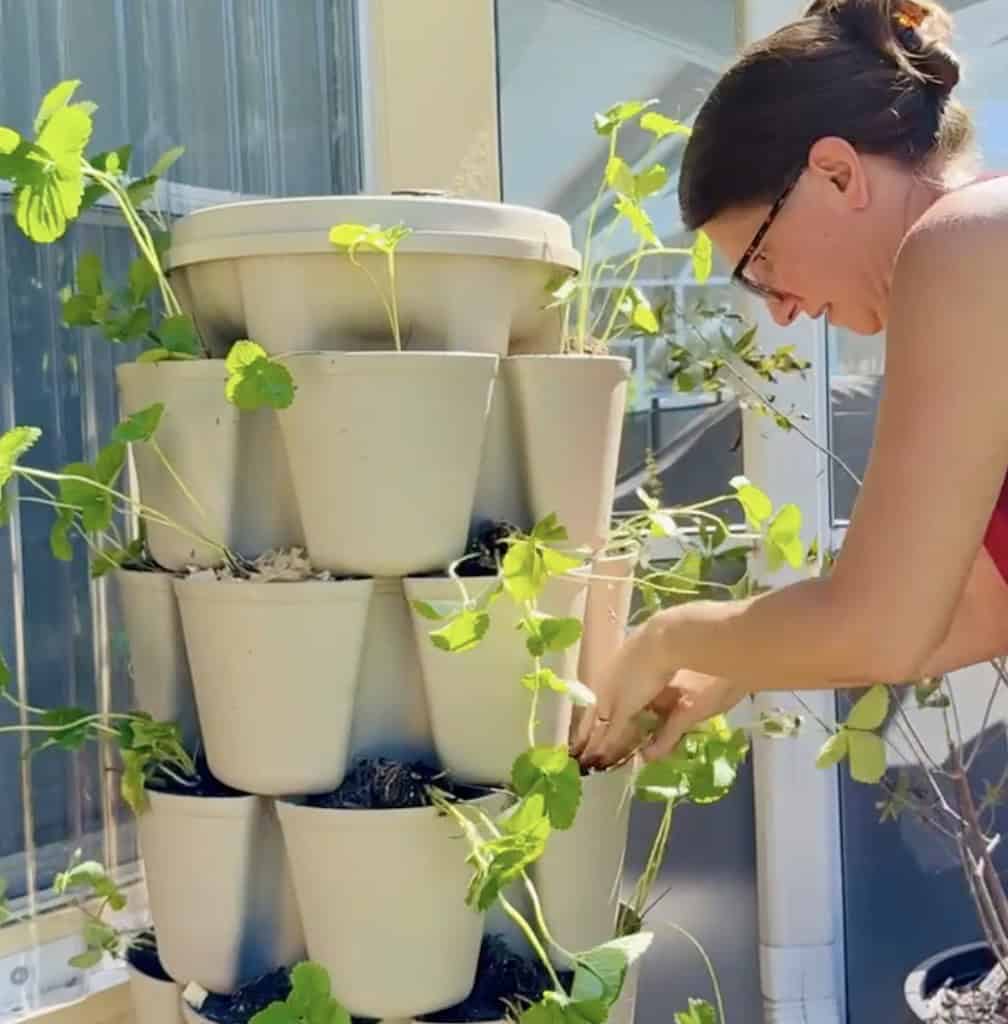
Strawberries do not need a huge amount of root space. About six to eight inches of depth gives you a lot of options, including raised beds, grow bags, and vertical containers.
I have grown them in all of those, as well as in the ground.
The important difference for me was what happened once the berries arrived.
In the ground and raised beds strawberry mistakes
If you want to grow strawberries in Florida’s sandy soil, you need to put some work into improving it. Our sand drains well, but it does not give hungry strawberry plants much to work with nutritionally.
With amended soil, growing in the ground is an option. Raised beds have also grown strawberry plants very well for me.
The plants were not the problem. The bugs were.
Slugs, snails, beetles, worms, you name it. Apparently, everybody loves a strawberry.
And once something takes a bite out of a berry, that berry starts going bad. You spend all this time getting the plant to produce, then find a half-chewed strawberry instead of the harvest you were waiting for.
I tried the little trays that lift berries off the soil. I tried heavy mulch. The bugs were not particularly impressed with either strategy.
When I grew strawberries in beds, I would lose at least half of the berries to pests. Half the harvest going into the compost after all that effort was enough to make me stop growing them for a year.
Why I prefer vertical strawberry planters
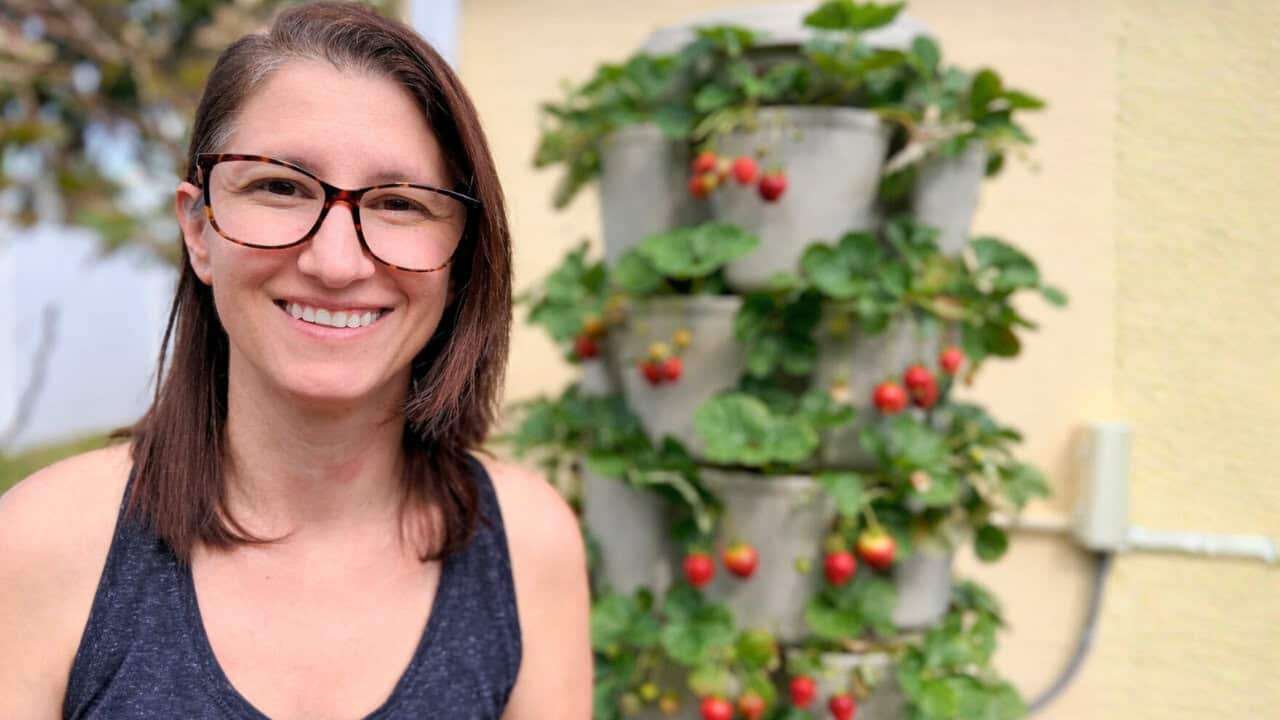
Containers changed things for me, especially Greenstalk containers that let the berries hang over the sides.

I want those berries hanging away from the soil, where the bugs have been less likely to get to them in my garden.
GreenStalk planters have been my favorite way to do this.
The shallower Leaf version works well with the small root system of a strawberry plant. With seven tiers and six pockets per tier, you have room for 42 plants in a footprint of roughly two square feet.
Forty-two plants. I needed a minute to do that math, but that is a lot of strawberries in a small space.
Each pocket also gives the berries a place to hang over the edge, which is exactly what I want.
How I would arrange strawberries in grow bags
Grow bags can work too. I would look for a wide bag rather than choosing one mainly for its depth.
Then I would plant strawberries around the outside edge so the berries could hang over the sides.
You can put strawberries in the middle, but that brings back the problem I was trying to get away from. The berries in the center are closer to the soil and more accessible to the pests that caused trouble in my beds.
Instead, I would use that center space for something with a small root system, such as onions, chives, or lettuce.
You still get to use the space, and the strawberries stay around the edge where you want them.
Choosing Soil for Strawberry Containers and Raised Beds
Once you decide where your strawberries will grow, pay attention to what you are filling that space with.
My Raised Bed Soil Mix
For raised beds, I prefer getting a mix from a nursery or soil supplier rather than buying bag after bag of raised bed soil. A mix around half compost and half soil is the kind of thing I look for.
I have used a mix from Whitwam’s Organics and had a very good experience with it.
Containers are different. For those, I want potting mix, and I want it loose.
The potting mix I prefer
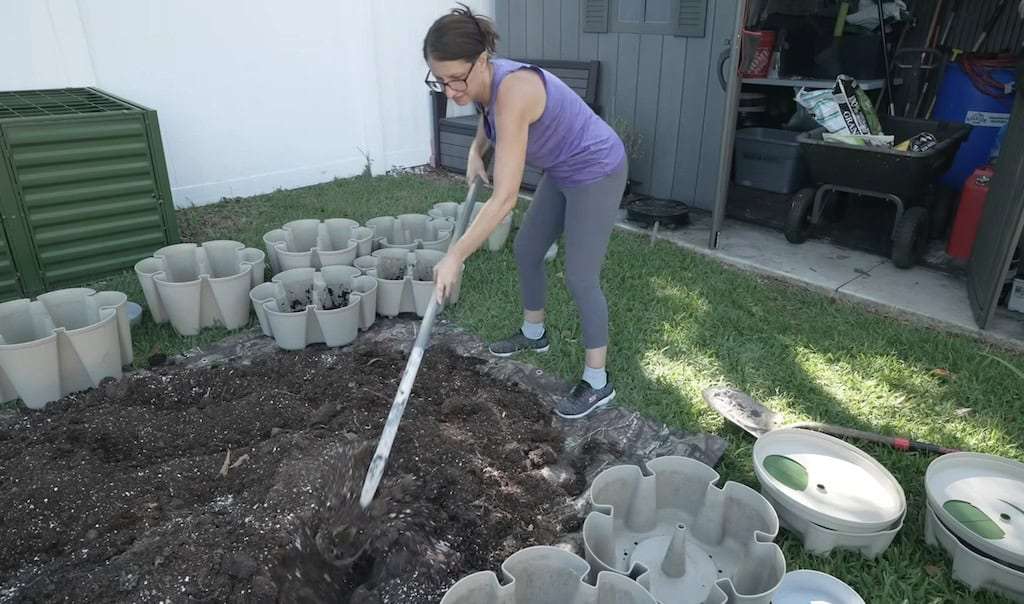
ProMix is the one I like, especially the pink bag. I get mine through Walmart delivery.
If I cannot get the pink bag, the yellow one is sufficient, but I would plan to add Berry-tone and possibly a little perlite.
This is one area where I am willing to spend more for the mix I prefer. I want that loose growing environment for the strawberry roots.
How I Feed My Strawberry Plants
Strawberries like to eat. If I want a good harvest, feeding them has to be part of the plan.
I approach that differently depending on whether I am using organic fertilizer or a synthetic option.
My organic approach: Compost and Berry-tone
If I am going organic, I want to start with plenty of compost and add Berry-tone at planting.
I like making my own compost. When I do not have any ready, though, I have to work with what is available. For this planting, I expect to have homemade compost ready around the middle of the growing season, so that is when I will be able to add it.
If you need to buy compost, I would look at a local nursery or compost supplier. Bagged compost is also an option if that is what you can get.
Berry-tone, from Espoma, has been my favorite organic fertilizer for strawberries. I have found it works well for them, which is why I keep coming back to it.
I would not choose a blueberry-specific fertilizer for this job. I am looking for something suited to the strawberries, rather than treating all berries as if they need exactly the same thing.
Use what you already have
If all you have is Tomato-tone, I would not send you shopping for a brand-new fertilizer just for one berry plant.
Use what you have.
If you get into growing strawberries and decide you want to keep doing it, then Berry-tone is something I would consider buying the next time you need fertilizer.
There is a difference between sharing my favorite and telling you that you need a separate shopping cart for every crop. Nobody needs that.
A synthetic option and why I am careful with it
For a synthetic fertilizer, I like Jack’s. In my experience, synthetic feeding can get plants growing quickly, but I am more careful with it because it is easier to overdo.
I would watch how the strawberries are growing rather than automatically feeding them as often as possible. If they are producing good growth and flowers, I may be able to stretch the interval between feedings.
In containers, I am particularly cautious about feeding too often. Stronger fertilizer is not an invitation to keep adding more.
The organic materials I use take longer to break down and make nutrients available gradually. That is a different pace from the more immediate response I see with a synthetic fertilizer.
Either way, the goal is to support the plants, then pay attention to how they respond.
What I Would Focus on First
If I were starting strawberries again, I would put my effort into three things: healthy plugs, a container that lets the berries hang over the edge, and a loose potting mix with a plan for feeding.
Those choices made the biggest difference after years of struggling.
I would start with varieties I have enjoyed, especially Chandler and Camarosa, while leaving a little room to try something new. And I would remember that getting a plant through summer is a separate challenge from getting a good strawberry harvest.
If you want more of my Florida growing notes, the Homegrown Florida Gardening Guide includes strawberries along with the crops I grow in my vegetable garden. It is where I have put many of the varieties, tips, and lessons I have collected over the years.
Mostly, I hope you get to skip a few of my expensive lessons. Growing strawberries should end with you eating sweet berries, preferably before everything else in the garden gets a bite.